Watermelon and lime juice
Blend watermelon flesh with lime and a little cold water. Depending on the fruit, serve it pulpy or strain before pouring. Lime adds tartness without requiring sugar. The quantities make about four glasses. Straining may reduce the yield because the pulp holds some juice. Stir just before pouring, as the pulp can rise or settle as it stands.
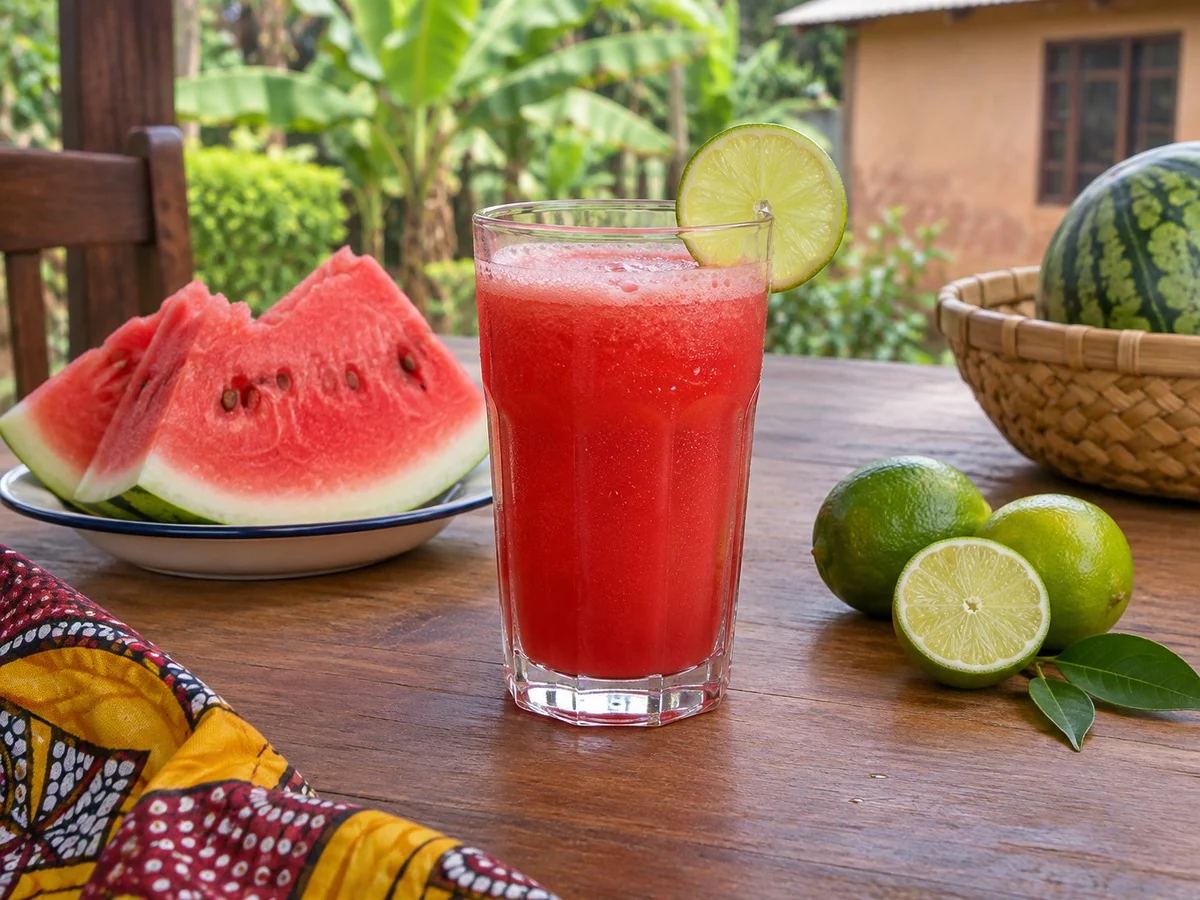
Ingredients
- 750 g watermelon flesh
- 25 ml lime juice
- ≤150 ml water
Preparation
Put half the cubes into the blender with the lime and about half the water. Close the lid and pulse until there is enough liquid to move the remaining cubes. For a small blender, work in two batches and combine in the jug.
Add the rest of the flesh and blend until even. Switch off before moving pieces with a spatula. Taste a little. If it already pours and has a clear watermelon flavour, keep the remaining water aside. Add it slowly if the pulp is too thick to pour.
For a clearer drink, strain through a fine sieve. Stir gently to let the liquid run without forcing the pulp through. For a pulpy drink, pour straight into the jug. Let any foam settle briefly before serving.
Stir, taste and divide among four glasses. If the lime is too prominent, add more watermelon juice to one test serving before adjusting the whole jug. Serve chilled. If it must wait briefly, cover and refrigerate, then stir before pouring.
Introduction
Ingredients and equipment
Allow 750 g of watermelon flesh weighed after trimming off the rind and hard seeds, 25 ml of lime juice and up to 150 ml of cold drinking water. Use a stable board, knife, blender, measuring jug and optionally a fine sieve. Allow about fifteen minutes. Choose firm, juicy fruit. If buying it already cut, choose fruit stored as directed by the seller. Chill the glasses beforehand if you want to avoid diluting the drink with ice.
Preparing the fruit
Wash the outside before cutting on a clean board. Lay a slice flat and remove the rind and any thick white layer. Take out visible hard seeds and cut the flesh into cubes small enough for the blades. Catch and keep any juice that runs out as you cut. Weigh the trimmed flesh. Squeeze the lime separately, removing seeds before measuring.
Step-by-step preparation
1. Put half the cubes into the blender with the lime and about half the water. Close the lid and pulse until there is enough liquid to move the remaining cubes. For a small blender, work in two batches and combine in the jug.
2. Add the rest of the flesh and blend until even. Switch off before moving pieces with a spatula. Taste a little. If it already pours and has a clear watermelon flavour, keep the remaining water aside. Add it slowly if the pulp is too thick to pour.
3. For a clearer drink, strain through a fine sieve. Stir gently to let the liquid run without forcing the pulp through. For a pulpy drink, pour straight into the jug. Let any foam settle briefly before serving.
4. Stir, taste and divide among four glasses. If the lime is too prominent, add more watermelon juice to one test serving before adjusting the whole jug. Serve chilled. If it must wait briefly, cover and refrigerate, then stir before pouring.
Adjusting the dilution
Two watermelons of the same weight can make drinks of different thicknesses. A watery fruit may need little additional water, while firm flesh may need some to start the blades. Add in stages. If the melon flavour is weak, leave the drink as it is or add more melon. Extra water will dilute it further. If straining, measure after draining because the pulp retains some liquid and changes the glass size you need.
Serving and nutrition
Serve four glasses and stir between the first and last pours. Watermelon contains naturally occurring sugars. Water adds none, but changes the amount of fruit in a glass of the same size. The strained drink contains less pulp. To reproduce it or estimate composition, record the flesh weight, added water and final volume. Offer lime wedges separately for anyone who wants more acidity.
Choosing how much pulp to keep
For small glasses, a fine sieve helps when the melon is fibrous. Taste the blended juice before deciding. Soft fruit may already pour easily. To keep some pulp, strain only part, mix it back in and measure the final yield. For a large batch, strain small quantities at a time and clear the sieve when the pulp slows the flow.
Dividing the glasses
Set out all four glasses before taking the juice from the refrigerator. Pour a little into each, stir the jug and top them up to divide the pulp evenly. If testing dilution with one glass, record the extra water so you can adjust the others, or leave some more concentrated to suit different tastes. Let heavy foam settle before measuring.
Cultural context
This home drink joins the mango, passion fruit and pineapple juices from the first volume. Watermelon contains plenty of water, so start with less added water and taste before diluting. Hold some back for that adjustment. Use squeezed lime juice so that zest and white pith do not dominate the blender mixture.
Nutrition notes
Estimated nutrition per serving. Before adjustment for cooking losses · Calcium 14 mg · Iron 0.6 mg · Potassium 212 mg · Vitamin A 47 µg RAE · Vitamin C 13.6 mg