Roasted squash with sesame
Sesame-roasted squash is served in wedges with golden edges and tender flesh. Add toasted sesame and lime once the tray leaves the oven so the seeds stay crisp and the lime is easy to dose. The recipe serves four. Allow for wedge thickness, cut them to similar sizes and leave room for steam to escape. Beans prepared separately can complete the plate.
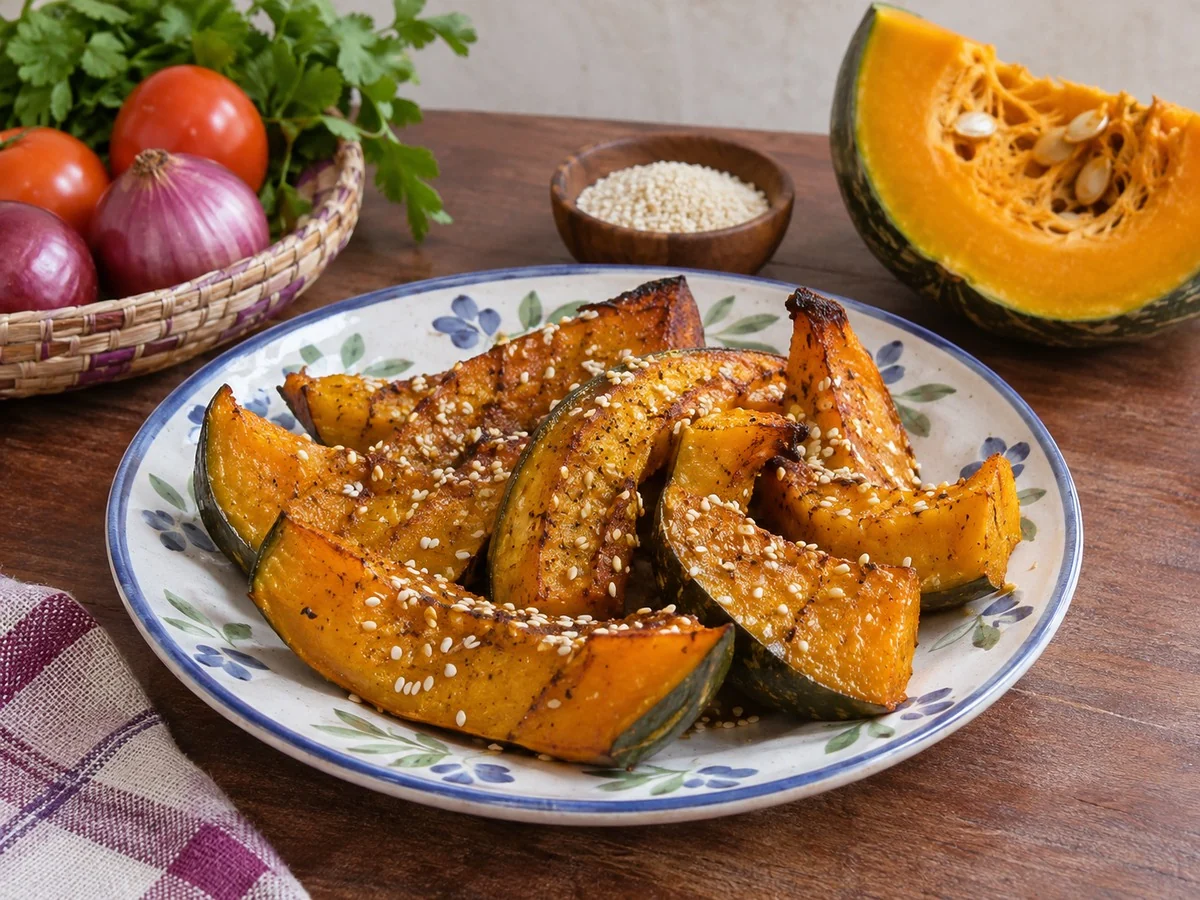
Ingredients
- 850 g prepared squash
- 20 ml vegetable oil
- 25 g sesame seeds
- 15 ml lime juice
- ≈2 g fine salt
Preparation
Preheat to 200 °C. Wash and dry the squash. Open on a stable board and remove the seeds and surrounding fibres. Cut wedges of similar thickness. Set thin tips aside to remove early. If the skin is hard to cut, buy a precut section. Avoid forcing the blade into a squash that rolls.
Coat the wedges in oil with a spoon or toss in a bowl. Salt lightly and lay them flat with space between them. Use two trays if necessary, as crowding traps steam and reduces browning. Put the tray on the middle shelf.
Roast until the edges colour. Turn with a spatula when the first face releases easily. To keep the skin down, return the tray without turning and check the other surface near the end. A knife should slide easily into a thick wedge near the skin. Take smaller wedges out early if ready.
Toast sesame in a dry pan, stirring until fragrant. Transfer to a dish at the desired colour. Measure the lime, keeping some for the table. As the squash leaves the oven, scatter the seeds and add a few drops of lime. Taste before adding more.
Introduction
Ingredients and equipment
Weigh 850 g of trimmed edible squash, 20 ml of vegetable oil, 25 g of sesame seeds, 15 ml of lime juice and about 2 g of fine salt to taste. Weigh after removing seeds and fibres. Leave the skin on if it holds the wedges together and remove at serving if tough. Use a large tray, spatula, small dish for lime and dry pan for seeds. Allow fifteen minutes of preparation and about thirty-five in a 200 °C oven, adjusting for thickness.
Preparing and roasting
1. Preheat to 200 °C. Wash and dry the squash. Open on a stable board and remove the seeds and surrounding fibres. Cut wedges of similar thickness. Set thin tips aside to remove early. If the skin is hard to cut, buy a precut section. Avoid forcing the blade into a squash that rolls.
2. Coat the wedges in oil with a spoon or toss in a bowl. Salt lightly and lay them flat with space between them. Use two trays if necessary, as crowding traps steam and reduces browning. Put the tray on the middle shelf.
3. Roast until the edges colour. Turn with a spatula when the first face releases easily. To keep the skin down, return the tray without turning and check the other surface near the end. A knife should slide easily into a thick wedge near the skin. Take smaller wedges out early if ready.
4. Toast sesame in a dry pan, stirring until fragrant. Transfer to a dish at the desired colour. Measure the lime, keeping some for the table. As the squash leaves the oven, scatter the seeds and add a few drops of lime. Taste before adding more.
Adjusting the roasting
Watery squash may brown slowly. Start by spacing the wedges in one layer. If the flesh is tender but pale, move the tray nearer the heat briefly and watch. If the tips brown before the centre softens, move the tray lower, reduce the heat slightly or remove pieces that are already cooked. Cut more evenly next time.
If opening a large squash, roast only the stated 850 g and use the rest elsewhere. For a double batch use two trays and check each shelf separately. Swap them if one heats more strongly. Toast the seeds as the squash finishes and keep them in a dish so you can divide them all at once.
Serving and nutrition
Serve with beans and offer extra lime separately. Orange-fleshed squash supplies carotenoids, and the seeds contribute fat. This dish contains sesame. Portions cover the seasoned wedges alone. For the served weight, consider water lost in roasting and any skin left uneaten. Divide the larger wedges among the plates and top up with small pieces.
Choosing doneness for the meal
For intact wedges choose a squash that holds when lifted. Pierce the flesh near the skin at the thickest point. Remove it when the knife goes through easily even if it is paler than the others. Transfer very soft wedges straight to the plates rather than turning on the tray again. Plate the fragile pieces before the firmer ones.
With well-seasoned beans, start with a few drops of lime and taste a bite with the beans. Their sauce may already be acidic enough. On a shared platter, scatter seeds along the cut faces so they stick. Offer extra sesame and lime at the table for diners who want more crunch or acidity.
Serve skin side down if it was left on during roasting.
Cultural context
Steamed squash in recipe 103 makes moist wedges without browning. This home version uses the oven for golden edges and finishes with sesame. Temperature and quantities are specific to this recipe. The squash roasts without sauce. Oil coats it and helps transfer heat from the tray. Add lime out of the oven, tasting a first bite to decide how much the variety needs.
Nutrition notes
Estimated nutrition per serving. Before adjustment for cooking losses · Calcium 89 mg · Iron 2.8 mg · Potassium 628 mg · Vitamin A 151 µg RAE · Vitamin C 18.4 mg