Sautéed cabbage and carrots
This sauté combines cabbage ribbons, thin carrot sticks and sliced onion. The carrot goes in first because it takes longer to soften. Add cabbage next and briefly cover with a few spoonfuls of water to soften the ribbons. Finish uncovered to evaporate the liquid. The recipe makes four side portions. Cabbage should fold under a fork and carrot should still have some bite.
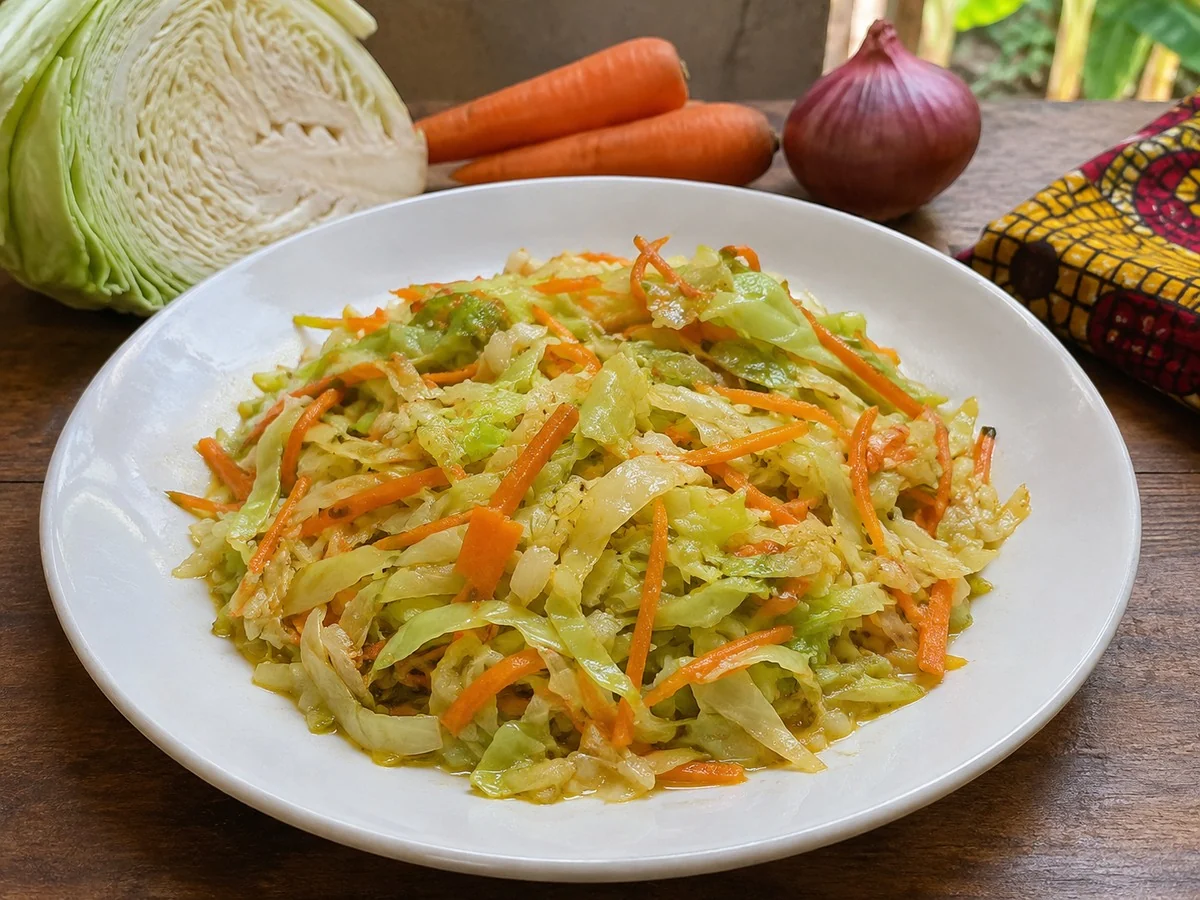
Ingredients
- 400 g trimmed cabbage
- 220 g carrots
- 100 g onion
- 20 ml vegetable oil
- ≤40 ml water
- ≈2 g fine salt
Preparation
Heat oil over medium heat. Stir in the onion until soft and lower the heat slightly if its edges brown. Add carrot sticks, spread them out and turn regularly until brighter and beginning to soften at the edges.
Add cabbage in two handfuls if bulky. Lift the ribbons with the spatula and let the first handful wilt before adding the second. Cook over medium-high heat, regularly moving the top vegetables down to the hot surface.
Add some water and cover briefly. Taste a carrot stick and a ribbon. If the carrot is firm and the base dry, add reserved water and turn the top vegetables down. If cabbage is already tender, uncover immediately and stir to release steam. The ribbons should retain some structure.
Let any remaining liquid evaporate. Salt gradually and taste a bite with all three vegetables. Turn off the heat when there is no puddle at the bottom. Divide into four portions or move to a wide serving dish.
Introduction
Ingredients and equipment
Use 400 g of trimmed cabbage, 220 g of trimmed carrots, 100 g of peeled onion, 20 ml of vegetable oil, up to 40 ml of water and about 2 g of fine salt to taste. Use a sharp knife, stable board, wide sauté pan, spatula and lid. Allow fifteen minutes to prepare and about sixteen to cook, depending on the cabbage and carrot size. A deep narrow pan traps steam and may take longer. Keep the water by the stove so you can add it as you stir.
Cutting the vegetables
Discard damaged cabbage leaves and the hard base, then weigh the usable part. Separate thick ribs and slice them finer. Stack tender leaves and cut short ribbons, as long ones tangle. Cut carrots into thin slabs and then sticks of similar width. For a thick carrot, trim a side to steady it on the board. Slice the onion separately so it can soften in oil before the other vegetables go in.
Step-by-step preparation
1. Heat oil over medium heat. Stir in the onion until soft and lower the heat slightly if its edges brown. Add carrot sticks, spread them out and turn regularly until brighter and beginning to soften at the edges.
2. Add cabbage in two handfuls if bulky. Lift the ribbons with the spatula and let the first handful wilt before adding the second. Cook over medium-high heat, regularly moving the top vegetables down to the hot surface.
3. Add some water and cover briefly. Taste a carrot stick and a ribbon. If the carrot is firm and the base dry, add reserved water and turn the top vegetables down. If cabbage is already tender, uncover immediately and stir to release steam. The ribbons should retain some structure.
4. Let any remaining liquid evaporate. Salt gradually and taste a bite with all three vegetables. Turn off the heat when there is no puddle at the bottom. Divide into four portions or move to a wide serving dish.
Adjusting the cooking
If the carrots are slow, add cabbage later or cut thinner sticks next time. If cabbage is ready while carrots are still firm, push it to the edge and cook the carrots in the centre with a trickle of water. Toss once more. If the vegetables get soft, finish uncovered and remove them from the pan so they do not continue to soften under the lid.
For more portions, work in two batches. Divide cabbage and carrots into two piles and measure water for each. Doubling in one pan produces more steam and makes sautéing harder. Use the first batch as a timing guide. Start the second over gentler heat if the pan is hotter.
Serving and nutrition
Serve with beef rice or beans. Carrots provide carotenoids and the vegetables contribute fibre. Quantities cover the side dish alone. Put any sauce alongside to keep its texture. Divide cabbage and carrot, then share the soft onion. A wide spatula picks up all three at once.
Adjusting the cut and timing
For cabbage with thick ribs, separate them and cut like carrots. Cook them together, then add the thinner leaves. The ribs get extra time while the ribbons stay supple. With very fine carrot sticks, stir briefly before adding cabbage so the carrot holds its shape.
For a shared meal, start the onion and carrot while the main dish finishes. Add cabbage near serving, as it can soften further in the hot pan even off the heat. Taste before adding reserved water. Young cabbage may release enough liquid to cook almost entirely uncovered. Drain with the spatula at plating if liquid remains.
Cultural context
This home side differs from the braised cabbage of the first volume. It uses fine cuts, a wide sauté pan and brief cooking. Serve alongside beef rice or beans cooked separately. There is no tomato in the base. Sweetness comes from onion and carrot. Cutting the vegetables to appropriate sizes lets them finish together without leaving them on the heat too long.
Nutrition notes
Estimated nutrition per serving. Before adjustment for cooking losses · Calcium 69 mg · Iron 1.8 mg · Potassium 477 mg · Vitamin A 350 µg RAE · Vitamin C 60.6 mg