Mukene fried rice
Mukene fried rice combines cooked rice, finely cut vegetables and small dried fish fried separately. The fish return to the pan at the end. The rice should be hot throughout while the vegetables retain some bite. Cooking in stages keeps the fish intact while the rice is stirred. Serve four portions, with pepper and carrot for colour and onion for the base.
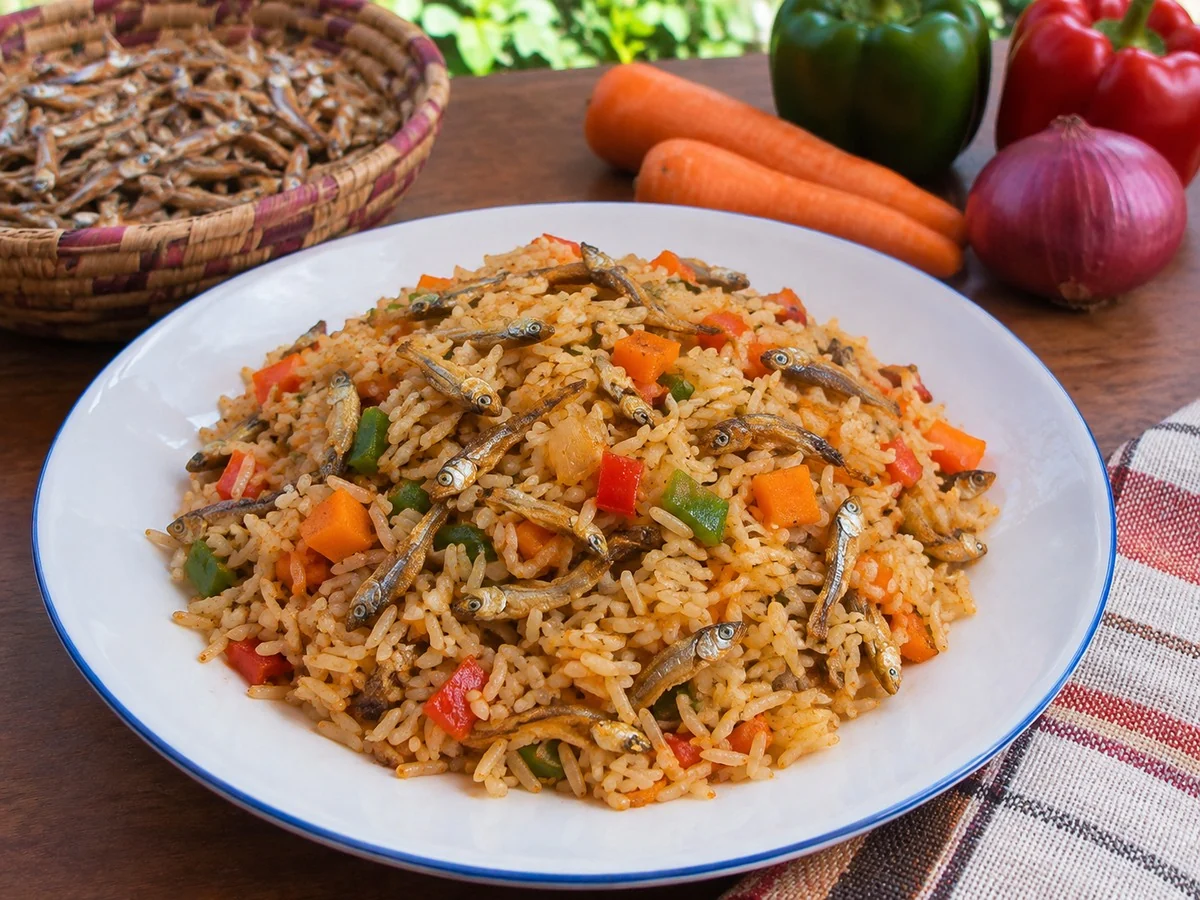
Ingredients
- 600 g cooked rice
- 100 g food-grade dried mukene
- 120 g carrots
- 100 g bell pepper
- 80 g onion
- 25 ml vegetable oil
Preparation
Sort the mukene on a pale plate. If the label calls for rinsing, rinse in a fine colander and drain thoroughly. Pat off surface moisture to limit splashing. Finely dice the carrot and pepper and slice the onion. Keep the vegetables separate if the carrot pieces are larger.
Heat some oil and fry the fish in a loose layer. Stir gently and cook through as directed on the packet. Move to a clean plate. If fragments stick and start to burn, clean the pan before adding vegetables.
Add the remaining oil. Sauté onion and carrot, then add pepper. Soften the vegetables without letting them release much liquid. Stir by lifting them. Medium-high heat helps drive off moisture if you can stir across the bottom regularly.
Add the rice, gently breaking up clumps. Move grains from the edge to the centre to heat them evenly. Check that leftover rice is steaming throughout. Work in two batches if the pan makes the middle hard to reach.
Return the cooked fish at the end and stir just enough to spread them. Taste before salting, as the fish may already contain salt. Serve as soon as hot.
Introduction
Ingredients and equipment
Use 600 g of cooked rice, 100 g of edible dried mukene, 120 g of carrot, 100 g of trimmed sweet pepper, 80 g of peeled onion and 25 ml of oil. Allow water for preparing the fish if the packet calls for it. Have a fine colander, wide deep-sided pan, spatula and separate plate for the cooked fish. Allow about fifteen minutes each for preparation and cooking. In a small pan work in two batches, as a deep layer traps steam and heats unevenly.
Use freshly cooked rice or leftovers that were cooled and stored properly. The Food Standards Agency advises cooling rice for later use quickly, ideally within an hour, and reheating it only once, until steaming throughout. Follow the storage and reheating directions before starting. Break up clumps with a fork before putting the rice over high heat.
Step-by-step preparation
1. Sort the mukene on a pale plate. If the label calls for rinsing, rinse in a fine colander and drain thoroughly. Pat off surface moisture to limit splashing. Finely dice the carrot and pepper and slice the onion. Keep the vegetables separate if the carrot pieces are larger.
2. Heat some oil and fry the fish in a loose layer. Stir gently and cook through as directed on the packet. Move to a clean plate. If fragments stick and start to burn, clean the pan before adding vegetables.
3. Add the remaining oil. Sauté onion and carrot, then add pepper. Soften the vegetables without letting them release much liquid. Stir by lifting them. Medium-high heat helps drive off moisture if you can stir across the bottom regularly.
4. Add the rice, gently breaking up clumps. Move grains from the edge to the centre to heat them evenly. Check that leftover rice is steaming throughout. Work in two batches if the pan makes the middle hard to reach.
5. Return the cooked fish at the end and stir just enough to spread them. Taste before salting, as the fish may already contain salt. Serve as soon as hot.
Adjusting the stir-fry
If the rice sticks, check whether there is room to move it. Set some aside and finish in two batches if needed. Let vegetable juices evaporate before adding the rice. For firm carrot, cook the vegetables alone a little longer. Prolonged cooking once the fish return makes them less distinct. Have the plates ready before that step.
Serving and nutrition
Divide the hot rice and fish into four portions. Mukene provide protein and rice supplies mostly carbohydrates. This dish contains fish and may contain small bones. Salt depends on the dried fish. Taste a bite with both rice and fish before seasoning. Scoop from different parts of the pan for even portions. You can save a few cooked fish to scatter on top. Quantities refer to the fried rice alone. Serve salad separately so its juice does not soften the grains.
Rice storage reference
Food Standards Agency, advice on cooling and reheating rice. https://www.food.gov.uk/print/pdf/node/4286
Organising cuts and batches
Cut carrot smaller than pepper if you want the vegetables ready together. For thick carrots, slice into thin slabs and dice those. Slightly larger pepper pieces keep some texture when the rice is stirred. With hot rice, finish the vegetables first. When using chilled rice, start with a small amount you can break up and heat all the way through. Add more only if the pan has room.
For two batches, divide the vegetables and fish before starting. Leave the fish on its plate until the last minute. Lift the rice with the spatula to combine and add a few fish on top so each bowl visibly has some. If adding a citrus garnish, use very little to keep the fried rice’s texture.
Cultural context
This version adds mukene to the vegetable fried rice from the first volume. Mukene are also served in tomato and sesame sauces, but this dish is drier, with the garnish visible on the grains and no sauce to add at the end. Choose dried fish sold for food and follow the packet directions. The amount is for four and can be reduced if the fish are very salty.
Nutrition notes
Estimated nutrition per serving. Before adjustment for cooking losses · Calcium 512 mg · Iron 2.9 mg · Potassium 345 mg · Vitamin A 242 µg RAE · Vitamin C 39.3 mg