Bean pilau
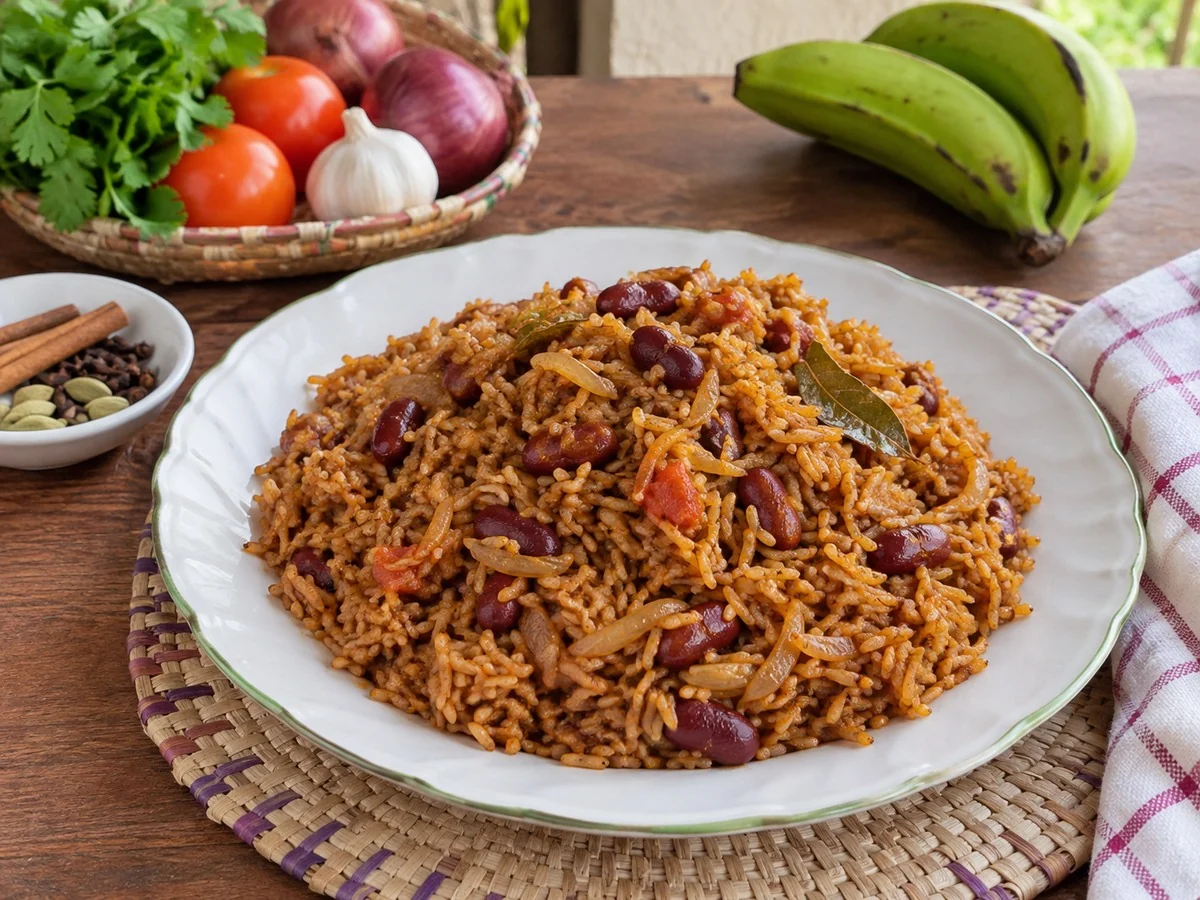
Bean pilau starts with golden onions and spices warmed in oil before the rice goes in. The cooked beans are added near the end. The rice absorbs the seasoning and the beans warm through without boiling for the full cooking time. The dish serves six, with kachumbari on the side. Onion and spices provide most of the colour. Give the onions time to brown evenly and remove any pieces that start to burn.
Ingredients
- 420 g dry long-grain rice
- 420 g cooked drained beans
- 300 g onion
- 25 ml vegetable oil
- ≤750 ml water
- 8 g pilau spice blend
- fine salt
Preparation
Rinse and drain the rice. Thinly slice the onions into strips of even width and separate them by hand so they brown at the same rate. When the rice is nearly cooked, reheat the beans separately and drain any water used for reheating.
Heat the oil and soften the onions over medium heat. Stir regularly once they begin to colour. Move strips at the edges towards the centre if they brown too quickly. Continue until evenly golden brown, removing any burnt pieces. If the base dries, lower the heat and gently loosen the onions with a spatula.
Stir the spices briefly into the onions to release their aroma in the oil, then immediately add the drained rice. Stir to distribute the onions and add the amount of water suited to the rice, holding some back. Salt lightly, bring to a simmer and cover.
Cook over low heat. When the rice has absorbed most of the water and is almost tender, spread the hot beans over the surface and lift a little rice with the spatula without stirring it through. Cover and finish cooking. If the grain is firm and the liquid gone, add hot water by the spoonful at the edge.
Once the rice is tender and the beans hot, turn off the heat. Rest covered for a few minutes, fluff with a fork and lift small portions to spread the beans without crushing them. Taste with the kachumbari before adjusting the seasoning.
Introduction
Ingredients and equipment
Measure 420 g of dry long-grain rice, 420 g of cooked and drained beans, 300 g of peeled onions, 25 ml of oil, 8 g of pilau spice blend, up to 750 ml of water and salt to taste. Check that the beans are tender all the way through. If starting with dried beans, cook them according to the packet and weigh them once cooked. Use the rice packet’s directions as a starting point for water. Have a lidded casserole, colander, spatula and small saucepan for the beans. Allow twenty-five minutes for preparation and roughly forty-five for cooking, much of it for the onions.
Step-by-step preparation
1. Rinse and drain the rice. Thinly slice the onions into strips of even width and separate them by hand so they brown at the same rate. When the rice is nearly cooked, reheat the beans separately and drain any water used for reheating.
2. Heat the oil and soften the onions over medium heat. Stir regularly once they begin to colour. Move strips at the edges towards the centre if they brown too quickly. Continue until evenly golden brown, removing any burnt pieces. If the base dries, lower the heat and gently loosen the onions with a spatula.
3. Stir the spices briefly into the onions to release their aroma in the oil, then immediately add the drained rice. Stir to distribute the onions and add the amount of water suited to the rice, holding some back. Salt lightly, bring to a simmer and cover.
4. Cook over low heat. When the rice has absorbed most of the water and is almost tender, spread the hot beans over the surface and lift a little rice with the spatula without stirring it through. Cover and finish cooking. If the grain is firm and the liquid gone, add hot water by the spoonful at the edge.
5. Once the rice is tender and the beans hot, turn off the heat. Rest covered for a few minutes, fluff with a fork and lift small portions to spread the beans without crushing them. Taste with the kachumbari before adjusting the seasoning.
Adjusting onions and spices
With moist onions, let steam escape before turning down the heat. The slices rarely brown evenly while liquid collects at the base. If dry edges colour before the centre, stir more often and slow the cooking. Add spices when the onions are ready. Too long alone in the oil changes their flavour and can make them stick. Have the drained rice ready to add immediately.
For fragile beans, leave them on top and fold them in gently after resting. Taste pre-seasoned beans before salting the rice water. Salted spice mix and tinned beans may already provide enough. For larger batches, brown onions in a wide pan or in two rounds, then combine to season the rice. This takes more time and gives a fuller onion flavour without extra spice.
Serving and nutrition
Serve the pilau on a wide dish and the kachumbari separately. Rice supplies carbohydrates and beans provide plant protein and fibre. The six portions refer to pilau alone. Scoop from both the centre and edges. If beans remain on top, spread them before serving the last plates. Record the type of beans and water actually used if you want to reproduce the result with the same rice. Keep salad juices out of the casserole so the rested grains keep their texture.
Preparing the accompaniment in parallel
While the rice absorbs the water, prepare the salad. For recipe 142, cut tomato and onion before avocado. Dress just before serving so juices do not pool while the rice rests. Warm the beans in a little water and drain before adding them. Hot beans are easier to add when the rice is nearly ready. For six portions, use a large fork and deep serving dish. Transfer some rice first and slide in the rest to preserve the distribution of rice and beans. Taste one bite with salad before adjusting the seasoning.
The resting time helps the grains separate before serving.
Cultural context
In the first volume’s meat pilau, the rice, spices and other ingredients cook together. This home version uses cooked beans. It differs from rice and beans served as two separate preparations. Here the rice absorbs the aroma of onion and spices as it takes up water, and the beans join it towards the end. A pilau blend makes the spice quantity easy to measure, but its strength depends on the ingredients and how fresh they are. If the blend contains salt, adjust the final pinch at the table.
Nutrition notes
Estimated nutrition per serving. Before adjustment for cooking losses · Calcium 59 mg · Iron 3.4 mg · Potassium 511 mg · Vitamin A 0 µg RAE · Vitamin C 5.5 mg