Rice with squash and sesame
Rice with squash and sesame cooks by absorption in the same pan as the diced squash. The grains should stay separate after resting. The squash should yield to a fork while holding its shape. Toasted sesame goes on after cooking to keep its crunch. The recipe serves four and goes well with sautéed greens. Rice variety and squash moisture affect the amount of water, so hold some back until you see how the liquid simmers.
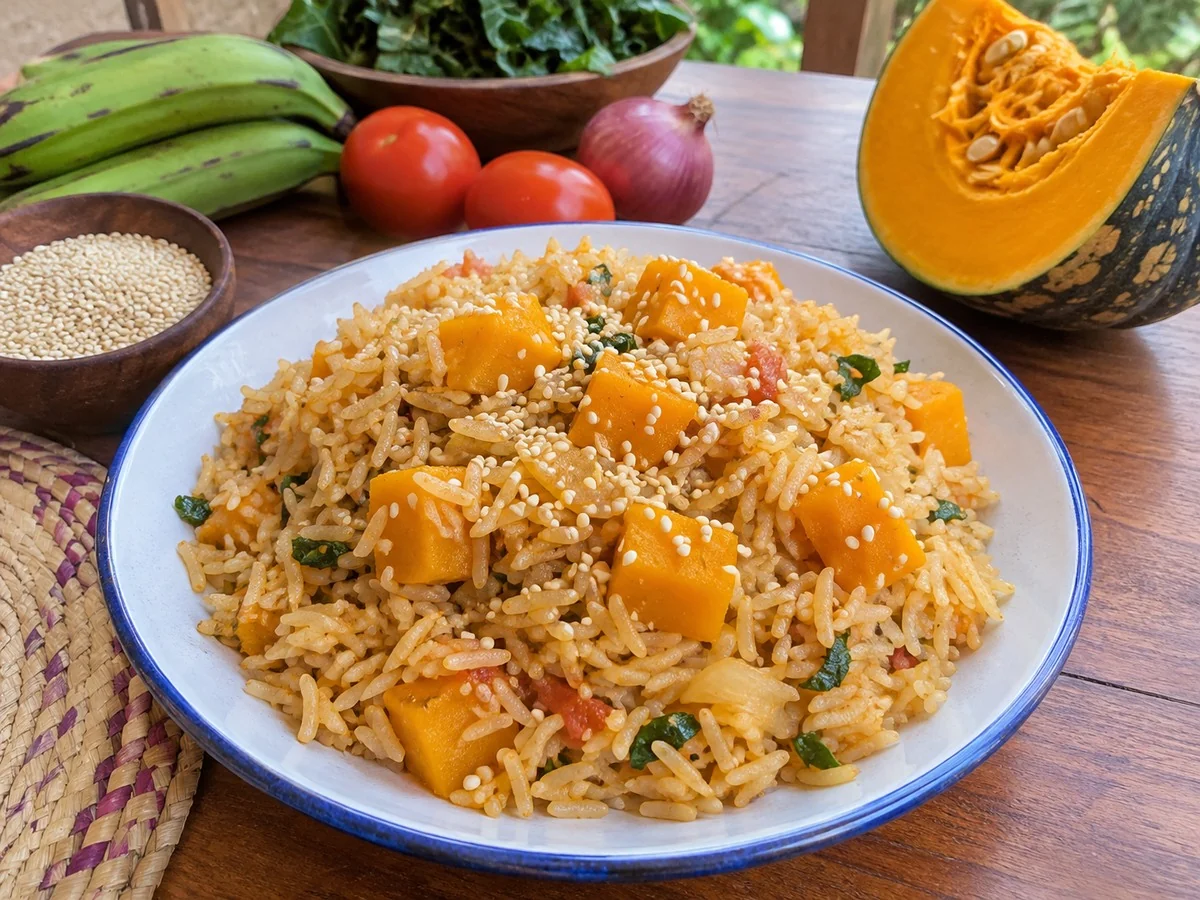
Ingredients
- 280 g dry long-grain rice
- 350 g prepared squash
- 90 g onion
- ≤520 ml water
- 15 ml vegetable oil
- 25 g sesame seeds
- ≈2 g fine salt
Preparation
Scoop out the squash and remove tough skin. Cut into small cubes about one and a half centimetres thick. Larger pieces may still be firm when the rice is done. Slice the onion. Rinse and drain the rice, discarding the rinse water separately from the measured amount.
Heat the oil and soften the onion without letting it turn dark brown. Add the squash and stir to coat. Warm briefly until it begins to release moisture. For dense squash, add a spoonful of water and cover briefly. Keep the cubes firm at this stage so they finish cooking with the rice.
Stir in the drained rice once. Add the amount of water the variety needs, allowing for moisture in the pan, and reserve the rest. Salt lightly and bring to a simmer. Cover and lower the heat. Gentle cooking lets the rice absorb liquid without breaking the cubes. If you lift the lid to check, put it back at once.
Check near the end of the packet time. Taste a grain and pierce a large cube. If the rice is firm when the liquid is gone, add hot water and keep cooking covered. If the squash is tender and the base still moist, turn off the heat as soon as the rice is done. Rest covered for a few minutes before fluffing.
Toast the sesame in a small dry pan, stirring. Remove as soon as the seeds smell toasted and start to colour. Tip into a dry dish. Serve the rice in four portions and scatter the sesame on top or offer it at the table.
Introduction
Ingredients and equipment
Use 280 g of dry long-grain rice, 350 g of trimmed edible squash flesh, 90 g of peeled onion, up to 520 ml of water, 15 ml of oil, 25 g of sesame seeds and about 2 g of salt to taste. Weigh the squash without seeds or hard parts. Read the rice packet before measuring the water. A variety that takes less liquid will not need the full amount. Use a heavy-based lidded saucepan, colander and small dry pan for the sesame. Allow fifteen minutes to prepare, about twenty-five to cook and a few minutes to rest covered.
Step-by-step preparation
1. Scoop out the squash and remove tough skin. Cut into small cubes about one and a half centimetres thick. Larger pieces may still be firm when the rice is done. Slice the onion. Rinse and drain the rice, discarding the rinse water separately from the measured amount.
2. Heat the oil and soften the onion without letting it turn dark brown. Add the squash and stir to coat. Warm briefly until it begins to release moisture. For dense squash, add a spoonful of water and cover briefly. Keep the cubes firm at this stage so they finish cooking with the rice.
3. Stir in the drained rice once. Add the amount of water the variety needs, allowing for moisture in the pan, and reserve the rest. Salt lightly and bring to a simmer. Cover and lower the heat. Gentle cooking lets the rice absorb liquid without breaking the cubes. If you lift the lid to check, put it back at once.
4. Check near the end of the packet time. Taste a grain and pierce a large cube. If the rice is firm when the liquid is gone, add hot water and keep cooking covered. If the squash is tender and the base still moist, turn off the heat as soon as the rice is done. Rest covered for a few minutes before fluffing.
5. Toast the sesame in a small dry pan, stirring. Remove as soon as the seeds smell toasted and start to colour. Tip into a dry dish. Serve the rice in four portions and scatter the sesame on top or offer it at the table.
Adjusting the cooking
If the cubes break down in the rice, cut slightly larger pieces next time or cook them with the onion for less time before adding rice. For a very firm squash do the opposite, checking tenderness before the rice goes in. Aim for both to finish together. If one is still firm, avoid stirring the upper pieces to the bottom. Add hot water at the edge and put the lid back on briefly.
Lift and distribute the grains with a fork, inserting it in a few places rather than stirring around the whole bottom. This preserves the squash cubes. In a shared dish, arrange the visible cubes first, then add the sesame, especially if the rice must wait for the greens. Seeds stay crisper away from a damp lid.
Serving and nutrition
Rice provides most of the carbohydrates. Orange squash contributes carotenoids and sesame provides fat. This dish contains sesame. Serve the greens and other accompaniments separately so the grains and cubes stay visible. To record yield, weigh the portions without their accompaniments and note the actual water used. For even portions, scoop from different parts of the pan in turn. Save a pinch of sesame for the last portion so it has as much on top as the first.
Toasting sesame while the rice rests
Take the pan off the heat before tipping the seeds into a dish. A heavy pan retains enough heat to keep colouring them. For a double batch, work in thin layers and remove each batch as it colours. Taste some cooled seeds before adding them. Their toast should complement the squash, which varies in sweetness. When plating, use a fork to bring a few intact cubes to the surface. Leave any with softened edges mixed with the rice so the dish looks clear without losing vegetables.
Keep a few seeds aside so diners can adjust the crunch at the table.
Cultural context
This home recipe combines long-grain rice, squash and sesame from the Ugandan collection. The steamed squash recipe serves whole wedges with sauce. Here the small cubes cook in the rice and are divided among plates. Sesame is a topping instead of a thickener. This gives a different texture from rice with cowpea leaves, although both are cooked by absorption. Serve another vegetable separately to keep the flavours distinct.
Nutrition notes
Estimated nutrition per serving. Before adjustment for cooking losses · Calcium 77 mg · Iron 2.5 mg · Potassium 371 mg · Vitamin A 62 µg RAE · Vitamin C 9.5 mg