Rice with cowpea leaves
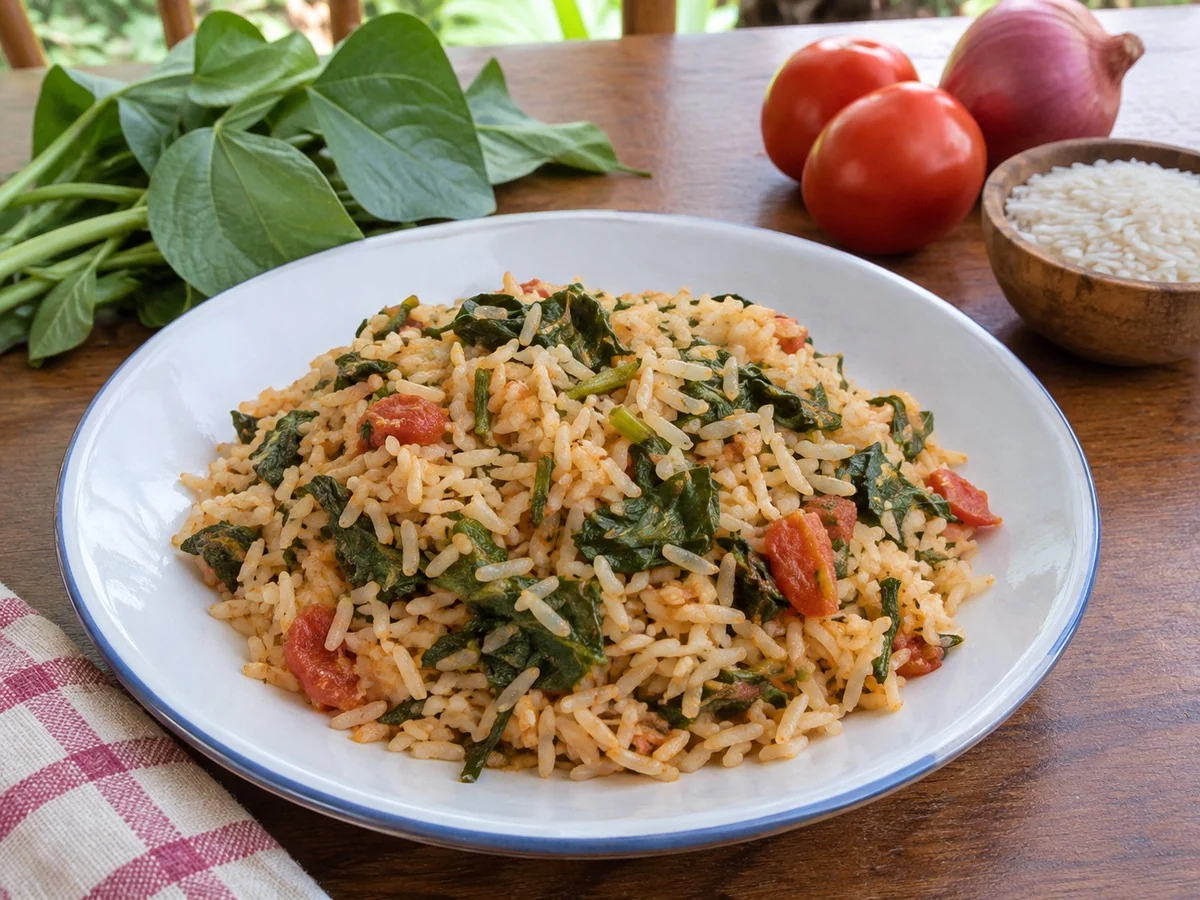
Rice with cowpea leaves cooks by absorption in a tomato and onion base. Soften the sliced leaves before adding the rice. The finished rice should fluff with a fork, with greens spread between the grains. The recipe serves four. It can accompany eggs or fish cooked separately, or form the base of a meal with vegetables. The water needed depends on the rice and the juice the tomato releases.
Ingredients
- 280 g dry long-grain rice
- 220 g edible cowpea leaves
- 100 g onion
- 150 g tomatoes
- ≤520 ml water
- 20 ml vegetable oil
- ≈2 g fine salt
Preparation
Heat the oil over medium heat. Soften the onion until it bends under the spoon, then add the diced tomato and juices. Stir until the tomato breaks down. If the base dries before the pieces soften, add a little measured water.
Add the leaves by handfuls, stirring between additions so they wilt without piling up. Cook until they reduce in volume. Check that a small stalk has begun to soften. If the leaves remain firm, cook a few more minutes before adding the rice, so it does not finish first.
Add the drained rice and stir once to distribute the greens. Add most of the water, allowing for the liquid left in the tomato base and reserving some to adjust. Salt lightly, bring to a simmer, cover and turn down the heat so the rice cooks without catching.
Near the end of the packet cooking time, taste a grain. If the water is absorbed and the centre is still firm, add a few spoonfuls of hot water and continue covered. If tender with liquid still visible, cook a little longer over low heat and turn off the heat. Rest covered for a few minutes to distribute the moisture.
Lift the grains with a fork without crushing the bottom. Check that the leaves are evenly spread. Serve on four plates and add accompaniments alongside. Offer extra sauce separately for diners who prefer drier rice.
Introduction
Ingredients and equipment
Weigh 280 g of dry long-grain rice, 220 g of edible cowpea leaves after trimming, 100 g of peeled onion and 150 g of tomatoes. Allow up to 520 ml of water, 20 ml of vegetable oil and about 2 g of fine salt to taste. Use a pot with a tight-fitting lid, colander, knife and fork. Allow fifteen minutes for preparing the vegetables and rice and about twenty-five for cooking, or longer for firm leaves. Use the packet’s water and timing as a starting point and adjust for moisture from the tomato and leaves.
Preparing the leaves
Remove thick stalks and coarse pieces before weighing. Keep the small tips that bend easily. Wash in several changes of water, lifting out the leaves to leave grit behind. Drain and cut into short strips. Long leaves can wrap around the grains and gather in one serving. Smaller pieces mix evenly. Rinse and drain the rice separately while slicing the onion and dicing the tomato. Save the tomato juice to account for it later.
Step-by-step preparation
1. Heat the oil over medium heat. Soften the onion until it bends under the spoon, then add the diced tomato and juices. Stir until the tomato breaks down. If the base dries before the pieces soften, add a little measured water.
2. Add the leaves by handfuls, stirring between additions so they wilt without piling up. Cook until they reduce in volume. Check that a small stalk has begun to soften. If the leaves remain firm, cook a few more minutes before adding the rice, so it does not finish first.
3. Add the drained rice and stir once to distribute the greens. Add most of the water, allowing for the liquid left in the tomato base and reserving some to adjust. Salt lightly, bring to a simmer, cover and turn down the heat so the rice cooks without catching.
4. Near the end of the packet cooking time, taste a grain. If the water is absorbed and the centre is still firm, add a few spoonfuls of hot water and continue covered. If tender with liquid still visible, cook a little longer over low heat and turn off the heat. Rest covered for a few minutes to distribute the moisture.
5. Lift the grains with a fork without crushing the bottom. Check that the leaves are evenly spread. Serve on four plates and add accompaniments alongside. Offer extra sauce separately for diners who prefer drier rice.
Adjusting the water
Treat the stated volume as a starting maximum. A juicy tomato or quickly drained leaves already contribute moisture. If changing rice, refer to the packet and account for the cooking base. A wide pot with a loose lid loses water faster, so check the level before the bottom dries. A narrow pot retains more moisture. Avoid constant stirring during cooking, as it can break the grains and release starch.
Serving and nutrition
Serve in bowls or spread over a shared plate. Offer eggs, fish or sauce separately. Rice provides mostly carbohydrates and the greens and tomato contribute fibre. The portions refer to the rice alone. For evenly sized portions, lift the mixture from several parts of the pan. If one portion has very few leaves, add a few spoonfuls from the edge. Note the rice variety and actual water used when comparing batches, since these explain much of the variation in texture.
Adjusting for batch size
For two, use a smaller pan so the rice and leaves cover the bottom without forming a very shallow layer. Less water does not shorten the time needed to cook the centre of the grains. For eight, use a wider pot or prepare two batches. A crowded pan makes it hard to tell whether the leaves have wilted enough. Leave wet leaves to drain while the rice rests in its colander. Once the leaves have softened, draw a channel across the base with the spoon. If it fills at once, count that liquid towards the rice. If it stays dry, start with the water for your variety and adjust once it simmers.
Cultural context
This home recipe uses the cowpea leaves also found in sesame dek boo. Here they cook with the rice, without a seed paste. The first volume’s rice with beans uses the seeds and serves the two components side by side. In this adaptation the leaves and rice share the cooking water. Let the vegetables release some moisture first so you can judge how much water to pour in. The quantities make four bowls.
Nutrition notes
Estimated nutrition per serving. Before adjustment for cooking losses · Calcium 160 mg · Iron 3.9 mg · Potassium 451 mg · Vitamin A 129 µg RAE · Vitamin C 44.6 mg