Goat stew with tomato and sesame
Goat with tomato and sesame starts as an onion and tomato stew. When the meat is tender, loosen tahini with some hot cooking liquid and stir it in over low heat. The sauce turns paler and coats the cubes. It should stay fluid enough to serve with boiled yam. The recipe makes four portions. Cooking time is approximate, since some cuts of goat take longer to soften.
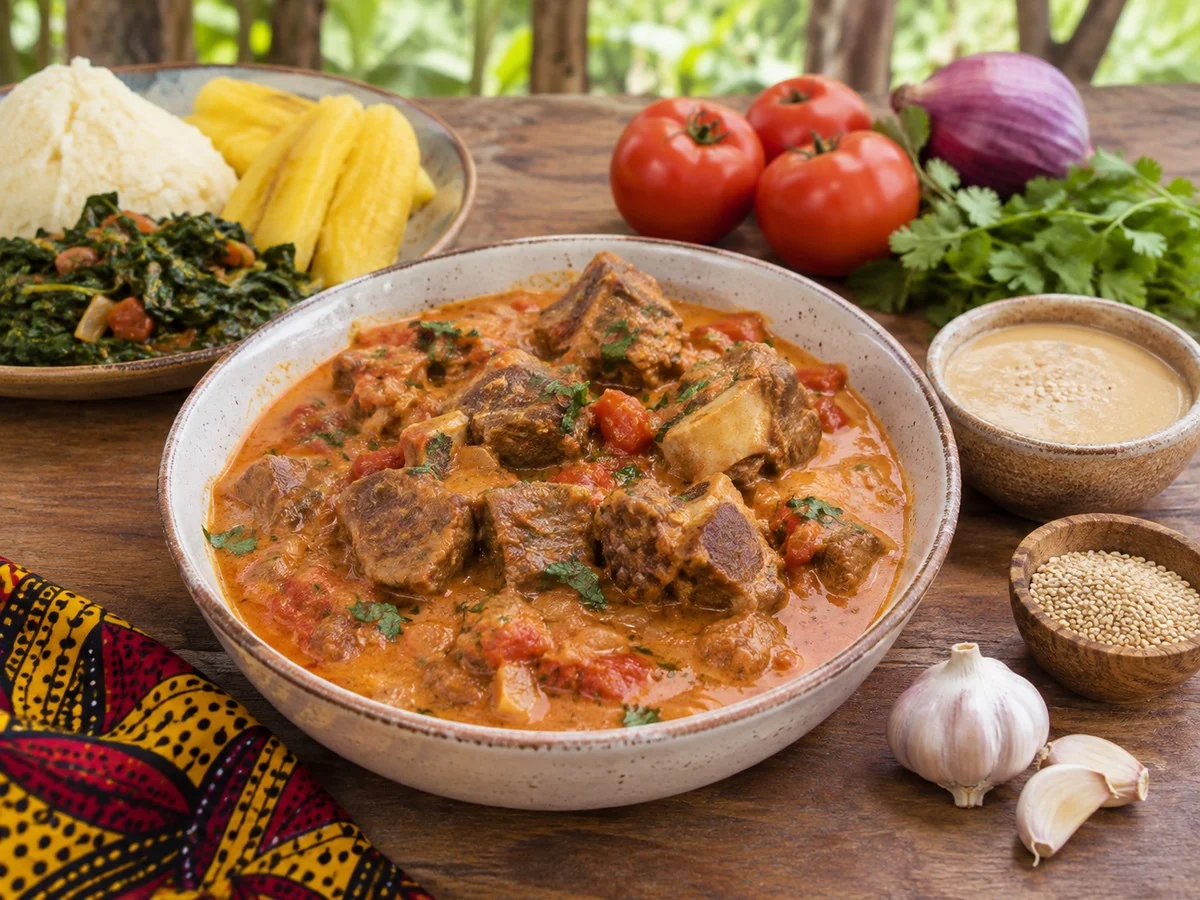
Ingredients
- 650 g stewing goat meat
- 80 g pure sesame paste
- 260 g tomatoes
- 120 g onion
- 450 ml water
- 20 ml vegetable oil
- fine salt
Preparation
Slice the onion and dice the tomatoes, keeping their juices. Prepare and pat the goat dry separately. Cut very thick pieces down where possible so they cook evenly. Avoid mixing tiny cubes with much larger pieces that need more time.
Heat some oil in the casserole and brown the pieces in batches with space between them. Turn when the first side releases. Transfer each batch to a plate. Add remaining oil to dry spots as needed. Aim for even colouring without taking the crust dark brown.
Soften the onions in the same casserole, then add the tomatoes and their juices. Scrape up the browned meat juices. Add a small amount of measured water if the base reduces too quickly. Once the tomatoes crush easily, return the goat and any juices from the plate. Add water to surround the pieces and keep the rest for adjustments.
Bring to a simmer, cover and turn down the heat. Cook gently until a fork goes into a thick piece easily. Check the liquid level as it simmers. If the meat is firm when the sauce has already reduced, add hot water and continue covered. Wait for the meat to soften before preparing the tahini.
Stir a small ladleful of hot cooking liquid into the tahini a spoonful at a time until smooth and pourable. If the pot still contains a lot of liquid, reduce a little uncovered while keeping enough for the sauce. Stir in the tahini gently over low heat. Taste and add salt. Take off the heat when the sauce coats the spatula but still flows.
Introduction
Ingredients and equipment
Use 650 g of stewing goat, 80 g of tahini, 260 g of ripe tomatoes, 120 g of peeled onion, 450 ml of water, 20 ml of vegetable oil and salt. Weigh the meat as it will be cooked. If using bone-in cuts, choose comparable pieces and note this because edible weights will differ. Stir the separated oil back into the tahini before weighing. Use a lidded casserole, small bowl, ladle and spatula. Allow twenty minutes to prepare and about an hour and forty minutes to cook, or longer if needed for tenderness.
Step-by-step preparation
1. Slice the onion and dice the tomatoes, keeping their juices. Prepare and pat the goat dry separately. Cut very thick pieces down where possible so they cook evenly. Avoid mixing tiny cubes with much larger pieces that need more time.
2. Heat some oil in the casserole and brown the pieces in batches with space between them. Turn when the first side releases. Transfer each batch to a plate. Add remaining oil to dry spots as needed. Aim for even colouring without taking the crust dark brown.
3. Soften the onions in the same casserole, then add the tomatoes and their juices. Scrape up the browned meat juices. Add a small amount of measured water if the base reduces too quickly. Once the tomatoes crush easily, return the goat and any juices from the plate. Add water to surround the pieces and keep the rest for adjustments.
4. Bring to a simmer, cover and turn down the heat. Cook gently until a fork goes into a thick piece easily. Check the liquid level as it simmers. If the meat is firm when the sauce has already reduced, add hot water and continue covered. Wait for the meat to soften before preparing the tahini.
5. Stir a small ladleful of hot cooking liquid into the tahini a spoonful at a time until smooth and pourable. If the pot still contains a lot of liquid, reduce a little uncovered while keeping enough for the sauce. Stir in the tahini gently over low heat. Taste and add salt. Take off the heat when the sauce coats the spatula but still flows.
Adjusting the simmer
A tougher cut generally needs more time and gentle heat. If the liquid drops fast, check the position of the lid before adding a lot of water. For a lighter sauce, add the loosened tahini in two stages and taste the meat with the first. Darker toasted paste can quickly become prominent. If using all the tahini, wait for the sauce to return to a gentle simmer before checking whether it needs loosening. Avoid prolonged reduction after adding it.
Serving with yam
Cook the yam separately and drain when a knife goes through a thick piece. Serve goat alongside with a little sauce around the meat. Offer sauce separately if you prefer plain yam. Goat contributes protein and tahini provides fat. This dish contains sesame. The portions are for the stew alone. Count yam and any bones separately from the edible meat served.
For four portions, distribute the goat first, sharing any bone-in pieces, then spoon a similar amount of sauce over each. Record how long the meat took to tenderise and how much water you used to reproduce the recipe with the same cut. For more sauce, add hot water before taking the casserole off the heat, then taste and adjust the salt.
Dividing a large casserole
For a double batch, allow more batches for browning and use a dish large enough to hold the meat while you work. A deep pan may need less than twice the water to surround it. Check the level and let it return to a simmer before topping up. Once the meat is tender, use a bowl large enough to loosen the tahini without spilling. Add it across several areas and stir until evenly distributed before plating. If the yam is ready first, keep it drained while finishing the sauce and plate it just before the meat.
Cultural context
This home version pairs the goat in the first volume with a sesame-thickened sauce. The earlier tomato stew has no sesame. Here the tahini goes in at the end, once the meat is tender and the consistency can be adjusted. The preceding beef with odii follows a similar sequence. Odii in this collection combines peanut and sesame, while this recipe uses pure sesame paste. The proportions and yam accompaniment are specific to this version.
Nutrition notes
Estimated nutrition per serving. Before adjustment for cooking losses · Calcium 216 mg · Iron 6.5 mg · Potassium 766 mg · Vitamin A 43 µg RAE · Vitamin C 21.5 mg