Beef stew with odii
Beef with odii simmers first in tomato and onion. A thinned paste of peanut and sesame goes in once the meat is tender. The paste gives the sauce a coating consistency without prolonged cooking at the bottom of the casserole. The dish makes four portions with plain kalo. A spoonful should hold a cube of meat and some sauce that still flows easily.
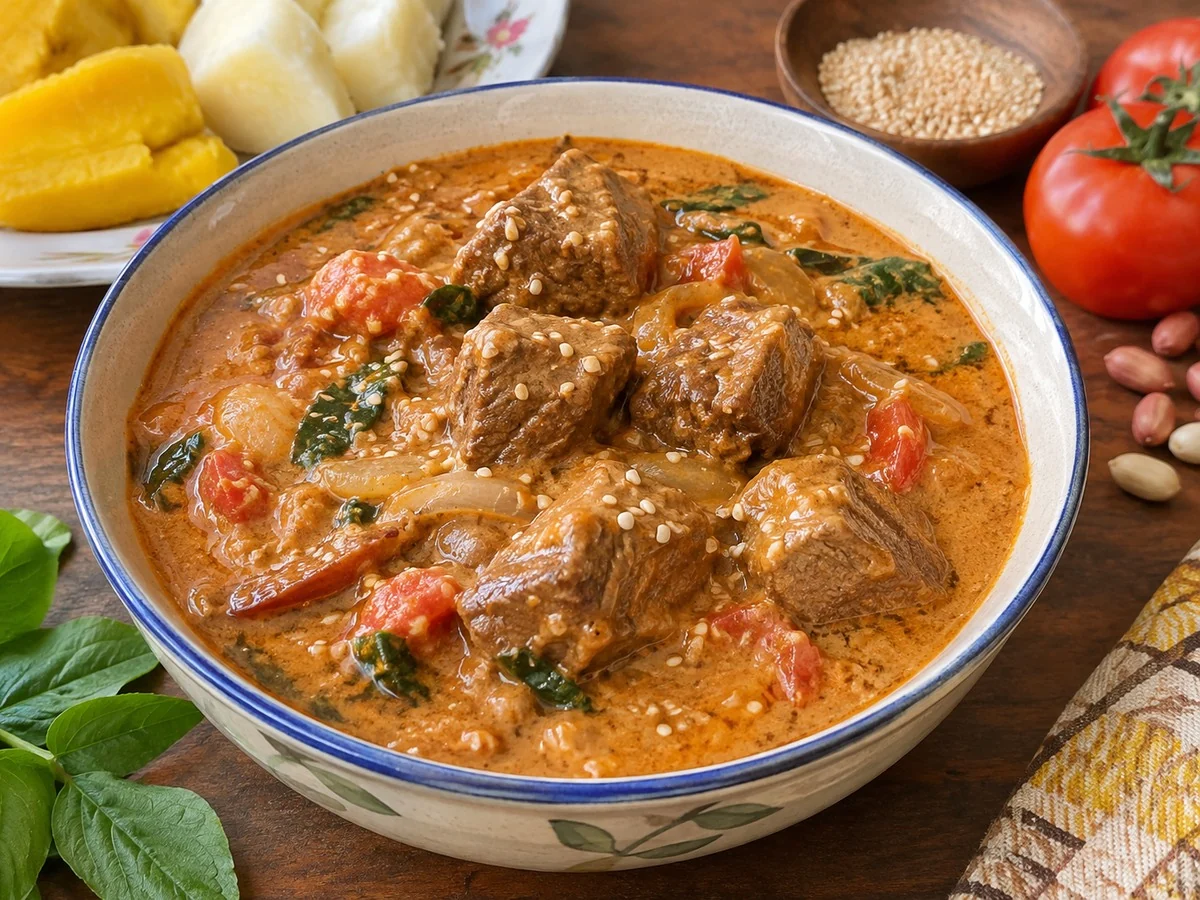
Ingredients
- 600 g stewing beef
- 90 g odii paste
- 150 g onion
- 300 g tomatoes
- 500 ml water
- 20 ml vegetable oil
- ≈2 g fine salt
Preparation
Slice the onion and dice the tomatoes, saving their juices. Pat the beef dry and cut into similar-sized cubes if needed. Heat some oil and brown the meat in batches with room between the pieces. Set aside each batch once coloured. Add a little measured oil if the pan dries.
Soften the onion in the same casserole, scraping up the browned juices. Add the tomatoes and cook until they crush easily. Add a spoonful of measured water if the base dries before the tomatoes are soft. Return the beef and any juices from the plate.
Add enough water to come almost to the level of the meat. Reserve the rest. Bring to a simmer, lower the heat and cover. Cook until a fork enters the largest cubes easily. Check the liquid level occasionally. Add hot water if the beef needs longer, and finish tenderising it before preparing the paste.
Once the meat is tender, stir the odii in its jar before weighing it into a bowl. Stir in some hot cooking liquid in small amounts until it pours without clumps. If the casserole still holds a lot of liquid, reduce it uncovered before pouring in the paste.
Stir in the loosened paste gently. Simmer over low heat until the sauce coats the meat, scraping the base regularly. Taste for salt after adding the odii. If too thick, stir in hot water and simmer briefly. Serve the beef cubes with a small ladleful of sauce.
Introduction
Ingredients and equipment
Use 600 g of stewing beef, 90 g of odii, 150 g of peeled onion, 300 g of ripe tomatoes, 500 ml of water, 20 ml of vegetable oil and about 2 g of salt to taste. Weigh the meat after trimming any thick parts you do not plan to cook. Chuck or shin works well. Use the odii from recipe 102 or a paste whose ingredients you know. Check salt and allergens before weighing. Use a heavy-based casserole, bowl for the paste and spatula that reaches the edges. Allow twenty minutes to prepare and about an hour and forty minutes to cook, with more time if the beef stays firm.
Step-by-step preparation
1. Slice the onion and dice the tomatoes, saving their juices. Pat the beef dry and cut into similar-sized cubes if needed. Heat some oil and brown the meat in batches with room between the pieces. Set aside each batch once coloured. Add a little measured oil if the pan dries.
2. Soften the onion in the same casserole, scraping up the browned juices. Add the tomatoes and cook until they crush easily. Add a spoonful of measured water if the base dries before the tomatoes are soft. Return the beef and any juices from the plate.
3. Add enough water to come almost to the level of the meat. Reserve the rest. Bring to a simmer, lower the heat and cover. Cook until a fork enters the largest cubes easily. Check the liquid level occasionally. Add hot water if the beef needs longer, and finish tenderising it before preparing the paste.
4. Once the meat is tender, stir the odii in its jar before weighing it into a bowl. Stir in some hot cooking liquid in small amounts until it pours without clumps. If the casserole still holds a lot of liquid, reduce it uncovered before pouring in the paste.
5. Stir in the loosened paste gently. Simmer over low heat until the sauce coats the meat, scraping the base regularly. Taste for salt after adding the odii. If too thick, stir in hot water and simmer briefly. Serve the beef cubes with a small ladleful of sauce.
Adjusting for the meat and paste
A cut rich in connective tissue can take longer. Use tenderness under a fork as your guide. Once the beef is tender, check the sauce volume before adding all the paste. For a lighter sauce, start with two-thirds of the loosened odii. Taste with a piece of beef and add the rest if you want more seed flavour. A concentrated paste thickens fast, particularly in a wide pan over high heat. Lower the heat before adding much water to adjust.
Serving and nutrition
Serve kalo on a separate plate or beside the beef. The meat provides protein and odii contributes fat. The paste in recipe 102 contains peanuts and sesame. Check the ingredients if using a different paste. For even servings, distribute the beef before adding the remaining sauce. Count the kalo separately.
Reading reference
Daily Monitor, What is the story behind the savory delight known as odii? https://www.monitor.co.ug/uganda/lifestyle/travel/what-is-the-story-behind-the-savory-delight-known-as-odii--4333888
Timing the simmer
You can start the kalo once the meat begins to soften. Check a large cube before finishing the starch. If the beef needs much longer, keep the odii in its bowl without adding liquid. Use hot sauce to loosen it once the meat is ready. For a large casserole, brown the beef in batches and note how many. Browning alone can account for a longer total time.
If the odii is grainy, crush the larger lumps in the bowl as you loosen it. A few visible grains are fine in a fluid sauce. If mostly oil shows on the surface after a few minutes, lower the heat, stir gently and taste before adding more paste. Divide the beef cubes first and then spoon over the sauce so all portions get similar amounts. Serve kalo alongside so people can take as much sauce as they like with each bite.
Cultural context
Odii appears in recipe 102 as a condiment and base for sauces. The Daily Monitor also describes its use with meat, fish and greens in northern Uganda. This home version uses a casserole. It differs from beef luwombo, steamed in leaves. Here the meat browns uncovered and then simmers covered. You can adjust the amount of sauce before adding the odii. Adapt the proportions to the cut of beef and consistency of the paste.
Nutrition notes
Estimated nutrition per serving. Before adjustment for cooking losses · Calcium 112 mg · Iron 5.8 mg · Potassium 820 mg · Vitamin A 42 µg RAE · Vitamin C 25.3 mg