Mukene in sesame sauce
Dried mukene cook in a tomato and onion sauce enriched with sesame paste. The fish should stay recognisable in the sauce. Loosen the paste separately before adding it, then thicken it over low heat. This lets you adjust the salt after tasting the fish in the sauce. The recipe makes four side portions. Serve with cooked sweet potato, which provides a slightly sweet base for tasting the sauce without extra seasoning.
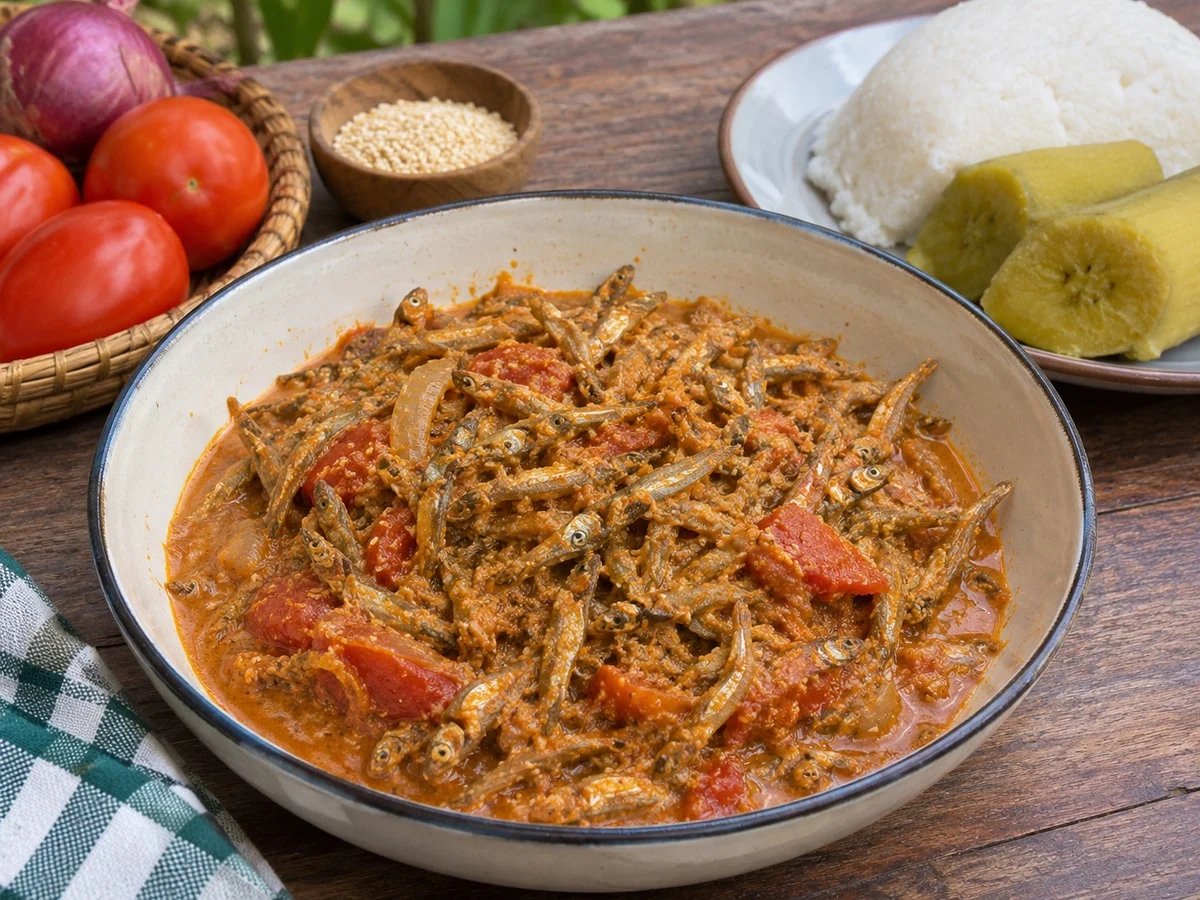
Ingredients
- 130 g food-grade dried mukene
- 70 g pure sesame paste
- 200 g tomatoes
- 100 g onion
- 300 ml water
- 15 ml vegetable oil
Preparation
Slice the onion and dice the tomatoes, saving their juices. Heat the oil and soften the onion over medium heat. Stir in the tomatoes until they start to collapse. If the base dries before they soften, add a spoonful of the measured water.
Add the drained fish and most of the water. Lift with the spatula to distribute the fish without breaking them. Bring back to a simmer for about ten minutes, or follow the packet instructions. Keep enough liquid to take some for the paste. If it reduces fast, partly cover or add reserved water.
Put the sesame paste in a bowl and add hot cooking liquid a little at a time. The paste may tighten with the first addition. Work it with the back of a spoon until it becomes pourable. If a spoonful contains lots of fish, draw liquid from the edge so you do not crush them when loosening the paste.
Pour the sesame cream into the pan in a thin stream. Lift the contents from the bottom to distribute it. Simmer gently for a few minutes, watching that it does not stick. Check that the fish are cooked through, then taste a spoonful with some fish and add salt only if needed.
Turn off the heat when the sauce coats a spoon without hiding the fish. If too dense, add a little hot water, return to a simmer and taste again. Divide the fish among four bowls, then add the sauce.
Introduction
Ingredients and equipment
For four portions, allow 130 g of edible dried mukene, 70 g of pure sesame paste, 200 g of tomatoes, 100 g of peeled onion, 300 ml of drinking water and 15 ml of vegetable oil. Keep a little salt aside if the fish are lightly salted. Use a fine colander, pale plate, heavy-based sauté pan and bowl for the sesame. Allow about fifteen minutes to prepare and twenty-five to cook, depending on the fish. Any rinsing water is separate from the 300 ml of cooking water. A fine mesh keeps the smallest fish from slipping through as they drain.
Preparing the fish
Spread the mukene on a pale plate, check them and pick out small debris. If the packet calls for rinsing, rinse briefly in the colander. Drain well without squeezing the fish. Discard any rinse or soaking water. Keep the fish away from vegetables prepared for serving. If oil has separated from the paste, stir it in before weighing. Otherwise the first spoonful may be oily and the next much thicker.
Step-by-step preparation
1. Slice the onion and dice the tomatoes, saving their juices. Heat the oil and soften the onion over medium heat. Stir in the tomatoes until they start to collapse. If the base dries before they soften, add a spoonful of the measured water.
2. Add the drained fish and most of the water. Lift with the spatula to distribute the fish without breaking them. Bring back to a simmer for about ten minutes, or follow the packet instructions. Keep enough liquid to take some for the paste. If it reduces fast, partly cover or add reserved water.
3. Put the sesame paste in a bowl and add hot cooking liquid a little at a time. The paste may tighten with the first addition. Work it with the back of a spoon until it becomes pourable. If a spoonful contains lots of fish, draw liquid from the edge so you do not crush them when loosening the paste.
4. Pour the sesame cream into the pan in a thin stream. Lift the contents from the bottom to distribute it. Simmer gently for a few minutes, watching that it does not stick. Check that the fish are cooked through, then taste a spoonful with some fish and add salt only if needed.
5. Turn off the heat when the sauce coats a spoon without hiding the fish. If too dense, add a little hot water, return to a simmer and taste again. Divide the fish among four bowls, then add the sauce.
Adjusting and serving
When there is a high proportion of fish to liquid, salt concentrates quickly. Taste before reducing substantially and dilute a little if necessary. If the sauce thickens while standing, stir gently and check how it falls from a spoon. It should still flow easily enough to serve with sweet potato. Vigorous stirring will not reverse a reduction and can break the fish.
Serve the cooked sweet potato in separate pieces. Mukene provide protein and sesame contributes fat. Both fish and sesame are allergens. The fish may contain small bones. Yield varies with initial draining and reduction. When comparing batches, record the total water used and how salty the fish were. The stated portions refer to the fish sauce alone.
Dividing the fish and sauce
Before taking the pan off the heat, look at how the fish are distributed. The smallest may gather near the sides and the sauce can be thicker in one part of the pan. Lift the mixture once with a spatula without crushing it. Ladle fish and sauce together from different parts of the pan so the last bowl does not get mostly sesame. If paste remains in a lump, crush it in a spoonful of liquid at the edge and stir it back in instead of stirring the whole pan hard.
Serve very tender sweet potato on a separate plate to keep the sauce fluid. For a larger batch, choose a pan wide enough to move the fish gently and add the water in stages. A double batch in a deep covered pan may lose less water than expected.
For serving, offer a pinch of fresh herbs separately if diners want to garnish their own portions.
Cultural context
Mukene already feature in the first volume in tomato sauce and fried. This recipe uses sesame as a different thickener. It also differs from the banana and mukene katogo, where the fish and matooke share the pan. Here the dried fish and sauce make a separate dish, served with a starch prepared apart. The amounts are for this home adaptation. Use dried mukene sold for eating and follow the directions for the product you buy.
Nutrition notes
Estimated nutrition per serving. Before adjustment for cooking losses · Calcium 779 mg · Iron 4.9 mg · Potassium 468 mg · Vitamin A 68 µg RAE · Vitamin C 16.8 mg