Fish in sesame sauce
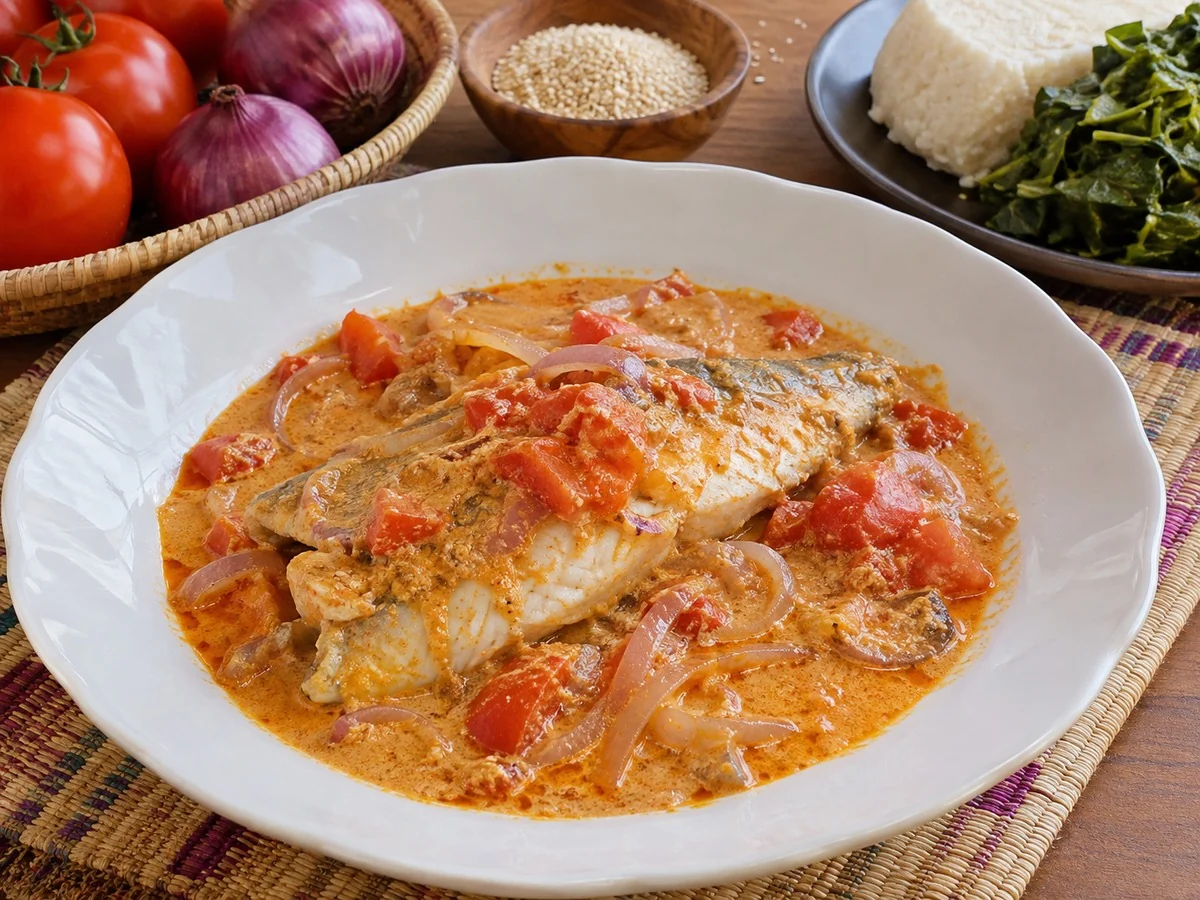
Firm white fish is paired with tomato sauce thickened with sesame. Loosen the paste before adding it so the sauce stays fluid while the fish cooks. Lay the fillets in one layer and cook without frequent turning. The sauce should coat the flesh when you lift it onto the plate. Make four portions with plain posho alongside. A piece of posho can scoop up the sauce so you can taste the fish and sesame separately.
Ingredients
- 600 g firm fish fillets
- 80 g pure sesame paste
- 250 g tomatoes
- 100 g onion
- 250 ml water
- 15 ml vegetable oil
- ≤2 g fine salt
Preparation
Slice the onion and dice the tomatoes, saving their juices. Check the fish separately for bones and keep the fillets chilled until needed. Use a pan that holds all four portions without overlap. If it is small, use two pans or divide the sauce between batches.
Heat the oil and soften the onion over medium heat. Add the tomatoes and juice. Stir until the flesh softens and crush the larger pieces against the base. Add some water and simmer a few minutes. Keep the rest for loosening the sesame and for adjustments.
Put the sesame paste into a small bowl. Gradually stir in reserved water. The paste may stiffen at first, then loosen as you add more. When it runs off the spoon, stir it into the tomato. Return to a light simmer and scrape the base to check that it is evenly mixed.
Lay the fillets in the sauce. Spoon a little sauce over the tops without moving them. Partly cover and maintain a gentle simmer. Start checking the thinner pieces first. FoodSafety.gov specifies 63 °C internally for fish fillets. Insert the probe into the thickest part and remove each fillet as it is ready.
Taste and adjust the salt. If the sauce is too thin, lift the cooked fish onto a clean plate, reduce briefly uncovered and spoon it over the fish at serving. If too thick, stir in a little hot water and check seasoning. Put one fillet on each plate and divide the sauce.
Introduction
Ingredients and equipment
Use 600 g of firm boneless white fish fillets, 80 g of pure sesame paste, 250 g of ripe tomatoes, 100 g of peeled onion, 250 ml of water, 15 ml of oil and up to 2 g of fine salt to taste. Choose similar-sized fillets, such as tilapia. Use a wide lidded sauté pan, a small bowl for the sesame, a flexible spatula and a food thermometer. Allow about twenty minutes to prepare and twenty-five to cook. With a range of thicknesses, take out thinner fillets when ready and let thicker ones finish.
Stir the sesame paste before weighing if the oil has risen. A spoonful from the top will otherwise be thinner than one from the bottom. When comparing batches, record whether the paste used pale or more heavily toasted seeds, as the flavour can change even at the same weight.
Step-by-step preparation
1. Slice the onion and dice the tomatoes, saving their juices. Check the fish separately for bones and keep the fillets chilled until needed. Use a pan that holds all four portions without overlap. If it is small, use two pans or divide the sauce between batches.
2. Heat the oil and soften the onion over medium heat. Add the tomatoes and juice. Stir until the flesh softens and crush the larger pieces against the base. Add some water and simmer a few minutes. Keep the rest for loosening the sesame and for adjustments.
3. Put the sesame paste into a small bowl. Gradually stir in reserved water. The paste may stiffen at first, then loosen as you add more. When it runs off the spoon, stir it into the tomato. Return to a light simmer and scrape the base to check that it is evenly mixed.
4. Lay the fillets in the sauce. Spoon a little sauce over the tops without moving them. Partly cover and maintain a gentle simmer. Start checking the thinner pieces first. FoodSafety.gov specifies 63 °C internally for fish fillets. Insert the probe into the thickest part and remove each fillet as it is ready.
5. Taste and adjust the salt. If the sauce is too thin, lift the cooked fish onto a clean plate, reduce briefly uncovered and spoon it over the fish at serving. If too thick, stir in a little hot water and check seasoning. Put one fillet on each plate and divide the sauce.
Adjusting the sauce
Check the sesame sauce both in the pan and on a bite of fish. A thick layer all over the fish can overwhelm it. One or two spoonfuls of hot water may be enough to restore a looser consistency. If it remains very thin, reduce the sauce before adding the fish next time. Avoid a long reduction with the fish in the pan. Serve the sauce hot, but repeated boiling makes the fillets more likely to flake apart.
Serving and nutrition
Offer posho separately. Set each fillet on a little sauce and spoon more around it. Fish supplies protein and sesame paste contributes fat. The recipe contains fish and sesame. To estimate each portion, record cooked fillet weight and divide the sauce into four similar amounts. Count posho and other accompaniments separately.
Cooking reference
FoodSafety.gov, Cook to a Safe Minimum Internal Temperature. https://www.foodsafety.gov/food-safety-charts/safe-minimum-internal-temperatures
Choosing the pan and dividing portions
Choose a pan that lets the sauce come halfway up the fish. In a wide pan, water evaporates faster and the sauce can catch before the fillets are ready. A narrow pan retains water better but may force the pieces to overlap. If so, prepare all the sauce first and divide it between two pans. Remove each fillet when ready. If the fish flakes while lifting, use a flat spatula and spoon sauce around the pieces on the plate. Stirring them back together in the pan would break them further.
For a lighter serving, spoon a little sauce around the posho first and bring the rest to the table. Sesame remains noticeable even when the fish is served almost plain. If the paste is salted, taste the sauce at the end of cooking before adding the measured salt. When noting quantities, record whether the sauce was split between pans, since this affects reduction.
Cultural context
This home adaptation draws on the seed sauces in the Ugandan collection. Sesame takes the place of the peanut used in several recipes in the first volume. Fresh fish poaches in the sauce, unlike the tilapia and okra luwombo cooked in banana leaf or the sesame mukene made with small dried fish. The fish and paste weights belong to this version. Fillet thickness affects cooking time and the choice of paste affects consistency.
Nutrition notes
Estimated nutrition per serving. Before adjustment for cooking losses · Calcium 334 mg · Iron 5.4 mg · Potassium 678 mg · Vitamin A 43 µg RAE · Vitamin C 20.2 mg