Tilapia and okra luwombo
Each tilapia fillet in this luwombo steams inside a banana leaf with a little tomato, onion and okra. The sauce stays in the parcel and thickens slightly with the okra. When opened, the fish should flake under a fork while keeping its shape on the plate. Add lemon at serving for acidity without wetting the leaves during assembly. The recipe serves four. Cook white rice separately and serve it alongside with some of the sauce from each parcel.
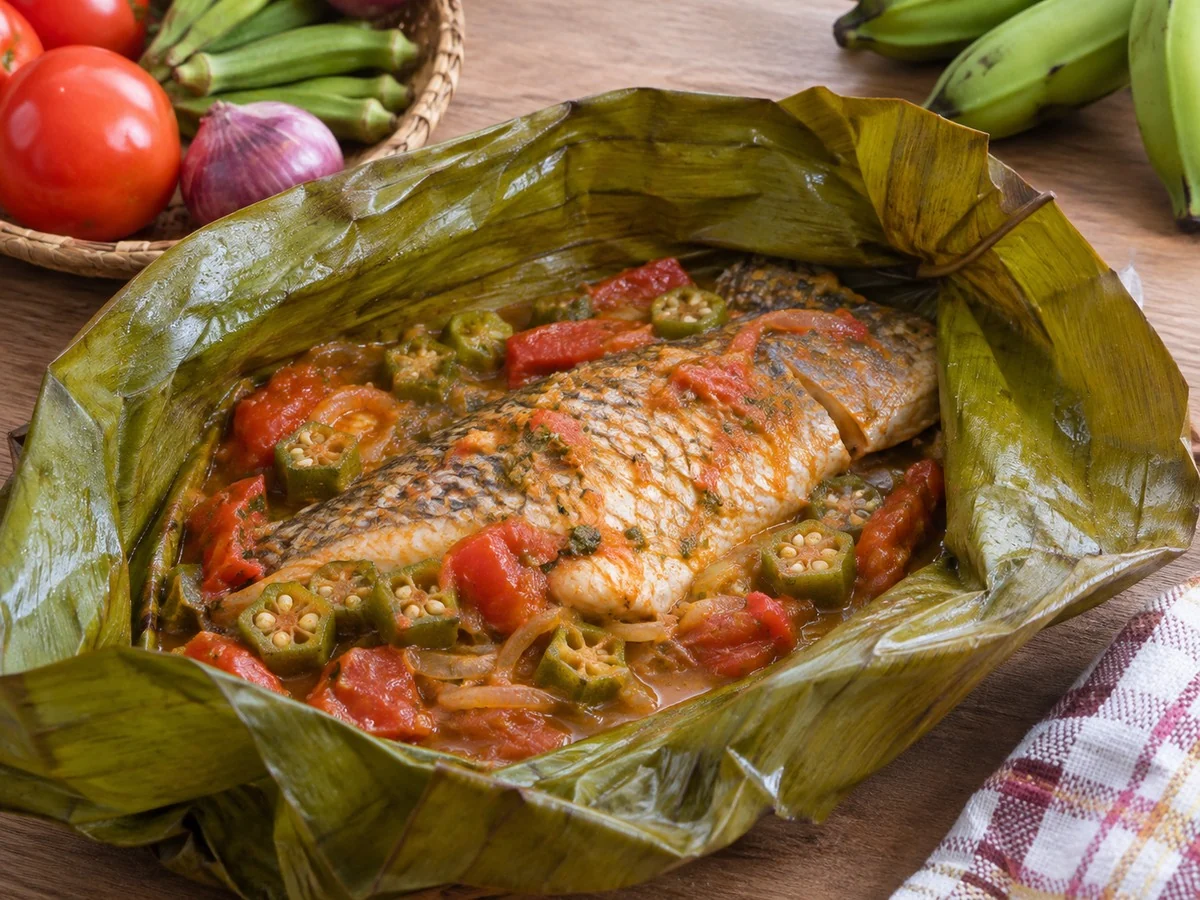
Ingredients
- 600 g boneless tilapia fillets
- 180 g okra
- 250 g tomatoes
- 80 g onion
- 15 ml lemon juice
- 4 food-grade banana leaves
- fine salt
Preparation
Rinse and dry the leaves and soften them briefly over gentle heat. Discard torn or punctured sections. If a thick rib prevents folding, cut a panel either side of it and overlap the two. Cut the strings before you handle the fish so all the equipment is ready.
Slice the onion, dice the tomatoes and cut the okra into rounds. Soften the onion with the tomatoes in their juices over medium heat, stirring. Add a spoonful of water if the tomatoes dry before softening. Once they crush under the spatula, add the okra and simmer for a few minutes until the sauce lightly coats the rounds. Reduce a thin sauce before filling the leaves. Salt lightly. Prepare the vegetables away from the raw fish and use a clean board for anything served uncooked.
Lay out the four leaves. Put a quarter of the tomato and okra mixture in each centre, leaving the edges clear. Feel the fillets for any remaining bones and put one portion on each bed of vegetables. Hold the lemon juice for serving.
Fold two sides of each leaf, then tuck in the ends to hold the sauce. Tie without cutting through the leaf and lift the parcel from below. If it leaks, wrap it in another panel with the fold in a different position.
Bring the water to a simmer and set the parcels seam side up in the basket above the water level. Cover and leave room for steam to circulate. Work in two batches if crowded. Start checking a thick fillet after about twenty minutes of steaming. Larger parcels may take longer.
Open one parcel carefully and check the thickest part of the fish. FoodSafety.gov specifies an internal temperature of 63 °C for fish fillets. If it has not reached that temperature, close the parcel and continue cooking. Check separately if the fillets differ in size. Transfer to deep plates when cooked and add lemon at the table.
Introduction
Ingredients and equipment
Allow 600 g of boneless tilapia fillets, 180 g of okra, 250 g of ripe tomatoes, 80 g of peeled onion, 15 ml of lemon juice, salt and four large food-grade banana leaves. Have kitchen string and water for steaming. Use a heavy-based sauté pan, a steamer, four deep plates and a food thermometer. Allow about twenty minutes of preparation and thirty-five for the base and steaming, adjusting for fillet thickness and equipment.
Weigh the fish once deboned and divide into four portions of similar thickness. Fold a long fillet slightly at its thin end if needed, keeping fillets in separate layers. Choose tender okra and weigh it after trimming. Keep sturdy leaf offcuts to reinforce bases that split during folding.
Preparing the base
Rinse and dry the leaves and soften them briefly over gentle heat. Discard torn or punctured sections. If a thick rib prevents folding, cut a panel either side of it and overlap the two. Cut the strings before you handle the fish so all the equipment is ready.
Slice the onion, dice the tomatoes and cut the okra into rounds. Soften the onion with the tomatoes in their juices over medium heat, stirring. Add a spoonful of water if the tomatoes dry before softening. Once they crush under the spatula, add the okra and simmer for a few minutes until the sauce lightly coats the rounds. Reduce a thin sauce before filling the leaves. Salt lightly. Prepare the vegetables away from the raw fish and use a clean board for anything served uncooked.
Assembling and steaming the parcels
1. Lay out the four leaves. Put a quarter of the tomato and okra mixture in each centre, leaving the edges clear. Feel the fillets for any remaining bones and put one portion on each bed of vegetables. Hold the lemon juice for serving.
2. Fold two sides of each leaf, then tuck in the ends to hold the sauce. Tie without cutting through the leaf and lift the parcel from below. If it leaks, wrap it in another panel with the fold in a different position.
3. Bring the water to a simmer and set the parcels seam side up in the basket above the water level. Cover and leave room for steam to circulate. Work in two batches if crowded. Start checking a thick fillet after about twenty minutes of steaming. Larger parcels may take longer.
4. Open one parcel carefully and check the thickest part of the fish. FoodSafety.gov specifies an internal temperature of 63 °C for fish fillets. If it has not reached that temperature, close the parcel and continue cooking. Check separately if the fillets differ in size. Transfer to deep plates when cooked and add lemon at the table.
Adjusting and serving
If the sauce runs off the leaf as you fill it, reduce further in the pan before continuing. The okra may thicken the juices a little more as it cooks. Open parcels in the plates to catch the sauce. Serve in the opened leaves or lift the fish with a wide spatula. Separately cooked white rice absorbs some sauce. This dish contains fish, which contributes protein. The quantities are for the parcels alone and exclude the rice. Divide the cooking juices along with the vegetables so each serving gets its seasoning.
Cooking reference
FoodSafety.gov, Cook to a Safe Minimum Internal Temperature. https://www.foodsafety.gov/food-safety-charts/safe-minimum-internal-temperatures
Organising the parcels and steamer
Test an empty parcel in the basket before filling them all. It shows how much room the others have and whether the folds will touch the lid. The fish should stay in contact with the vegetables. A deep fold helps hold the sauce. If the top is too tight, the steam released on opening makes checking awkward. Leave enough loose leaf to grasp the fold with tongs. Set the parcel on a plate to check the fish without losing sauce into the pot, then return it only if it needs longer.
Taste the juices before adding lemon. Tart tomatoes may need less than the stated amount, so offer the rest at the table. If serving rice with sauce, put the fish alongside so people can taste the flesh before breaking it into the rice.
Cultural context
The collection already includes fish luwombo with peanuts and vegetable parcels. This version uses okra in a tomato base that receives the raw fish just before steaming. The sauce is lighter and the okra rounds stay visible. The choice of tilapia, proportions and seasoning are specific to this adaptation. Judge reduction separately from the doneness of the fish. Briefly cook the sauce so it sits on the leaf. The fish then cooks entirely in the steamer.
Nutrition notes
Estimated nutrition per serving. Before adjustment for cooking losses · Calcium 217 mg · Iron 3.5 mg · Potassium 755 mg · Vitamin A 62 µg RAE · Vitamin C 33.7 mg