Sweet potato and sesame luwombo
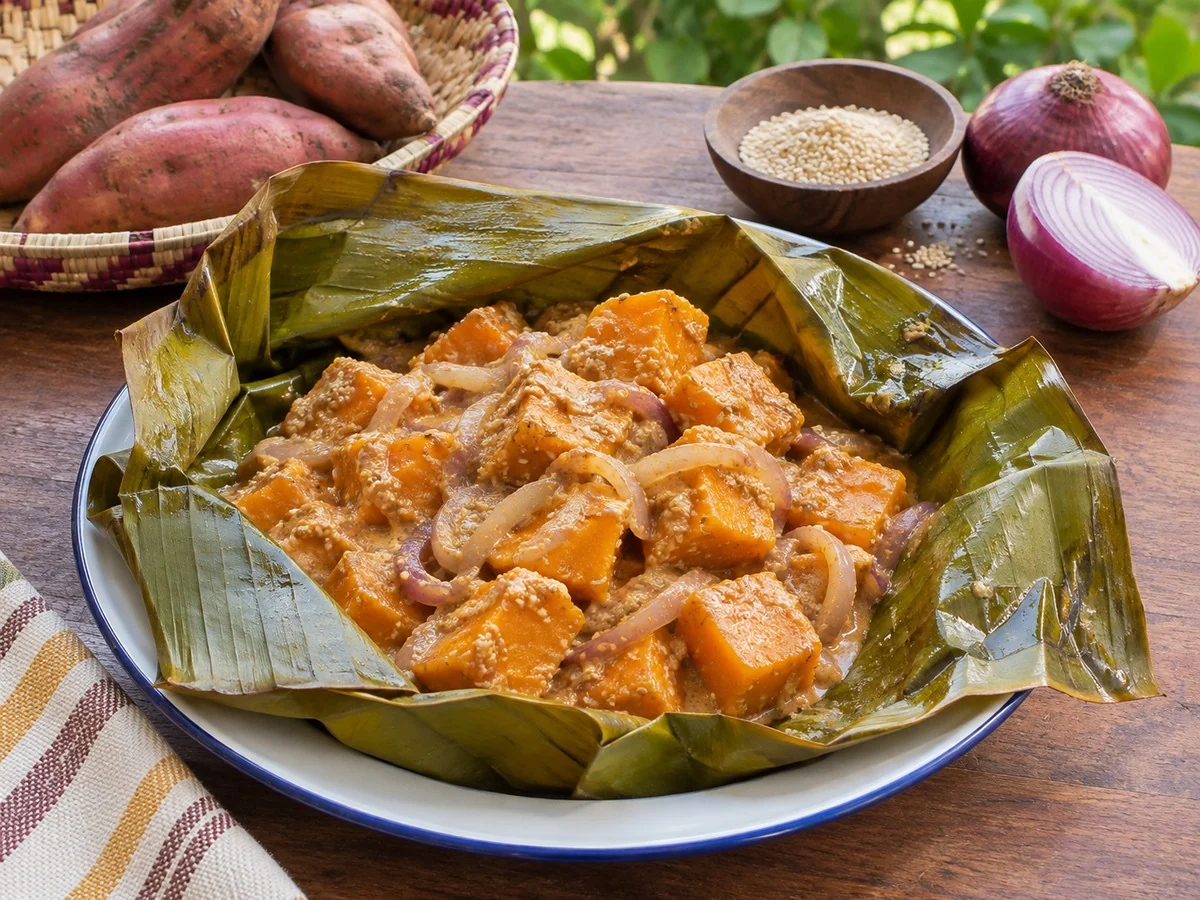
In this luwombo, small cubes of sweet potato cook in banana leaves with finely sliced onion and sesame sauce. Steam softens the cubes and holds the juices inside the parcel. On opening, the sauce should coat the cubes when spooned over them. A very thick paste can settle on the bottom, while too much liquid makes the leaf difficult to fold. The recipe makes four parcels, one per person. Serve slightly bitter greens alongside to balance the sweet potato.
Ingredients
- 650 g peeled sweet potato
- 70 g pure sesame paste
- 100 g onion
- 180 ml water
- 4 food-grade banana leaves
- ≈2 g fine salt
Preparation
Put the sesame paste in a bowl. Stir in a little of the 180 ml water. The paste may stiffen at first. Gradually add the rest until the cream runs off the back of a spoon. Stir in some salt and taste.
Put the sweet potato and onion in the large bowl. Add the sauce and toss gently to coat. Wait briefly to see how much liquid settles. If a lot remains, lift the cubes with a spoon first and add only the sauce that each leaf can hold.
Divide the filling among the leaf centres. Fold two sides one over the other, then turn in the ends. Tie without cutting the leaf with the string. Lift each parcel from the base and check for leaks. Reinforce with another panel if needed.
Heat the steamer water and put the parcels in seam side up, with their bases above the water. Cover and keep a steady simmer. If steam drops, check the water level and add hot water if needed. At forty to forty-five minutes, partly open one parcel and pierce a large cube. If the centre is still firm, close and cook until tender.
Lift the four parcels by their bases and set them in shallow bowls. Open the leaves carefully, letting steam escape away from your face. Stir once if sauce has settled in the bottom. Serve in the open parcels or transfer the cubes and sauce to the bowls.
Introduction
Ingredients and equipment
Use 650 g of peeled sweet potato, 70 g of pure sesame paste, 100 g of peeled onion, 180 ml of water for the sauce, about 2 g of fine salt and four large food-grade banana leaves. Allow separate water for the steamer and have kitchen string ready. Orange-fleshed sweet potato gives the result in the illustration. Other edible varieties work if you adjust timing to their firmness. Use a mixing bowl, small bowl for the paste, board, knife and pot with a steamer basket. Allow about twenty-five minutes to prepare and forty-five minutes of steaming from when the water simmers. Larger cubes or a full basket may take longer.
Preparing the vegetables and leaves
Peel and cut the sweet potato into cubes about two centimetres across, keeping thickness even. Cut long ends separately to avoid collecting large pieces in one parcel. Slice the onion finely so it blends into the sauce. Stir the sesame paste before weighing. If oil has separated, mix it back in with a spoon.
Rinse and dry the leaves and remove torn or dry sections. Soften each over gentle heat until it bends readily. If the middle rib is too thick to fold, cut around it and overlap two panels well. Save sturdy trimmings to reinforce parcel bases. Lay out all four leaves before mixing the sauce so you can portion the filling as soon as it is ready.
Step-by-step preparation
1. Put the sesame paste in a bowl. Stir in a little of the 180 ml water. The paste may stiffen at first. Gradually add the rest until the cream runs off the back of a spoon. Stir in some salt and taste.
2. Put the sweet potato and onion in the large bowl. Add the sauce and toss gently to coat. Wait briefly to see how much liquid settles. If a lot remains, lift the cubes with a spoon first and add only the sauce that each leaf can hold.
3. Divide the filling among the leaf centres. Fold two sides one over the other, then turn in the ends. Tie without cutting the leaf with the string. Lift each parcel from the base and check for leaks. Reinforce with another panel if needed.
4. Heat the steamer water and put the parcels in seam side up, with their bases above the water. Cover and keep a steady simmer. If steam drops, check the water level and add hot water if needed. At forty to forty-five minutes, partly open one parcel and pierce a large cube. If the centre is still firm, close and cook until tender.
5. Lift the four parcels by their bases and set them in shallow bowls. Open the leaves carefully, letting steam escape away from your face. Stir once if sauce has settled in the bottom. Serve in the open parcels or transfer the cubes and sauce to the bowls.
Adjusting the sauce and serving
If the sesame paste is thick, loosen it separately before adding it to the cubes so you can check the consistency before folding. A sauce that runs straight out of the wrapper needs a better seal and slightly less liquid in each parcel. Use two batches if the basket is small. Keep cube size the same so the same cooking time applies.
Serve with sautéed or slightly bitter greens. Offer the sauce separately if everyone wants to choose the amount. Sweet potato mainly provides carbohydrates and the paste contributes fat. This dish contains sesame. The served weight depends on how much sauce is left in the wrapper. Exclude the banana leaves when weighing portions and track any side vegetables separately.
Dividing cubes before steaming
Spread the largest cubes among the parcels rather than putting them all together, so one parcel does not fall behind. To check doneness, open one with a thick cube and pierce it through the centre. A soft surface can hide a firm centre. If the four portions must wait for a moment, keep the leaves closed on the plates and remove the string at the table. This preserves heat without prolonging cooking in the steamer.
Cultural context
This home adaptation follows the Ugandan collection’s luwombo method, enclosing the ingredients in leaves to steam. Sweet potato and sesame give it a different texture and seasoning from the vegetable parcels with peanuts. Measure the same amount of root and sauce into each parcel so all four cook at the same rate. The leaves serve as a wrapper and presentation and are removed before eating.
Nutrition notes
Estimated nutrition per serving. Before adjustment for cooking losses · Calcium 230 mg · Iron 3.6 mg · Potassium 589 mg · Vitamin A 1286 µg RAE · Vitamin C 53.1 mg