Cassava and fish croquettes
These croquettes combine cooked cassava and cooked white fish, bound with egg and coated in maize flour. The outside browns in a pan while flakes of fish remain visible in the centre. Twelve small pieces give three per person. Tender, drained cassava makes them easier to shape. The croquettes are thin enough to turn in a shallow pan. Serve fresh tomato and lime alongside to keep their juices off the crust.
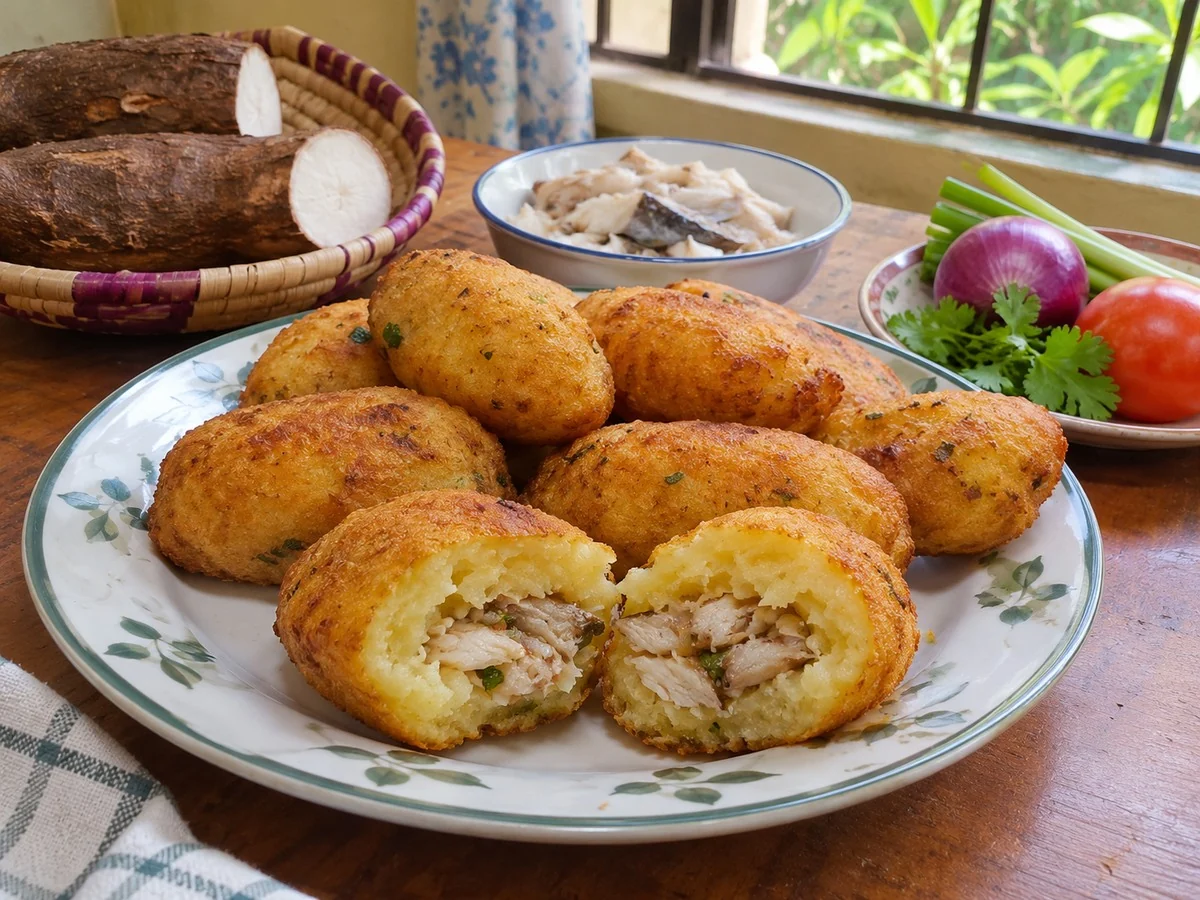
Ingredients
- 500 g properly prepared and fully cooked cassava
- 250 g fully cooked, boneless white fish
- 1 egg
- 60 g fine maize flour
- 25 ml vegetable oil
- ≈2 g fine salt
Preparation
Check the cooked cassava pieces and remove visible fibres. Crush the flesh while it still yields under a fork. If very firm, use a masher before adding the fish. Wait before adding any liquid.
Flake the fish with two forks and check again for bones. Keep a few medium flakes for texture. Mix with cassava and salt. Beat the egg separately, then stir it in just enough to bind the mixture.
Make twelve small, slightly flattened oval croquettes. Put the maize flour on a plate. Roll each piece in it and shake off the excess. A thin coating is enough. Leave them on a dry plate until cooking.
Heat some of the oil over medium heat. Add a few croquettes with space between them. When the first side is golden and releases, turn with the spatula. Brown the second side and make sure the centre is hot. If using leftovers, the FDA’s reheating guide specifies an internal temperature of 74 °C.
Move the croquettes to the rack and work in batches. Divide the oil so the pan keeps a thin coating. Remove any flour that accumulates and browns before continuing. Serve with tomato and lime wedges.
Introduction
Ingredients and equipment
For four portions, use 500 g of properly prepared and fully cooked edible cassava, 250 g of fully cooked boneless white fish, one medium egg, 60 g of maize flour, 25 ml of vegetable oil and about 2 g of fine salt. Weigh the cassava after draining and removing fibres and the fish after removing bones. Use cassava that has already been prepared and cooked according to the supplier’s directions. Pan-frying the formed croquettes is insufficient to prepare an unknown raw root. Allow about twenty-five minutes to prepare and twenty to brown them in small batches.
Use a shallow dish for the coating, a fork, mixing bowl, thin spatula and wide, flat-based pan. Have a rack or plate ready to hold the croquettes in one layer. Use scales to divide the mixture, or divide it into four portions and then split each into three. Croquettes of similar size are more likely to finish together.
Step-by-step preparation
1. Check the cooked cassava pieces and remove visible fibres. Crush the flesh while it still yields under a fork. If very firm, use a masher before adding the fish. Wait before adding any liquid.
2. Flake the fish with two forks and check again for bones. Keep a few medium flakes for texture. Mix with cassava and salt. Beat the egg separately, then stir it in just enough to bind the mixture.
3. Make twelve small, slightly flattened oval croquettes. Put the maize flour on a plate. Roll each piece in it and shake off the excess. A thin coating is enough. Leave them on a dry plate until cooking.
4. Heat some of the oil over medium heat. Add a few croquettes with space between them. When the first side is golden and releases, turn with the spatula. Brown the second side and make sure the centre is hot. If using leftovers, the FDA’s reheating guide specifies an internal temperature of 74 °C.
5. Move the croquettes to the rack and work in batches. Divide the oil so the pan keeps a thin coating. Remove any flour that accumulates and browns before continuing. Serve with tomato and lime wedges.
Adjusting the shape
A mixture that splits may contain too many fibres or oversized flakes of fish. Remove the fibres and mash a little more before adding flour. If the croquettes deform when you lift them, make smaller, flatter pieces. A thick one can brown before the centre is hot. Start with one test piece. If it opens when turned, let the crust set longer before sliding the spatula underneath. Adjust the thickness of the next pieces based on that batch.
Serving and nutrition
Serve three croquettes per person. If the tomatoes are especially juicy, cut them just before serving and put them alongside the lime wedges. Cassava supplies carbohydrates and fish contributes protein. The recipe contains fish and egg. To compare batches, record the boneless fish weight, the number of croquettes and the oil left in the pan. Tomato and lime are additional to the quantities in the recipe.
If serving in stages, bring the first batch to the table as soon as it is ready. Keep the tomato in a separate bowl so people can add lime or vegetables without wetting the croquettes waiting to be served.
Preparation references
Food Standards Australia New Zealand, Cassava and bamboo shoots. https://www.foodstandards.gov.au/consumer/prevention-of-foodborne-illness/cassava
FDA, Safe Food Handling. https://www.fda.gov/food/buy-store-serve-safe-food/safe-food-handling
Adjusting the coating
Add flour to the coating dish in small amounts. Coat both broad sides first, then turn the croquette to cover the edges. Thick patches left after shaking suggest that the outside is too damp. Check for pooled liquid in the mixing bowl and coat only once. A double coating can overpower the texture of the cassava. Avoid adding flour once a croquette is in the pan, as it will fall into the oil instead of coating evenly. While draining, keep the most golden side up to let steam escape.
Cultural context
This home recipe brings together two ingredients already in the Ugandan collection. Cassava forms the dough and flaked fish is folded in. The fried cassava recipe uses intact sticks, while the fried tilapia is a whole fish. These croquettes use ingredients that are already cooked, and maize flour gives them a thin crust. Portions saved from an earlier meal can be used if they were stored properly.
Nutrition notes
Estimated nutrition per serving. Before adjustment for cooking losses · Calcium 126 mg · Iron 3.5 mg · Potassium 399 mg · Vitamin A 24 µg RAE · Vitamin C 22.8 mg