Tilapia chapati roll
Tilapia chapati wraps are filled with pan-fried fish, thinly sliced cabbage and fresh tomato. Lime goes in at the last moment. The warm fish meets crisp, cool vegetables. For a wrap you can hold easily, check for bones, drain the tomato and arrange the filling in a narrow strip. The recipe makes four portions using cooked chapatis warmed briefly to restore their flexibility.
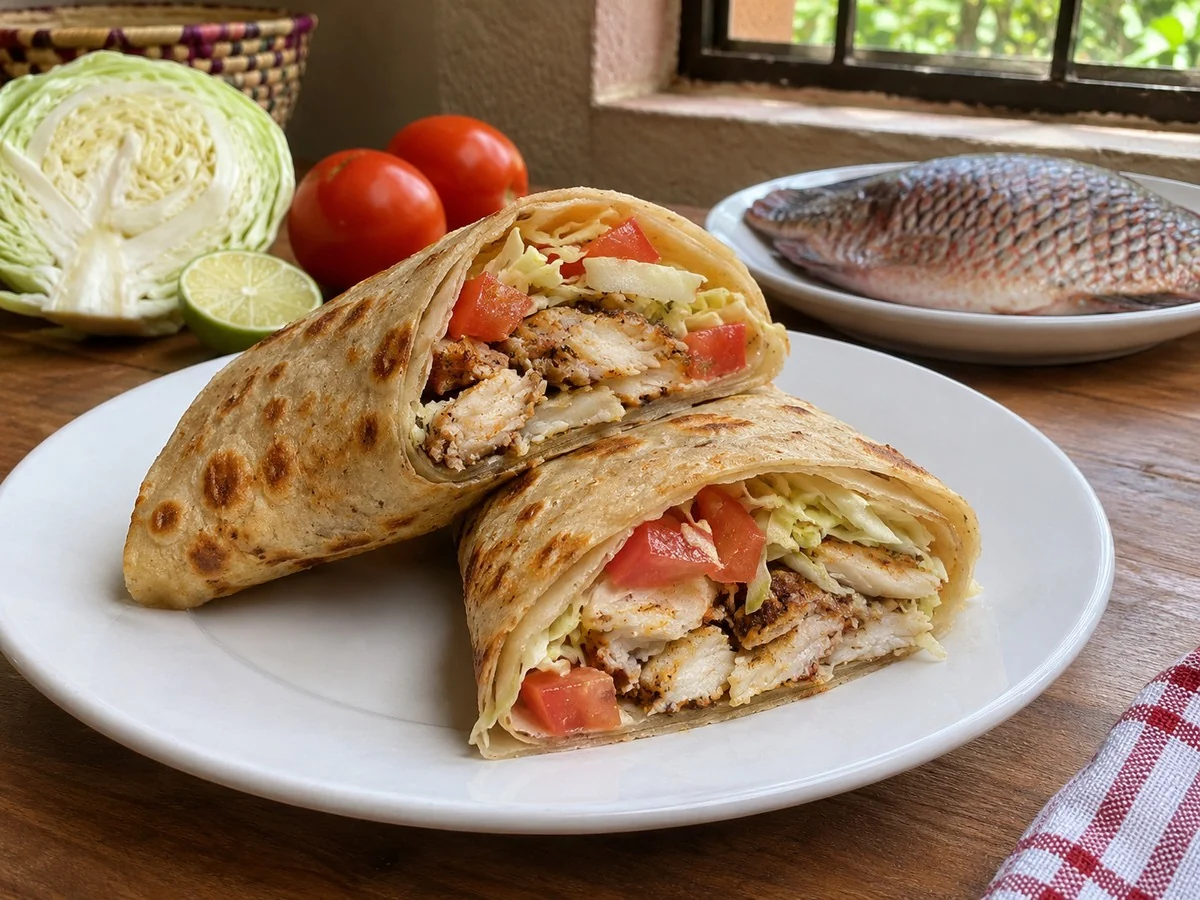
Ingredients
- 4 cooked chapatis
- 420 g boneless tilapia fillets
- 120 g trimmed cabbage
- 100 g tomatoes
- 20 ml vegetable oil
- 1 lime
- ≈2 g fine salt
Preparation
Prepare the vegetables first on a clean board. Remove thick cabbage ribs and slice the leaves into short thin ribbons. Wash and finely dice the tomato. Drain it in a colander and set the lime aside. Keep prepared raw vegetables away from raw fish and the equipment used for it.
Run your fingers over the fillets to find and remove any bones. Pat the fish dry and season lightly. Heat the oil over medium heat. Add the fish in a single layer, with room for the spatula under each fillet. Use two batches if the pan is small.
Cook until the first side holds together when lifted. Turn with a wide spatula and cook through. FoodSafety.gov lists an internal temperature of 63 °C for tilapia. Check the thickest part. Transfer to a clean plate, flake with a fork and check again for any small bones.
Warm the chapatis in a dry pan until they fold without cracking. Lay one flat and arrange a quarter of the cabbage, drained tomato and fish in a strip slightly towards you. Leave room at each end. Add a few drops of lime to the fish itself.
Fold in the sides and start rolling from the edge nearest the filling. Use your fingers to keep the filling together. Put the wrap seam side down and repeat. Serve immediately. To cut in two, use a sharp blade and lay the halves so the filling shows.
Introduction
Ingredients and equipment
Use four cooked chapatis, 420 g of boneless tilapia fillets, 120 g of trimmed cabbage, 100 g of tomato, 20 ml of vegetable oil, a lime and about 2 g of fine salt to taste. Use a pan, wide spatula, colander, clean plate for cooked fish and board for the vegetables and assembly. A food thermometer helps check doneness. Allow about twenty minutes for preparation and fifteen to cook the fish and warm the breads. Thick fillets or two batches may take longer.
Choose fillets of similar size where possible. Even if sold boneless, check before and after cooking. Break the cooked flesh into larger chunks or small flakes to match the bread. Use a firm tomato that will slice without collapsing and freshen the wrap without adding a sauce.
Step-by-step preparation
1. Prepare the vegetables first on a clean board. Remove thick cabbage ribs and slice the leaves into short thin ribbons. Wash and finely dice the tomato. Drain it in a colander and set the lime aside. Keep prepared raw vegetables away from raw fish and the equipment used for it.
2. Run your fingers over the fillets to find and remove any bones. Pat the fish dry and season lightly. Heat the oil over medium heat. Add the fish in a single layer, with room for the spatula under each fillet. Use two batches if the pan is small.
3. Cook until the first side holds together when lifted. Turn with a wide spatula and cook through. FoodSafety.gov lists an internal temperature of 63 °C for tilapia. Check the thickest part. Transfer to a clean plate, flake with a fork and check again for any small bones.
4. Warm the chapatis in a dry pan until they fold without cracking. Lay one flat and arrange a quarter of the cabbage, drained tomato and fish in a strip slightly towards you. Leave room at each end. Add a few drops of lime to the fish itself.
5. Fold in the sides and start rolling from the edge nearest the filling. Use your fingers to keep the filling together. Put the wrap seam side down and repeat. Serve immediately. To cut in two, use a sharp blade and lay the halves so the filling shows.
Adjusting the assembly
If the bread cracks as you fold, warm it a little more. If tomato still wets the board after draining, transfer the pieces with a spoon and leave the juice behind. If the filling is too bulky, serve some on the plate instead of squeezing it into the bread. Watch thin fillets individually and remove them as they finish. Warm chapatis just before filling and keep the wraps in one layer so later ones do not crush the first.
Serving and nutrition
Serve whole to eat by hand, or in halves, with extra lime and raw vegetables alongside. Fish supplies protein and bread supplies some of the carbohydrates. This dish contains fish and wheat. Oil absorption depends on the size of the pan and number of batches. The four portions refer to the wraps and exclude extra vegetables. For evenly weighed servings, divide the cooked fish before assembling, then do the same with the cabbage and tomato.
For service in two rounds, leave the drained tomato and breads apart until assembly. Offer lime wedges in a dish so each person can season the fish without wetting the other portions.
Cooking reference
FoodSafety.gov, Safe Minimum Internal Temperature Chart. https://www.foodsafety.gov/food-safety-charts/safe-minimum-internal-temperatures
Adjusting filling thickness
A fillet in broad flakes can make a lumpier roll than finely flaked fish. Use two forks to separate pieces of similar size without crushing them. Lay a short layer over the cabbage, then fit the tomato into the gaps. Trim any cabbage ribbons that stick out before folding. For a small chapati, leave more room at the ends and serve excess vegetables as salad. The bread can then cover the filling without pulling at the seam. Add lime after tasting a first piece of fish.
Cultural context
This home recipe combines two elements already in the Ugandan collection, chapati and tilapia. The grilled and fried tilapia in the first volume are served whole. Here, pan-fried fillets are broken into pieces to distribute through the bread. The technique is a rolled chapati without an omelette filling. The cabbage stays raw, unlike in the bean chapati, so slice it finely enough for easy folding. The proportions are specific to this adaptation.
Nutrition notes
Estimated nutrition per serving. Before adjustment for cooking losses · Calcium 145 mg · Iron 3.9 mg · Potassium 530 mg · Vitamin A 22 µg RAE · Vitamin C 26.0 mg