Chapati roll with beans and cabbage
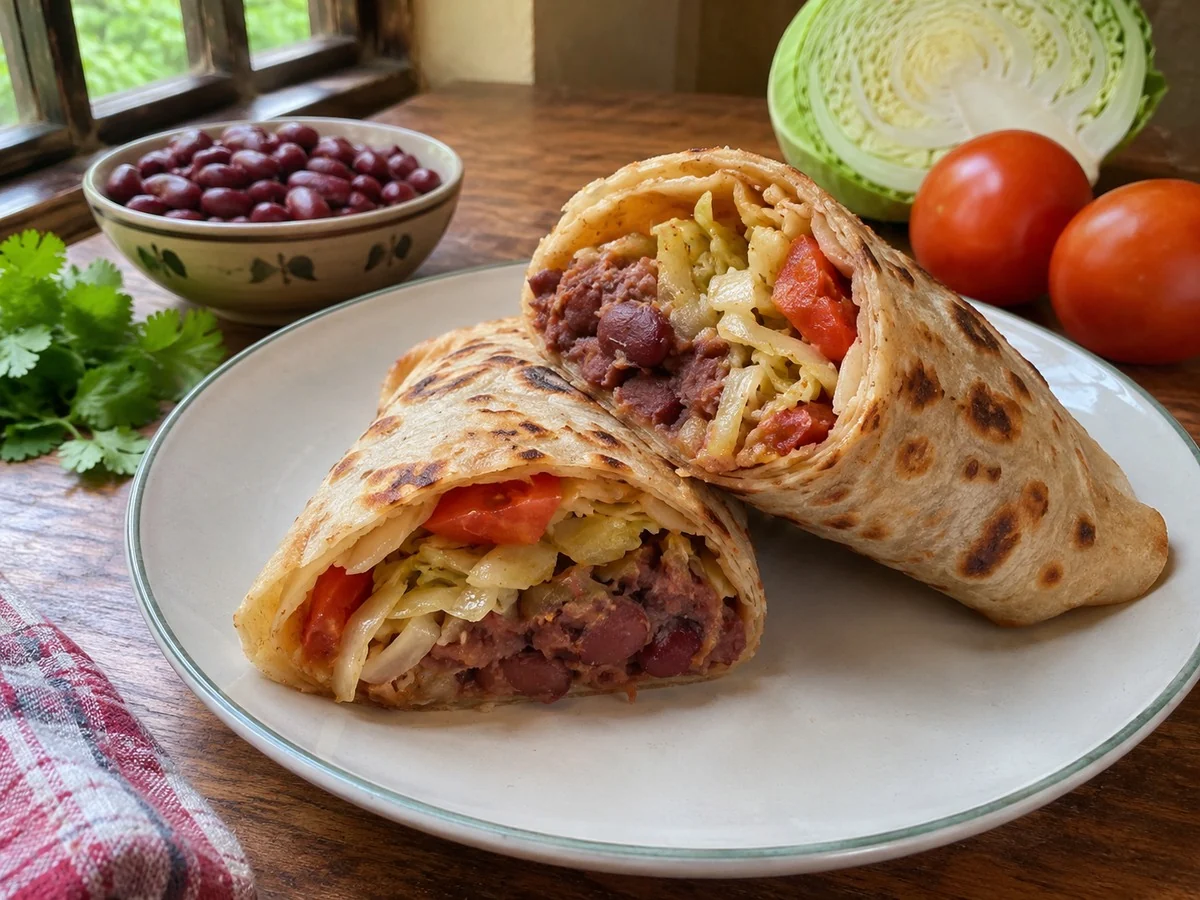
This chapati wraps around mashed beans, sautéed cabbage and tomato. The beans bind the filling, the cabbage adds texture and the tomato provides moisture once its excess juice has reduced. The handheld roll should hold together without dripping. Four chapatis make four portions. Start with cooked flatbreads and beans so the cooking time can go into softening the cabbage and heating the filling.
Ingredients
- 4 cooked chapatis
- 400 g cooked drained beans
- 180 g trimmed cabbage
- 100 g tomatoes
- 15 ml vegetable oil
- ≈2 g fine salt
Preparation
Heat the oil and add the sliced cabbage. Stir over medium to fairly high heat until the ribbons start to soften. Spread them out to cook evenly. If the pan is small, let the first handful wilt before adding the rest.
Add the diced tomato and cook away excess juice, stirring as it reduces. The mixture should keep some moisture without forming a puddle when pushed to one side. If the cabbage is still firm, reduce the heat and cook a little longer.
Warm the drained beans. Mash most with a fork, keeping some whole for texture, then mix with the cabbage and adjust the salt. The filling should sit in a mound on a spoon. Add a little reserved tomato juice if dry, or reduce further if it runs like a sauce.
Heat the chapatis individually in a dry pan, just until they fold without cracking. Cover them with a clean cloth while assembling the first rolls. Lay a chapati flat. Spread a quarter of the filling in a strip slightly below the centre, leaving a few centimetres clear at both ends.
Fold both sides towards the filling, bring up the near edge and roll without squeezing the filling out. Lay seam side down and repeat. Serve whole or halve with a sharp blade for a clean cut.
Introduction
Ingredients and equipment
Use four cooked chapatis, 400 g of cooked and drained beans, 180 g of trimmed cabbage, 100 g of tomato, 15 ml of oil and about 2 g of salt to taste. Weigh beans after draining. If using salted tinned beans, rinse and drain before weighing, then taste before adding salt. Use chapatis large enough to hold a strip of filling and fold the sides over it. A large pan, fork or masher and clean board are enough. Allow fifteen minutes to prepare and fifteen to cook, with the bread and beans ready.
Preparing the filling
Remove the tough parts of the cabbage before weighing the leaves, and cut into short thin ribbons. Slice thicker parts finer so they soften at the same time. Wash and finely dice the tomato. If it releases a lot of water, lift the pieces with a spoon and set the excess juice aside. Add some to the pan later if the cabbage is dry. Divide the bread and the filling at assembly so the portions stay even.
Step-by-step preparation
1. Heat the oil and add the sliced cabbage. Stir over medium to fairly high heat until the ribbons start to soften. Spread them out to cook evenly. If the pan is small, let the first handful wilt before adding the rest.
2. Add the diced tomato and cook away excess juice, stirring as it reduces. The mixture should keep some moisture without forming a puddle when pushed to one side. If the cabbage is still firm, reduce the heat and cook a little longer.
3. Warm the drained beans. Mash most with a fork, keeping some whole for texture, then mix with the cabbage and adjust the salt. The filling should sit in a mound on a spoon. Add a little reserved tomato juice if dry, or reduce further if it runs like a sauce.
4. Heat the chapatis individually in a dry pan, just until they fold without cracking. Cover them with a clean cloth while assembling the first rolls. Lay a chapati flat. Spread a quarter of the filling in a strip slightly below the centre, leaving a few centimetres clear at both ends.
5. Fold both sides towards the filling, bring up the near edge and roll without squeezing the filling out. Lay seam side down and repeat. Serve whole or halve with a sharp blade for a clean cut.
Adjusting the assembly
Dry flatbread can crack even around a small filling. Warm it briefly and test by folding an edge. If the bread is small, use a little less filling and serve the rest alongside. A moist filling can weaken the bread if the rolls are made too far ahead. Keep the ingredients apart until the last minute. Arrange several rolls seam side down in one layer to keep them closed.
Serving and nutrition
Serve as a handheld roll with raw vegetables or a small bowl of cooked vegetables alongside. Offer any sauce separately. Chapati contains wheat and contributes carbohydrates. Beans provide plant protein and fibre, and cabbage adds more fibre. Bread size affects the final weight. For four even portions, weigh the cooked filling and divide it by four, then adjust for the size of each chapati. Count accompaniments separately.
Some whole beans can remain visible at the cut edge. For even halves, spread the strip uniformly instead of piling the filling at the centre. A warm plate helps the roll stay soft while plating. If serving in batches, warm only the breads you will fill immediately.
Preparing several portions
For a shared lunch, keep all the filling in one bowl with the breads beside the assembly area. Measure the four portions before rolling. If one portion has mostly cabbage, return it and mix gently once more. Dividing the filling is easier while the beans are soft. Keep the breads dry, warm briefly and fold the edges as soon as they are pliable.
If cabbage releases more water after mixing, uncover and cook the filling a little longer before dividing it.
Cultural context
This home version sits between the filled chapatis in the collection and kikomando, in which pieces of flatbread are mixed with beans. Here, the whole chapati encloses the vegetables. The thick filling helps keep the roll intact. The cabbage is thinly sliced and sautéed before mixing with the beans, and this variation uses no omelette. It uses prepared beans and keeps the bread pliable at serving.
Nutrition notes
Estimated nutrition per serving. Before adjustment for cooking losses · Calcium 77 mg · Iron 5.2 mg · Potassium 779 mg · Vitamin A 11 µg RAE · Vitamin C 31.3 mg