Millet and banana breakfast porridge
Mashed ripe banana makes this millet porridge thicker and sweeter. Mix the millet flour with cold water, then cook it in the remaining water before adding the fruit. The cooked porridge should still run off the ladle. It will thicken a little in the bowls. The recipe makes four breakfast portions. The banana usually sweetens the whole batch. If you want the fresh texture of the fruit as well as the mashed banana, set aside a few slices for serving.
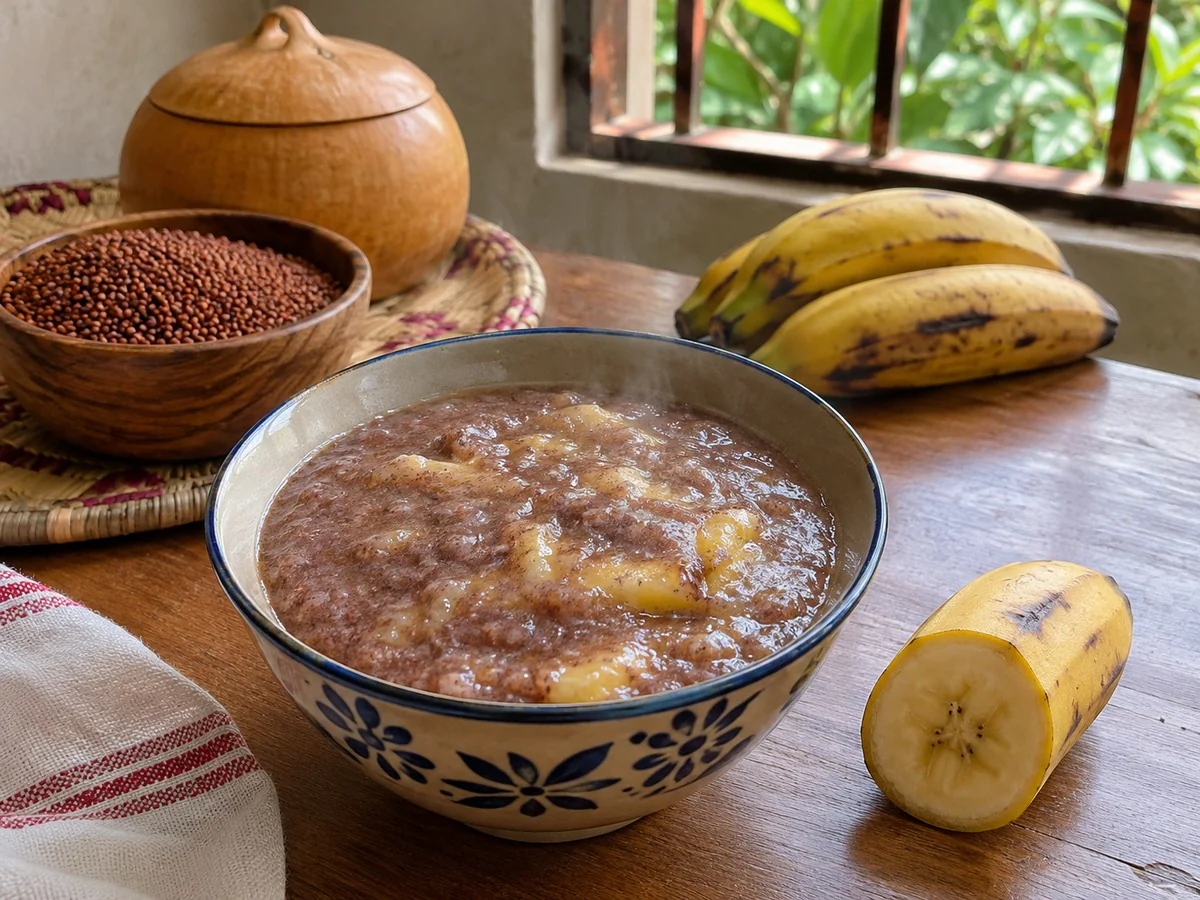
Ingredients
- 100 g millet flour
- 700 ml water
- 280 g ripe banana flesh
- a pinch of salt
Preparation
Pour the 230 ml of cold water into a bowl. Add the flour gradually while whisking. Scrape the sides and check the bottom for dry flour. Make sure the flour is evenly dispersed before heating the pan.
Heat the remaining water to a simmer. Stir the slurry again, as the flour can settle while the water heats. Pour it into the pan in a thin stream while whisking. Lower the heat slightly if it thickens on contact. Keep stirring until the base is even.
Cook over low heat for about fifteen minutes, scraping the bottom regularly. Check the corners for a thick layer. Turn down the heat if the bubbles spit. Cool a spoonful and taste before adding the fruit. The flour should have lost its powdery feel. Cook longer if necessary instead of judging by colour alone.
Mash the bananas with a fork, leaving a few small pieces if you like an uneven texture. Add the fruit in batches over low heat, stirring after each addition to distribute it. Warm briefly just until evenly mixed. Longer cooking would make the porridge thicker than intended.
Add a small pinch of salt if desired and taste. If the porridge no longer pours, stir in a spoonful of hot water and repeat if necessary. Divide into four bowls and let it cool briefly before serving.
Introduction
Ingredients and equipment
Measure 100 g of fine edible millet flour, 700 ml of drinking water, 280 g of ripe banana flesh and a small pinch of salt. Weigh the fruit after peeling. Use about 230 ml of cold water to mix the flour and the remainder for cooking. Keep extra hot water available if the porridge gets very thick. Use a bowl, whisk, heavy-based pan, spatula and fork. Allow ten minutes to prepare and about twenty minutes to cook, excluding initial heating. The fineness of the flour and your preferred consistency can add a few minutes.
Choose bananas that mash without leaving hard pieces. Very ripe fruit yields a moist, sweet mash. Plain yellow bananas are fine if they yield to a fork. Weigh out the 280 g after peeling. Keep the fruit whole until you are ready to mash if you want to limit exposure to air. For a garnish, use another banana or allow extra flesh so the recipe quantity stays the same.
Step-by-step preparation
1. Pour the 230 ml of cold water into a bowl. Add the flour gradually while whisking. Scrape the sides and check the bottom for dry flour. Make sure the flour is evenly dispersed before heating the pan.
2. Heat the remaining water to a simmer. Stir the slurry again, as the flour can settle while the water heats. Pour it into the pan in a thin stream while whisking. Lower the heat slightly if it thickens on contact. Keep stirring until the base is even.
3. Cook over low heat for about fifteen minutes, scraping the bottom regularly. Check the corners for a thick layer. Turn down the heat if the bubbles spit. Cool a spoonful and taste before adding the fruit. The flour should have lost its powdery feel. Cook longer if necessary instead of judging by colour alone.
4. Mash the bananas with a fork, leaving a few small pieces if you like an uneven texture. Add the fruit in batches over low heat, stirring after each addition to distribute it. Warm briefly just until evenly mixed. Longer cooking would make the porridge thicker than intended.
5. Add a small pinch of salt if desired and taste. If the porridge no longer pours, stir in a spoonful of hot water and repeat if necessary. Divide into four bowls and let it cool briefly before serving.
Adjusting the texture
Firmer bananas may leave small pieces after mixing. Crush them in the bowl first or keep them for texture. For a smoother result, mix the mashed fruit with a ladleful of porridge before returning it to the pan. If the porridge is too thin after adding the fruit, simmer briefly uncovered, scraping the base. A small reduction is usually enough because it thickens in the bowl too.
Use a smaller pan for half a batch. A wide surface speeds evaporation and makes the proportions harder to reproduce. For eight portions, choose a pan in which the whisk reaches the edges. Stir the slurry thoroughly and mash the fruit in two batches if the bowl is small. Weight is a better guide than the number of bananas.
Serving and nutrition
Millet flour and banana provide most of the carbohydrates. Sweetness depends on ripeness. Taste after mixing in the banana before offering a sweet topping. For equal portions, ladle a little into each bowl in turn or weigh the finished porridge. Evaporation and added water change the final volume.
Serve with banana slices if desired and count their weight separately when recording portions. Keep the topping in a dish if the bowls have to wait. Stir each bowl if the surface starts to set. To reproduce the texture, note the flour brand, the ripeness of the fruit and any extra water. These observations often explain differences better than timing alone.
With very ripe bananas and sweet porridge, serve it plain with a few slices alongside. For a milder banana flavour, add the fruit in two batches and taste after the first.
If you kept the mash coarse, distribute the intact fruit pieces evenly among the bowls.
Cultural context
This is a home adaptation of the millet porridge in recipe 115. Here, the fruit is part of the porridge and changes its consistency. The amounts are designed to keep it pourable after adding 280 g of banana flesh. Banana used only as a topping would give a different texture and distribute the sweetness differently. Millet remains the main grain. To compare the two recipes, taste the porridge just before adding the fruit, then again once it has been stirred in.
Nutrition notes
Estimated nutrition per serving. Before adjustment for cooking losses · Calcium 8 mg · Iron 2.0 mg · Potassium 300 mg · Vitamin A 2 µg RAE · Vitamin C 7.0 mg