Cassava and beef katogo
Cassava and beef katogo combines tender beef with pieces of cassava that absorb the tomato sauce without falling apart. The beef first simmers in a casserole with onion. The cassava, already fully prepared and cooked, goes in for the last ten minutes to heat through and take on the sauce. Serve four deep plates, with separately cooked greens if desired.
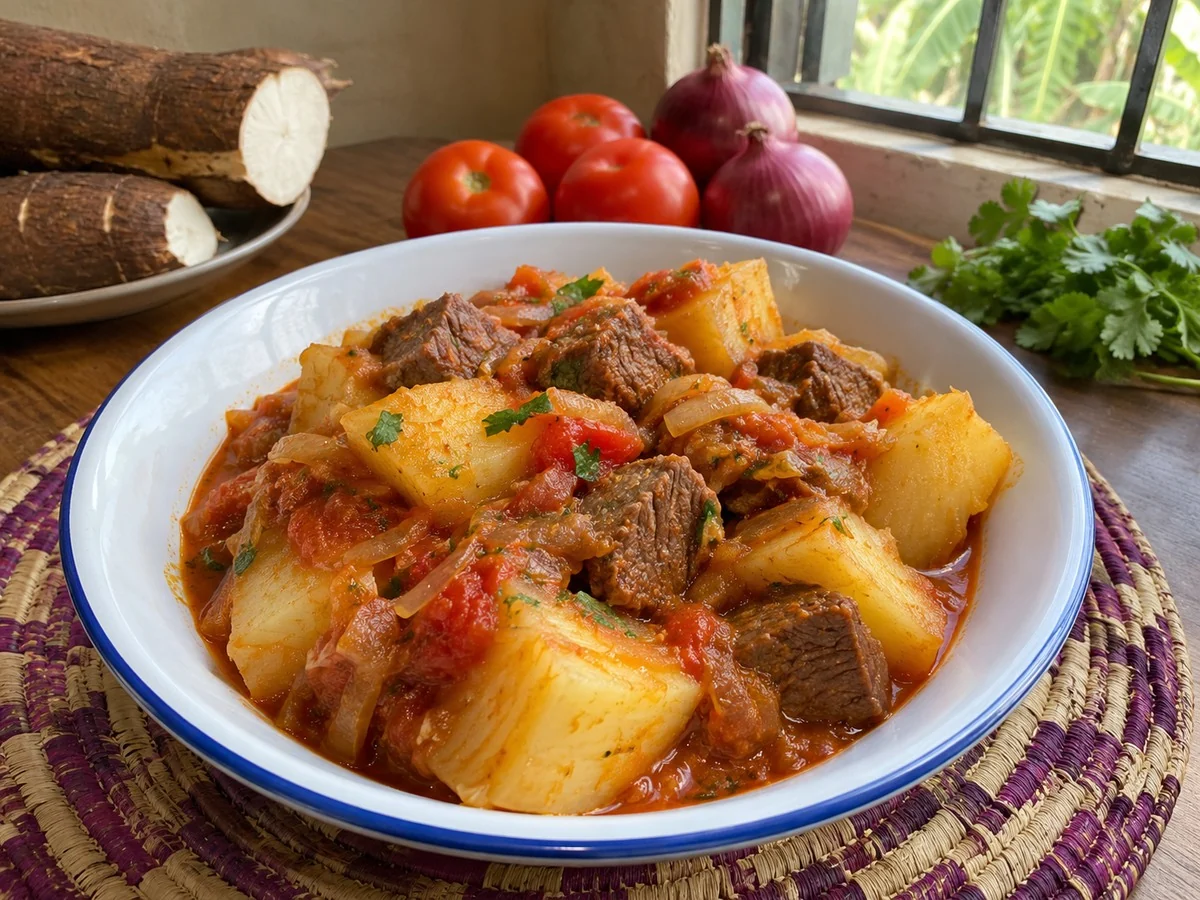
Ingredients
- 500 g stewing beef
- 700 g properly prepared and fully cooked cassava
- 300 g tomatoes
- 120 g onion
- 500 ml water
- 20 ml vegetable oil
- ≈2 g fine salt
Preparation
Prepare the vegetables and keep the cooked cassava apart. Cut the beef into cubes of about three to four centimetres if needed, then pat dry. Heat some of the oil in the casserole. Brown the pieces on several sides in batches. If the cubes release a lot of liquid, take some pieces out to make room. Set the seared beef aside.
Add the remaining oil and the onion to the same pan. Stir over medium heat until the slices bend under the spatula. Add the diced tomatoes and their juices. Reduce, scraping up the browned meat juices. If the bottom is dry, add a little of the measured water. The tomatoes are ready when the pieces crush easily.
Return the beef and any juice from the plate. Add water almost to the level of the meat, holding any extra in reserve. Bring to a simmer, cover and lower the heat. Simmer until a fork enters the cubes easily. Check the liquid from time to time and add hot water if it reduces before the beef turns tender.
While the beef simmers, drain the cooked cassava and remove any remaining central fibres. Cut only the largest pieces, making them small enough to fit a serving spoon. Once the beef is tender, lay the cassava in the sauce. Lift a few pieces of beef with the spatula to let the juices circulate. Simmer about ten minutes until the cassava is hot in the centre.
Taste and adjust the salt. If the sauce needs reducing, lift out the hot cassava carefully, reduce uncovered and return it just before serving. Divide the beef and cassava first, then pour the sauce into the plates.
Introduction
Ingredients and equipment
Allow 500 g of stewing beef, 700 g of fully prepared and cooked edible cassava, 300 g of tomatoes, 120 g of peeled onion, 500 ml of water and 20 ml of oil. Hold about 2 g of salt for adjusting after reduction. Use a lidded casserole, a plate for the browned beef and a spatula that can lift pieces intact. Allow twenty minutes to prepare and about an hour and forty minutes to cook. Some cuts need a longer simmer before the cassava can go in. Keep the prepared cassava separate from the raw beef on the worktop.
Choose a cut sold for stewing, such as chuck or shin. Ask for pieces of similar thickness where possible. Large differences in size are harder to correct than a few extra minutes of cooking. Use ripe tomatoes that will break down into a sauce. Cut firmer tomatoes smaller and slice the onion finely enough to blend into the sauce.
Step-by-step preparation
1. Prepare the vegetables and keep the cooked cassava apart. Cut the beef into cubes of about three to four centimetres if needed, then pat dry. Heat some of the oil in the casserole. Brown the pieces on several sides in batches. If the cubes release a lot of liquid, take some pieces out to make room. Set the seared beef aside.
2. Add the remaining oil and the onion to the same pan. Stir over medium heat until the slices bend under the spatula. Add the diced tomatoes and their juices. Reduce, scraping up the browned meat juices. If the bottom is dry, add a little of the measured water. The tomatoes are ready when the pieces crush easily.
3. Return the beef and any juice from the plate. Add water almost to the level of the meat, holding any extra in reserve. Bring to a simmer, cover and lower the heat. Simmer until a fork enters the cubes easily. Check the liquid from time to time and add hot water if it reduces before the beef turns tender.
4. While the beef simmers, drain the cooked cassava and remove any remaining central fibres. Cut only the largest pieces, making them small enough to fit a serving spoon. Once the beef is tender, lay the cassava in the sauce. Lift a few pieces of beef with the spatula to let the juices circulate. Simmer about ten minutes until the cassava is hot in the centre.
5. Taste and adjust the salt. If the sauce needs reducing, lift out the hot cassava carefully, reduce uncovered and return it just before serving. Divide the beef and cassava first, then pour the sauce into the plates.
Adjusting the simmer
If the beef is firm, give it more time alone in the tomato sauce. Adding cassava too soon would leave it sitting in the sauce until the meat was done. For a sauce that has reduced too far, add hot water in small amounts and cover. When the beef is tender but the sauce still thin, uncover to reduce before adding the cassava. You can then warm it without stirring for long. If the cassava edges begin to break down, lift the most fragile pieces out and use them when plating.
Serving and nutrition
Serve in bowls and offer cooked greens separately. Divide beef cubes of similar size among four portions, then distribute the cassava. Beef provides protein and cassava mainly carbohydrates. The amount of sauce depends on reduction and the salt on final seasoning. The proportions apply to the katogo alone. For a future nutritional estimate, record the cut of beef, the visible fat trimmed off and the finished weight. Count any vegetables served alongside separately.
Choosing the serving consistency
For bowls, keep enough sauce to ladle a little into each serving. For a plate with greens already in sauce, reduce the beef sauce a little further before adding the cassava, so the two remain distinct on the plate. For double quantities, choose a casserole that allows you to sear the beef in loose layers and add water in stages. The liquid level is a better guide than automatically doubling the volume.
Give the greens their own spoon so their sauce can be adjusted separately.
Cultural context
This is an adaptation of the beef katogo that uses cooking bananas in the first volume. Cassava is the staple here. It has a different texture from matooke and goes in already cooked. The beef sauce only reheats and flavours it. Choose edible cassava that has already been properly prepared and fully cooked. The stated amount is the drained weight after any remaining central fibres are removed. The timing covers simmering the meat and reheating the cassava.
Nutrition notes
Estimated nutrition per serving. Before adjustment for cooking losses · Calcium 93 mg · Iron 5.8 mg · Potassium 804 mg · Vitamin A 44 µg RAE · Vitamin C 55.8 mg