Matooke and mukene katogo
In this katogo, chunks of matooke cook in tomato before the mukene, small dried fish, are added near the end. There should be enough liquid to cook the bananas and soften the fish before reducing to a light coating. Each spoonful should bring the fish and banana together. Serve four portions, with separately cooked nakati greens if desired.
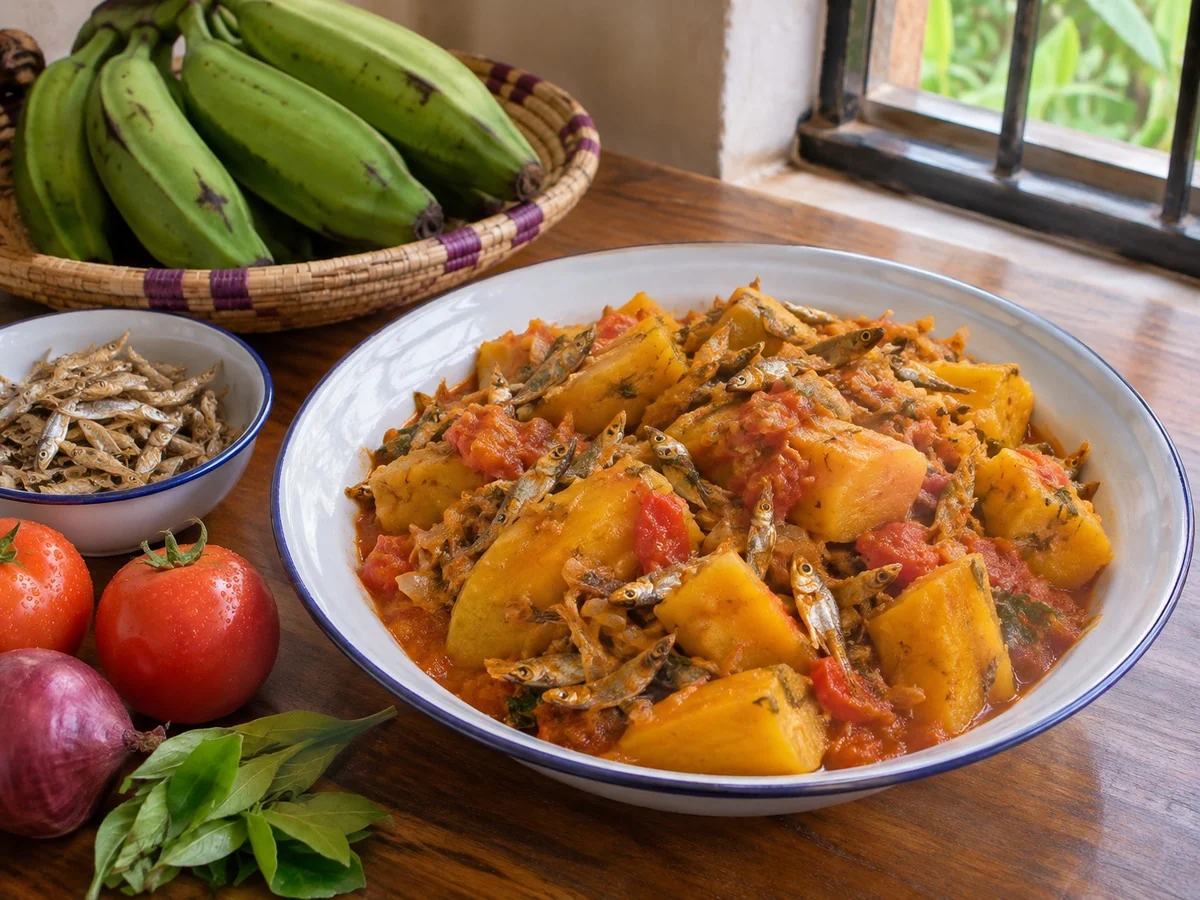
Ingredients
- 700 g peeled green matooke
- 100 g food-grade dried mukene
- 250 g tomatoes
- 100 g onion
- 450 ml water
- 15 ml vegetable oil
Preparation
Heat the oil over medium heat and soften the onion. Add the tomatoes and juices and cook until the pieces crush against the side of the pan. Add a spoonful of the measured water if the base dries before the tomatoes soften.
Lay the matooke in the tomato and turn once to coat. Pour in most of the water, holding back a few spoonfuls for adjustments. Bring to a simmer, cover and cook for about twenty minutes. Shake the pan gently if the top pieces are sitting above the sauce.
Test the biggest piece with a knife tip. The outside should yield, with some resistance near the centre. Cook longer at this stage if the bananas are still decidedly firm. Stir as little as possible once the fish goes in so both ingredients keep their shape.
Add the drained mukene and press it gently into the liquid. Simmer for about ten minutes, or adjust to the product directions. Check that the fish is fully cooked and the banana tender through the centre. If the base seems dry in places, add reserved water and shake the pan rather than stirring vigorously.
Taste the sauce with some banana and fish before salting. If it is very thin, briefly uncover and reduce over low heat. Turn off the heat once it lightly coats the bananas. Divide the bananas into bowls, then add the fish and sauce.
Introduction
Ingredients and equipment
Use 700 g of green matooke cooking bananas weighed after peeling, 100 g of edible dried mukene, 250 g of ripe tomatoes, 100 g of peeled onion, 450 ml of drinking water and 15 ml of vegetable oil. Hold back salt until serving if the fish is lightly salted. Use separate water for rinsing, outside the 450 ml measured for cooking. Set out a heavy-based lidded saucepan, a fine colander, a board and a wide spatula. Allow about twenty minutes for preparation and thirty-five for cooking, depending on the bananas and any directions for the fish.
Preparing the components
Spread the fish on a pale plate so that debris is easy to see. Sort it and rinse briefly in a fine colander if the product allows. Drain well. Follow the packet first if it calls for different preparation. Discard the rinse water. Prepare the fish before peeling the matooke so the cut bananas spend less time waiting.
Trim both ends of the bananas. Slit the skin lengthwise and lift it away without taking off much flesh. Weigh the bananas and cut into thick pieces of similar thickness. Two or three chunks per banana work for fruit of a similar size. Cut narrower ends slightly longer. Put the pieces in a clean container. Slice the onion and dice the tomatoes finely, keeping their juices.
Step-by-step preparation
1. Heat the oil over medium heat and soften the onion. Add the tomatoes and juices and cook until the pieces crush against the side of the pan. Add a spoonful of the measured water if the base dries before the tomatoes soften.
2. Lay the matooke in the tomato and turn once to coat. Pour in most of the water, holding back a few spoonfuls for adjustments. Bring to a simmer, cover and cook for about twenty minutes. Shake the pan gently if the top pieces are sitting above the sauce.
3. Test the biggest piece with a knife tip. The outside should yield, with some resistance near the centre. Cook longer at this stage if the bananas are still decidedly firm. Stir as little as possible once the fish goes in so both ingredients keep their shape.
4. Add the drained mukene and press it gently into the liquid. Simmer for about ten minutes, or adjust to the product directions. Check that the fish is fully cooked and the banana tender through the centre. If the base seems dry in places, add reserved water and shake the pan rather than stirring vigorously.
5. Taste the sauce with some banana and fish before salting. If it is very thin, briefly uncover and reduce over low heat. Turn off the heat once it lightly coats the bananas. Divide the bananas into bowls, then add the fish and sauce.
Adjusting for the dried fish
Salted mukene quickly season the sauce. Taste once the fish is cooked so you do not add more salt than needed. If the tomato is already very reduced when the fish goes in, add some hot water so it can sit in the sauce instead of staying dry on top. If the bananas become fragile before the sauce reduces, lift some out with the spatula, finish reducing and return them off the heat. A piece or two may also break down and thicken the sauce. Check its texture before changing the amount of liquid.
Serving
Serve hot with nakati or other greens cooked separately. Serving the greens on a side plate keeps the fish flavour clear in the sauce. Matooke is the main source of carbohydrate and the fish provides protein. Salt content depends on the dried product. Mention the presence of fish and possible small bones. The portions refer to the katogo alone. Keep the greens separate if recording portion weights for a future nutrition estimate.
Dividing the fish
Before serving, check where the mukene are. Some may stay near the edge where they were added. Ladle fish and sauce from several places in the pan into the four bowls. Leave the banana in the bowls while you do this so it does not get stirred again. For group service use a ladle and spatula separately. Put the greens on the side and taste a mixed bite before offering further seasoning.
If the banana chunks overlap as you plate them, use a wider plate so you can spread them out without breaking them.
Cultural context
This is an adaptation of the one-pot katogo method. The first volume has separate entries for matooke and mukene, as well as beef and offal katogo. This recipe pairs cooking bananas with dried fish and allows for their different cooking times. The bananas go into the tomato first and start to give the sauce body. The fish goes in later. Products and directions can vary among suppliers. Choose dried fish sold for human consumption and follow any preparation directions on the packet.
Nutrition notes
Estimated nutrition per serving. Before adjustment for cooking losses · Calcium 514 mg · Iron 3.3 mg · Potassium 1598 mg · Vitamin A 63 µg RAE · Vitamin C 55.2 mg