Squash and bean katogo
Squash and beans share a tomato and onion sauce. The squash goes into the pan first so it can soften while keeping its shape. The cooked beans go in when a knife tip begins to penetrate the pieces. A brief uncovered reduction finishes the sauce. Each serving should include intact squash, beans and a little sauce. The four portions can form the basis of a meal or accompany a small plate of sautéed greens.
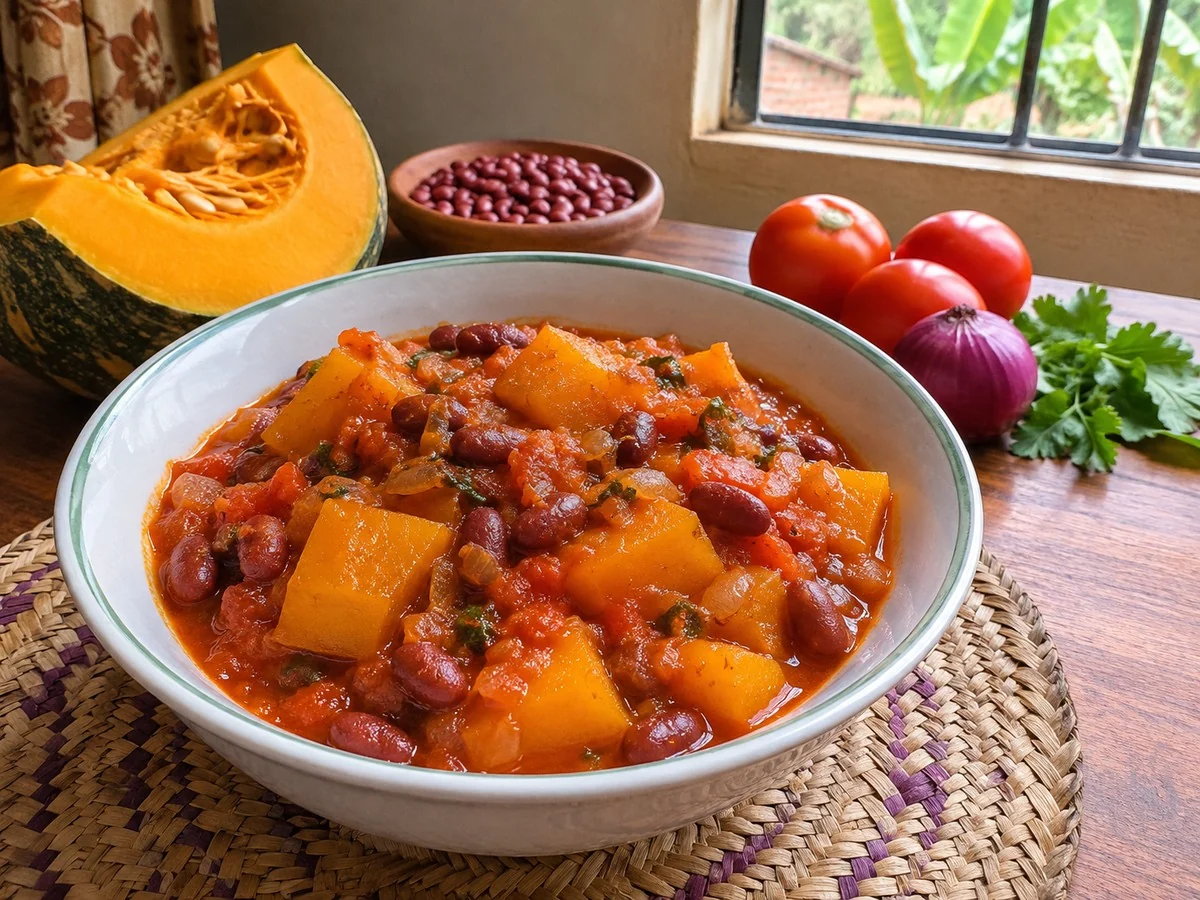
Ingredients
- 700 g prepared squash
- 400 g cooked drained beans
- 130 g onion
- 250 g tomatoes
- 220 ml water
- 20 ml vegetable oil
- ≈2 g fine salt
Preparation
Remove the seeds and stringy fibres. Peel any parts where the skin is unlikely to soften, then cut the flesh into cubes about three centimetres thick. Focus on thickness. Set thin tips aside together or add them later. Slice the onion and dice the tomatoes, saving their juices. Drain the beans and keep them ready.
Heat the oil over medium heat and stir in the onion until soft. Add the tomatoes and their juices. Cook until the pieces release enough liquid and can be crushed with a spatula. If the onion browns before the tomato breaks down, lower the heat and add a spoonful of the measured water. Spread the sauce over the bottom.
Add the cubes and move them gently to coat in tomato. Pour in the water, holding back a few spoonfuls. Cover and simmer for about fifteen minutes. Lift the lid if the liquid rises too high or you hear the base catch. Test one of the largest cubes. A knife tip should go most of the way through, with slight resistance in the centre.
Add the beans and lift the cubes once with the spatula to distribute them. Cook uncovered for about eight minutes. Check that the beans are hot and the squash tender. If the sauce gets too thick, add some reserved water. To check the bottom, lift a piece with the spatula rather than stirring the cubes around.
Taste the sauce with a bean and add salt gradually. If the sauce is thin and the squash already tender, carefully remove a few pieces. Reduce uncovered, turn off the heat and return the pieces to the pan. The squash stays intact while the sauce reaches the desired consistency.
Introduction
Ingredients and equipment
For four portions, weigh out 700 g of trimmed edible squash flesh, 400 g of cooked and drained beans, 130 g of peeled onion, 250 g of tomatoes, 220 ml of water and 20 ml of oil. Allow about 2 g of salt, adjusted if the beans are already salted. Weigh the squash after removing the seeds, fibres and any tough skin. The beans should already be tender in the centre and cooked separately. For tinned beans, check the drained weight and rinse if the packing liquid is very salty.
Allow about fifteen minutes for preparation and thirty minutes for cooking, excluding the time to cook the beans. Use a deep sauté pan or a lidded heavy-based saucepan. A wide spatula lets you lift the cubes without breaking them. Choose a pan that holds the squash in one or two layers. In a high pile the bottom cubes can cook much faster than those on top.
Step-by-step preparation
1. Remove the seeds and stringy fibres. Peel any parts where the skin is unlikely to soften, then cut the flesh into cubes about three centimetres thick. Focus on thickness. Set thin tips aside together or add them later. Slice the onion and dice the tomatoes, saving their juices. Drain the beans and keep them ready.
2. Heat the oil over medium heat and stir in the onion until soft. Add the tomatoes and their juices. Cook until the pieces release enough liquid and can be crushed with a spatula. If the onion browns before the tomato breaks down, lower the heat and add a spoonful of the measured water. Spread the sauce over the bottom.
3. Add the cubes and move them gently to coat in tomato. Pour in the water, holding back a few spoonfuls. Cover and simmer for about fifteen minutes. Lift the lid if the liquid rises too high or you hear the base catch. Test one of the largest cubes. A knife tip should go most of the way through, with slight resistance in the centre.
4. Add the beans and lift the cubes once with the spatula to distribute them. Cook uncovered for about eight minutes. Check that the beans are hot and the squash tender. If the sauce gets too thick, add some reserved water. To check the bottom, lift a piece with the spatula rather than stirring the cubes around.
5. Taste the sauce with a bean and add salt gradually. If the sauce is thin and the squash already tender, carefully remove a few pieces. Reduce uncovered, turn off the heat and return the pieces to the pan. The squash stays intact while the sauce reaches the desired consistency.
Adjusting for the variety
Dense squash holds its corners and may need a few extra minutes. A moist variety may release a lot of water early on. For a moist squash, start with less of the measured water and check the sauce after a few minutes. If the squash falls apart quickly, add the beans sooner or remove any cubes as they become tender. A few broken pieces can thicken the sauce. Use only a small amount so intact cubes remain in each serving.
If the beans are fragile, scatter them over the top and moisten them with sauce before stirring. Firmer beans can be mixed in a little earlier so they heat evenly. For a double batch, use a pan with a larger surface or divide the recipe between two pans. A deep stack makes the lower cubes hard to reach and can cause uneven cooking.
Serving and nutrition
Ladle into shallow bowls and serve sautéed greens separately. Divide the squash first, then add beans and sauce. The beans provide most of the plant protein and supply fibre. Orange-fleshed squash contributes carotenoids. The quantities refer to the katogo alone. Count any additional starch or sauce separately for a nutritional estimate.
When comparing batches, note how much water went in and which squash you used. Meaty tomatoes and dense squash may call for more water than a more watery variety.
Keep the lid partly open to control reduction if the squash is almost tender but there is still too much sauce.
Cultural context
This adaptation follows the one-pot katogo method. Several recipes in the first volume use matooke, cassava or potatoes to absorb some of the sauce. Here, squash takes that role and needs gentler handling. It can fall apart as the beans go in. The amounts are for a home version and can be adjusted to the squash. This recipe differs from the sweet potato and cowpea katogo by using squash and cooked beans. The sauce can thicken quickly if a few pieces break apart.
Nutrition notes
Estimated nutrition per serving. Before adjustment for cooking losses · Calcium 91 mg · Iron 5.3 mg · Potassium 1181 mg · Vitamin A 152 µg RAE · Vitamin C 35.1 mg