Sweet potato and cowpea katogo
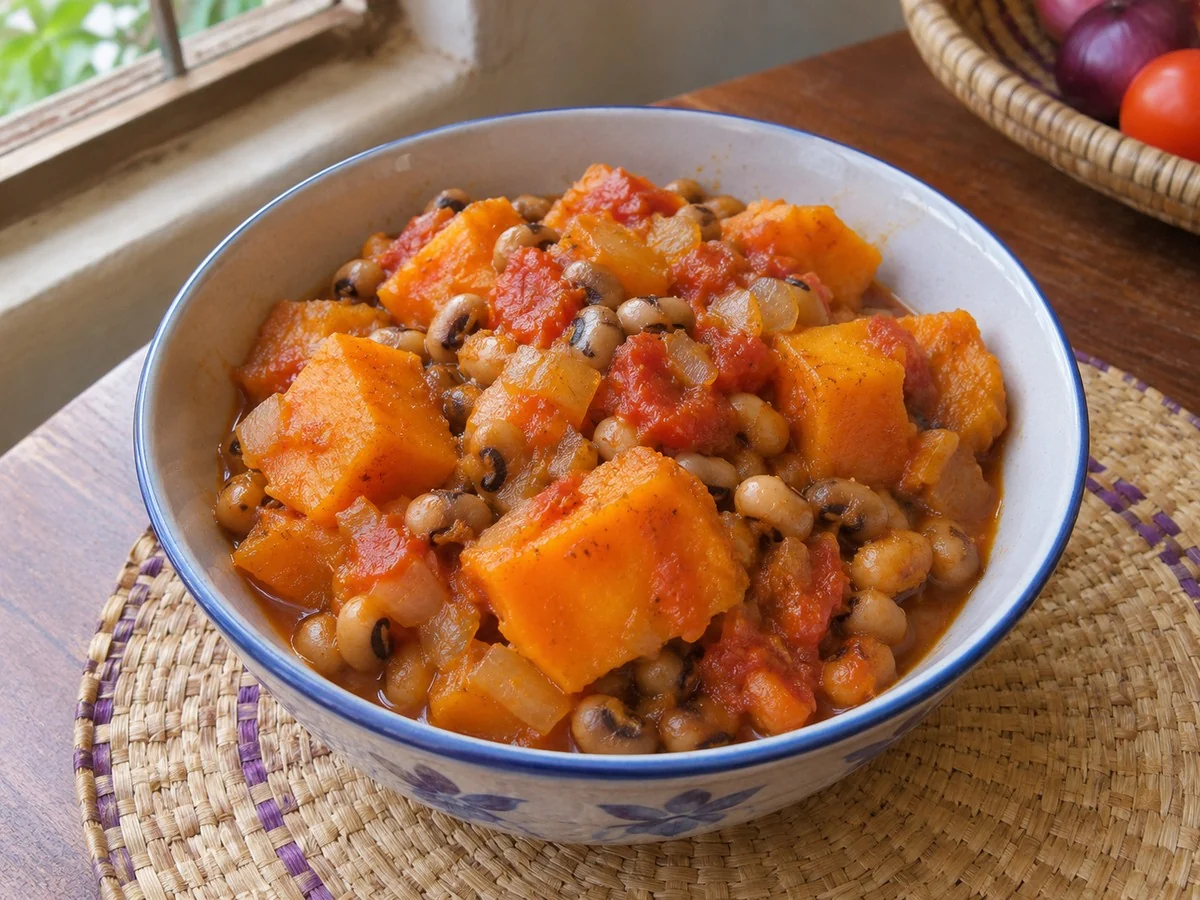
Sweet potato and cowpeas share a sauce in this dish. The sweet potato cubes cook in tomato and onion, then the tender cooked beans join them for the final simmer. The finished cubes should yield to a spoon without breaking apart at the first touch. The reduced sauce coats both ingredients. This recipe serves four. Bring it to the table in bowls with cooked greens, or serve straight from the casserole with a wide spoon.
Ingredients
- 650 g peeled sweet potato
- 350 g cooked drained cowpeas
- 250 g tomatoes
- 100 g onion
- 300 ml water
- 15 ml vegetable oil
- ≈2 g fine salt
Preparation
Peel the sweet potato and cut it into evenly sized cubes about three centimetres across. Weigh the flesh and set it aside. Slice the onion and dice the tomatoes, saving their juices in a bowl or on the board. Drain the cowpeas and taste one to check its tenderness and saltiness.
Heat the oil and soften the onion until translucent. Add the tomatoes and their juices and let them reduce for several minutes. The pieces should crush against the bottom. If the base dries before softening, add a spoonful of the measured water and lower the heat slightly.
Add the sweet potato cubes and coat them with tomato. Pour in most of the water, reserving the rest. Bring to a simmer, partially cover and cook for about fifteen minutes. Stir once by lifting the pieces off the bottom. Add hot water if the liquid runs low, keeping just enough to cook the cubes without leaving them in a thin broth.
Pierce one of the larger cubes. Add the cowpeas when the outside is tender and the centre still has slight resistance. Push the beans gently into the sauce with the spatula and bring it back to a simmer. Cook until the largest cubes are tender and the beans hot. If the cubes are already fragile when the beans go in, lower the heat and stir minimally.
Taste a bean and a little sauce before adding salt. If the sauce is thin, uncover for a few minutes and move the liquid gently with the spatula. If it is too thick, add a little reserved water. Turn off the heat as soon as the sauce coats the pieces and divide into portions with minimal stirring.
Introduction
Ingredients and equipment
Allow 650 g of peeled sweet potato, 350 g of cooked and drained cowpeas, 250 g of ripe tomatoes, 100 g of peeled onion, 300 ml of water, 15 ml of vegetable oil and about 2 g of salt to taste. Weigh the sweet potato after peeling and the beans after draining. Tinned cowpeas work if you account for their seasoning. If starting with dried beans, cook them separately according to the packet and weigh them once cooked. That preparation comes before the cooking times given here.
Use a medium heavy-based lidded saucepan, a board, a knife and a spatula. Allow about twenty minutes to prepare the vegetables and thirty-five minutes to cook. Timing depends on the size of the cubes and the ripeness of the tomatoes. Warm the water in advance if you want to add it gradually without repeatedly interrupting the simmer.
Step-by-step preparation
1. Peel the sweet potato and cut it into evenly sized cubes about three centimetres across. Weigh the flesh and set it aside. Slice the onion and dice the tomatoes, saving their juices in a bowl or on the board. Drain the cowpeas and taste one to check its tenderness and saltiness.
2. Heat the oil and soften the onion until translucent. Add the tomatoes and their juices and let them reduce for several minutes. The pieces should crush against the bottom. If the base dries before softening, add a spoonful of the measured water and lower the heat slightly.
3. Add the sweet potato cubes and coat them with tomato. Pour in most of the water, reserving the rest. Bring to a simmer, partially cover and cook for about fifteen minutes. Stir once by lifting the pieces off the bottom. Add hot water if the liquid runs low, keeping just enough to cook the cubes without leaving them in a thin broth.
4. Pierce one of the larger cubes. Add the cowpeas when the outside is tender and the centre still has slight resistance. Push the beans gently into the sauce with the spatula and bring it back to a simmer. Cook until the largest cubes are tender and the beans hot. If the cubes are already fragile when the beans go in, lower the heat and stir minimally.
5. Taste a bean and a little sauce before adding salt. If the sauce is thin, uncover for a few minutes and move the liquid gently with the spatula. If it is too thick, add a little reserved water. Turn off the heat as soon as the sauce coats the pieces and divide into portions with minimal stirring.
Adjusting for the sweet potato
The orange-fleshed sweet potato in the illustration can vary in moisture. If the cubes soften quickly, test earlier and add the cowpeas while the knife tip still meets moderate resistance. A floury variety may keep its edges but need more liquid. Lower the heat if the tomato reduces before the sweet potato is ready, then add a small ladleful of hot water. Once the beans are in, slide the spatula under a portion and lift to check the bottom instead of stirring in circles.
For a double batch, use a pan wide enough that the cubes do not pile high. Add part of the water at first, then top up as needed. A lidded casserole may retain enough steam to need less than twice the water. For two, use a small pan and start checking at the same point if the cubes are the same size.
Serving and nutrition
Serve in bowls with cooked greens alongside. A large spoon picks up both cubes and beans. Top up the bowls with remaining sauce. Cowpeas supply fibre and plant protein, while sweet potato provides much of the carbohydrate. Orange-fleshed varieties also provide carotenoids. The portions cover the katogo alone. Count any seed sauce or other accompaniment separately. A lime wedge at the table can balance very sweet potato without changing the cooking.
For a shared dish, place the most fragile pieces first, then add the cowpeas and sauce around them. This helps the cubes keep their shape until serving.
If the tomatoes are not very juicy, record the water actually used for the next batch. You can add a few spoonfuls earlier to the tomato base and subtract them from the amount set aside for simmering.
Cultural context
This home version follows the katogo method, in which a starchy staple cooks with its accompaniments in a single pan. Other entries use matooke, cassava or potatoes. Here, sweet potato softens readily in the tomato base, and cowpeas give the dish body while keeping their shape. The sweet potato and cowpea mash in recipe 113 uses the same main ingredients without tomatoes and finishes by crushing the flesh. Here the intact pieces and sauce require a different cut and gentler handling.
Nutrition notes
Estimated nutrition per serving. Before adjustment for cooking losses · Calcium 126 mg · Iron 3.8 mg · Potassium 930 mg · Vitamin A 1314 µg RAE · Vitamin C 70.6 mg