Pan-seared posho with onions
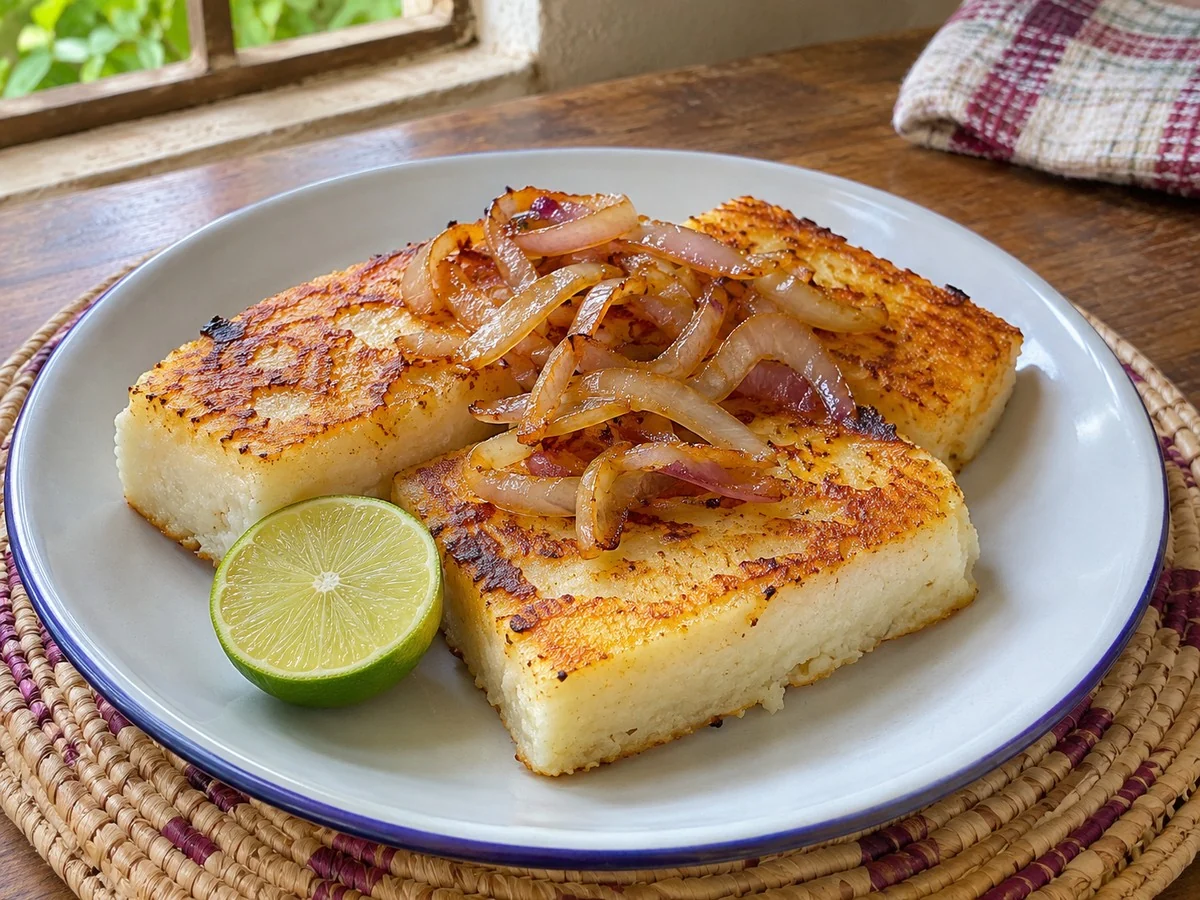
Pan-fried posho with onions starts with cooked maize paste firm enough to slice. The browned rectangles have a soft centre and two lightly crisp sides. The onions, cooked separately, stay tender and turn deep golden. A little lime juice adds acidity at the table. The recipe serves four and goes well with a bowl of beans. Bring the rectangles to the table whole and cut into them with a fork to dip the pieces into the sauce.
Ingredients
- 600 g firm cooked posho
- 150 g onion
- 25 ml vegetable oil
- 15 ml lime juice
Preparation
Heat about 10 ml of oil in the pan over medium heat. Add and spread out the sliced onion. Stir regularly until the strands turn soft and start to colour. If those at the edges darken quickly, bring them towards the centre and reduce the heat a little. Lift out the onions once tender and set aside on a plate.
Remove small onion pieces that might burn. Add some of the remaining oil and tilt the pan to spread it. Lay the posho rectangles in the pan with enough space between them to slide in a spatula. Let the first side set before moving the pieces.
Slide the spatula under one rectangle to check its colour. When the underside is golden and releases easily, turn it. Turn the others as each becomes ready. Adjust the heat if the outside browns before the slices are hot in the centre. Add only enough oil to maintain a thin film in the pan.
Transfer to warm plates. If cooking a second batch, keep the first in one layer on a rack or dish. If needed, return the onions to the pan for a few seconds to warm through. Divide them over the posho or serve them alongside. Add a few drops of lime juice at serving.
Introduction
Ingredients and equipment
Allow 600 g of firm cooked posho, 150 g of peeled onion, 25 ml of vegetable oil and 15 ml of lime juice. Offer a little salt separately if the posho and side dish are lightly seasoned. Weigh the posho ready to slice, without sauce. Use a straight-edged knife, a stable board, two plates and a flat-based frying pan. A wide spatula supports the pieces along their length. Allow ten minutes for preparation and about eighteen minutes to cook in a large enough pan. Two batches may take longer.
Preparing the block and onions
Check the posho block first. It should stay still on the board. Cut rectangles about two centimetres thick. Aim for eight pieces of similar weight, two per person. If the edge of the block is irregular, cut several smaller portions and group them when serving. Wipe the blade between cuts if the posho sticks to it. Thin slices may break when turned, while thick ones take longer to heat through.
Thinly slice the onion and separate the strands with your fingers. Squeeze and measure the lime juice. Keep it in a dish away from the heat. Once the posho is golden, add the juice a little at a time to the onions or right at the table. If serving beans in sauce, start warming them in another pan before browning the rectangles. Both dishes can then be ready together without tying up the frying pan.
Step-by-step preparation
1. Heat about 10 ml of oil in the pan over medium heat. Add and spread out the sliced onion. Stir regularly until the strands turn soft and start to colour. If those at the edges darken quickly, bring them towards the centre and reduce the heat a little. Lift out the onions once tender and set aside on a plate.
2. Remove small onion pieces that might burn. Add some of the remaining oil and tilt the pan to spread it. Lay the posho rectangles in the pan with enough space between them to slide in a spatula. Let the first side set before moving the pieces.
3. Slide the spatula under one rectangle to check its colour. When the underside is golden and releases easily, turn it. Turn the others as each becomes ready. Adjust the heat if the outside browns before the slices are hot in the centre. Add only enough oil to maintain a thin film in the pan.
4. Transfer to warm plates. If cooking a second batch, keep the first in one layer on a rack or dish. If needed, return the onions to the pan for a few seconds to warm through. Divide them over the posho or serve them alongside. Add a few drops of lime juice at serving.
Adjusting the cooking
If a slice sticks, wait until a crust forms before lifting again. An angled spatula may cut through the slice. Keep it low and slide it under to the centre. If the slices stay pale, check for crowding, as steam can get trapped between them. Work in two batches in a small pan. For thick slices straight from the fridge, medium heat allows the centre to warm gradually. Test one slice before repeating the process with the rest.
Serving and nutrition
Place a small mound of onions on each portion and offer extra lime juice separately. Keep beans and sauce in a separate bowl if you want the crust to stay crisp. To serve on one plate, put the posho beside the sauce. The rectangles provide mainly carbohydrates from maize flour. Oil absorption varies with the pan surface and the number of batches. The amount of beans is separate from the ingredient quantities here. For four equal portions, weigh the rectangles before cooking and share out the edge pieces among the plates.
A communal plate also works. Set the rectangles on their sides, slightly spaced, and serve the onions in a small dish. Diners can adjust the onion and lime with each bite.
Preparing posho for slicing
If making posho for this recipe, pour the hot paste into a shallow dish and level it with a spatula. Mark the cutting lines lightly before the block firms up all the way. Even thickness helps the eight slices cook at the same rate. Turn out the block before weighing the amount needed. Use an offcut to test the temperature before putting in the rectangles you want to serve.
Cultural context
The posho recipe in the first volume cooks maize flour in water to make a firm paste. This version serves the same staple in a different way, starting with an already cooked block. Pan-frying mainly changes the surface of each portion. Onion and lime brighten it at the table. It is a home adaptation for using cooked posho. You can also make posho specially and let it firm up in a rectangular dish before slicing.
Nutrition notes
Estimated nutrition per serving. Before adjustment for cooking losses · Calcium 22 mg · Iron 2.1 mg · Potassium 241 mg · Vitamin A 0 µg RAE · Vitamin C 7.0 mg