Sorghum porridge with milk
Sorghum porridge with milk is made in two stages. The flour cooks in water first, then the milk warms and loosens the thickened base. A little cinnamon scents the porridge while leaving the sorghum flavour clear. It should pour slowly from the ladle and stay supple as it cools. This version makes four bowls with pasteurised milk, and the sugar can be reduced to suit the table.
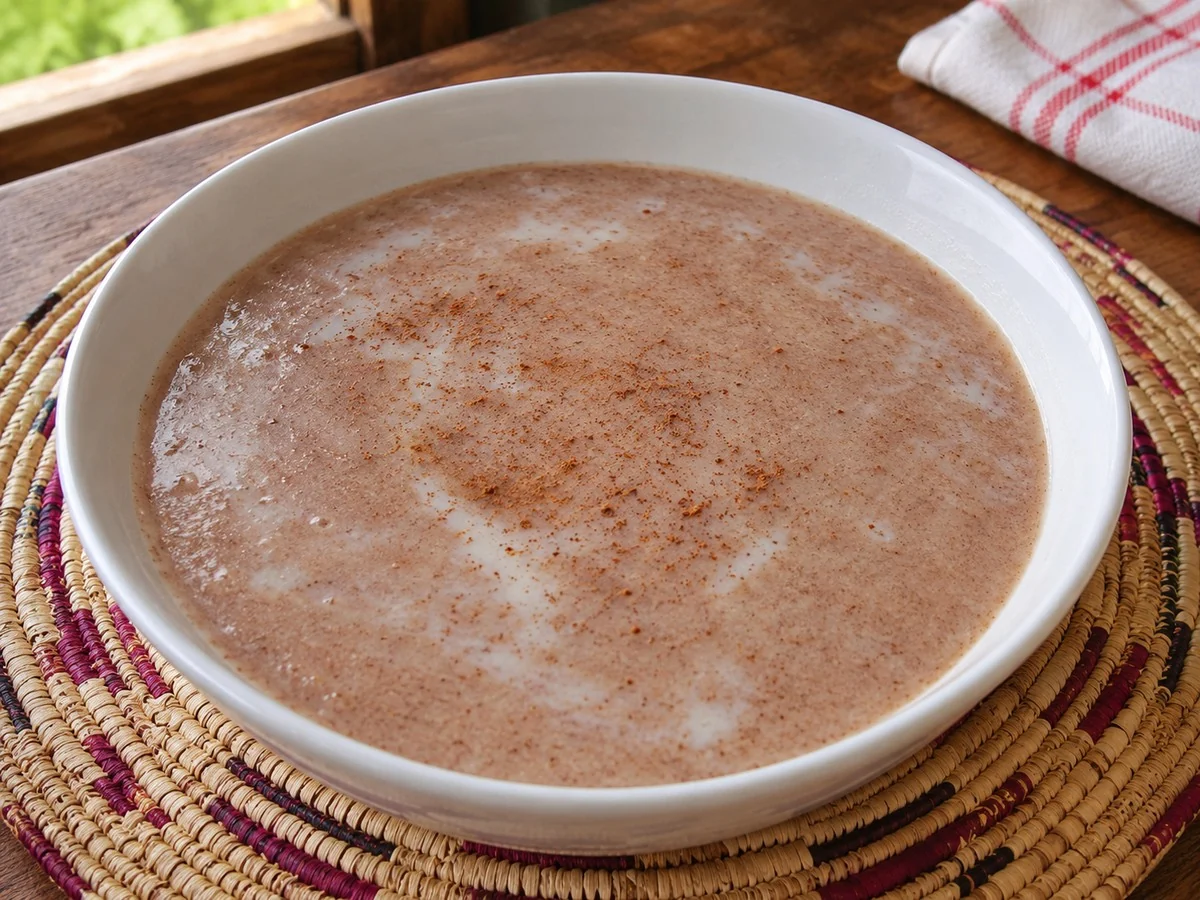
Ingredients
- 90 g sorghum flour
- 500 ml water
- 350 ml pasteurised milk
- ≤2 g ground cinnamon
- ≤15 g sugar, optional
Preparation
Pour the 180 ml of cold water into a bowl and whisk in the flour. Run the whisk along the sides and base. Crush any dry lumps and whisk again. Keep the bowl near the saucepan so you can stir once more before pouring.
Heat the remaining 320 ml of water. Once it simmers, lower the heat slightly. Stir the slurry and pour it in a thin stream while whisking. Once evenly mixed, switch to the spatula. Scrape the base, working around the edges where a thick layer can form quickly.
Cook over low heat for about twelve minutes, stirring regularly. The base thickens before the milk goes in. If it catches, lower the heat and stir straight away. Cool and taste a little to check for lumps or a powdery texture. Cook a little longer if it still feels powdery.
Add the milk gradually, whisking after each addition. Start with a splash to loosen the base, then add the rest as you stir. Add the cinnamon in pinches to distribute it evenly. Heat gently. When small bubbles appear, keep the heat low and stir regularly for about six to eight minutes. Watch the edges, especially if the milk starts to rise.
Stir in sugar to taste until dissolved. Cool a spoonful before tasting and check the consistency. If the porridge already holds its shape in the ladle, stir in a spoonful of hot water. Turn off the heat once it is smooth, even and loose enough to divide among the bowls.
Introduction
Ingredients and equipment
Measure 90 g of edible sorghum flour, 500 ml of drinking water, 350 ml of pasteurised milk, up to 2 g of ground cinnamon and up to 15 g of sugar. Reserve 180 ml of cold water for mixing the flour and heat the remaining 320 ml in the saucepan. For a mild cinnamon flavour, start with half the stated amount. A freshly opened jar may be more fragrant than an older one. Use a heavy-based saucepan with enough headroom for the milk to rise, a whisk, a flat spatula, a measuring jug and four bowls.
Allow five minutes for preparation and about twenty minutes to cook, excluding the time to heat the water initially. Very cold milk may take longer to return to a simmer. Set everything out before turning on the heat, since the porridge needs regular attention once it thickens. Add the spice and sugar at the stated stages so you can taste before deciding how much to use. Choose a fine flour for this texture rather than cracked sorghum.
Step-by-step preparation
1. Pour the 180 ml of cold water into a bowl and whisk in the flour. Run the whisk along the sides and base. Crush any dry lumps and whisk again. Keep the bowl near the saucepan so you can stir once more before pouring.
2. Heat the remaining 320 ml of water. Once it simmers, lower the heat slightly. Stir the slurry and pour it in a thin stream while whisking. Once evenly mixed, switch to the spatula. Scrape the base, working around the edges where a thick layer can form quickly.
3. Cook over low heat for about twelve minutes, stirring regularly. The base thickens before the milk goes in. If it catches, lower the heat and stir straight away. Cool and taste a little to check for lumps or a powdery texture. Cook a little longer if it still feels powdery.
4. Add the milk gradually, whisking after each addition. Start with a splash to loosen the base, then add the rest as you stir. Add the cinnamon in pinches to distribute it evenly. Heat gently. When small bubbles appear, keep the heat low and stir regularly for about six to eight minutes. Watch the edges, especially if the milk starts to rise.
5. Stir in sugar to taste until dissolved. Cool a spoonful before tasting and check the consistency. If the porridge already holds its shape in the ladle, stir in a spoonful of hot water. Turn off the heat once it is smooth, even and loose enough to divide among the bowls.
Adjusting the result
If small lumps remain after adding milk, whisk gently over low heat. Some disappear as the base loosens. If it is still too thin, cook a little longer uncovered and stir across the bottom. Pause between adjustments, as the porridge continues to firm up in the bowl while cooling. If a layer forms on the base, pour the unaffected porridge into a clean pan and resume cooking gently, leaving the deposit behind.
A very wide pan reduces the liquid quickly, particularly in a half batch. Use a narrower one if halving the recipe. For eight bowls, use a tall enough pan and a whisk that reaches the corners. It will take longer to return to temperature, but still judge the texture by the spoon. When trying different flours, note the time after adding the milk so you can distinguish reheating from cooking.
Serving and nutrition
Serve hot at a comfortable temperature. To let people choose their own cinnamon level, add little to the pan and offer extra at the table. A ripe banana can accompany the bowl. Sorghum supplies carbohydrates, and milk contributes protein and calcium. This recipe contains milk. For a nutrition estimate, record the type of milk and how much sugar actually went in. Weigh the finished porridge and divide it into four bowls to distinguish the amounts served from anything left in the pan. Count fruit served separately on its own.
Adding cinnamon at the table
If preferences differ, start with a pinch of cinnamon in the pan. Serve the milder portions first. Sift a little cinnamon over the remaining bowls and stir with a spoon while they are still hot. If the spice clumps, blend it into a spoonful of porridge before stirring it back into the bowl. Taste after mixing before adding any more sugar.
Cultural context
This recipe builds on the plain sorghum porridge in the first volume. Milk gives a different texture and changes how the pan needs watching, especially once it goes in. The cinnamon and sugar quantities belong to this home adaptation. It is a creamy breakfast porridge rather than a firm staple for serving with sauce. It also gives a chance to compare sorghum with the millet flour in the previous recipe. The flours can differ in colour and fineness.
Nutrition notes
Estimated nutrition per serving. Before adjustment for cooking losses · Calcium 115 mg · Iron 0.9 mg · Potassium 168 mg · Vitamin A 38 µg RAE · Vitamin C 0.0 mg