Sweet potato and cowpea mash
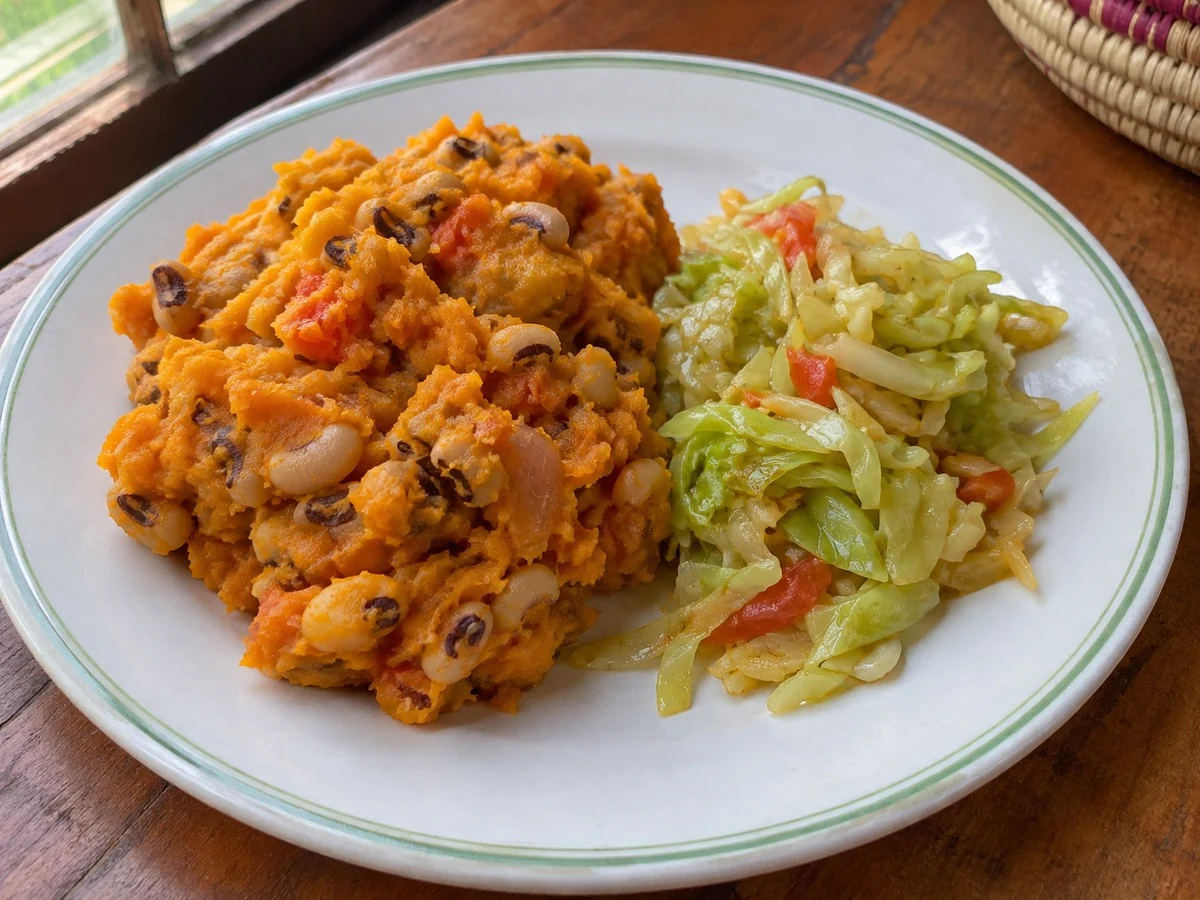
Sweet potato and cowpea mash brings together tender sweet potato and cooked cowpeas. The sweet potato is crushed into the base, while some of the beans keep their shape. Serve it by the spoonful with sautéed cabbage on the side. The mash should be thick enough to fall from the spatula in large pieces, with several beans visible in every bite. A little cooking water and oil are enough to adjust the texture. The four portions can accompany another dish or form the base of a mixed plate.
Ingredients
- 700 g peeled sweet potato
- 350 g cooked drained cowpeas
- ≤120 ml reserved sweet potato cooking water
- 15 ml vegetable oil
- ≈2 g fine salt
Preparation
Peel the sweet potato and cut evenly sized cubes. About three centimetres is suitable for mashing. Put them in the saucepan, cover with water and heat. Once it simmers, cook gently until the centre is fully tender without letting all the pieces disintegrate in the water.
Reheat the cooked cowpeas with a spoonful or two of water in a small pan. Stir gently and let the added liquid mostly disappear before combining. Cold cowpeas stiffen the mash and require more stirring, which crushes beans you might want to keep whole. Taste one to check that its centre is tender.
Pierce one of the largest sweet potato cubes. Once it is tender through the centre, draw off 120 ml of cooking water into the jug. Drain the cubes and return them to the warm pan off the heat. Mash with the oil. If the flesh is very dry, add a spoonful of reserved water before continuing.
Add the warm cowpeas. Mash a small portion with the sweet potato to bind the mixture, then fold the rest with a spatula. If the mash breaks into dry blocks, gradually add a little cooking water. Taste and salt as desired, then stop mixing once the mash is supple. You may not need all 120 ml.
Introduction
Ingredients and equipment
Prepare 700 g of peeled edible sweet potato, 350 g of cooked, well-drained cowpeas, up to 120 ml of sweet potato cooking water, 15 ml of oil and about 2 g of fine salt. You also need enough drinking water to cover the pieces in the saucepan. Orange-fleshed sweet potato gives the colour shown in the illustration. A pale variety works too and can be more floury. Weigh the cowpeas after draining. If using salted tinned beans, rinse and drain before salting the mash.
Allow fifteen minutes for preparation and about twenty-five for cooking and combining, starting with already cooked cowpeas. Use two pans or a saucepan and a colander that allows you to warm the cowpeas separately, a hand masher and a measuring jug for the cooking water. If you only have one pan, keep the sweet potato warm in a covered bowl while reheating the beans.
Step-by-step preparation
1. Peel the sweet potato and cut evenly sized cubes. About three centimetres is suitable for mashing. Put them in the saucepan, cover with water and heat. Once it simmers, cook gently until the centre is fully tender without letting all the pieces disintegrate in the water.
2. Reheat the cooked cowpeas with a spoonful or two of water in a small pan. Stir gently and let the added liquid mostly disappear before combining. Cold cowpeas stiffen the mash and require more stirring, which crushes beans you might want to keep whole. Taste one to check that its centre is tender.
3. Pierce one of the largest sweet potato cubes. Once it is tender through the centre, draw off 120 ml of cooking water into the jug. Drain the cubes and return them to the warm pan off the heat. Mash with the oil. If the flesh is very dry, add a spoonful of reserved water before continuing.
4. Add the warm cowpeas. Mash a small portion with the sweet potato to bind the mixture, then fold the rest with a spatula. If the mash breaks into dry blocks, gradually add a little cooking water. Taste and salt as desired, then stop mixing once the mash is supple. You may not need all 120 ml.
Adjusting for the sweet potato variety
A moist variety may mash easily without water. Let some steam escape after draining and start combining without adding any. A dry variety often calls for several small additions. Stir after each spoonful because the texture changes quickly while the flesh is hot. If the mash becomes too loose, return it briefly to low heat and scrape the base so the excess moisture can evaporate without scorching it.
For two people, halve the ingredients and use a smaller pan. Cubes of the same size take about as long to cook. For eight, mix in a wide bowl or split the batch before adding the beans. A dense layer at the bottom of a large pot requires more stirring and can make the mash uniform. Fold the last of the cowpeas in at the end to keep them visible.
Serving and nutrition
Serve hot with sautéed cabbage and chopped tomato if in season. Use a spatula to lift a whole portion so you do not take mostly the smoother mash at the bottom. When plating, make a shallow hollow in the mash and put the cabbage alongside. Cowpeas supply plant protein and fibre. Sweet potato provides most of the carbohydrates. The portions cover the mash alone. Record any accompaniments and the final salt separately if weighing the dish for nutritional calculation.
In bowls, arrange the mash against one side to leave room for the cabbage. You can also reserve a few whole cowpeas and scatter them over the mash at the table so both ingredients are immediately visible.
Preparing the components separately
If cooking cowpeas the day before for another meal, set aside a plain portion without tomato juice or aromatics. Weigh it after draining. Leftover cowpeas in sauce change the texture and make it harder to judge how much cooking water to add. When comparing batches, record the actual amount added by measuring what is left in the jug. This gives a more precise starting point for another batch with the same sweet potato variety.
Cultural context
The collection already pairs everyday staples such as matooke, cassava and sweet potato with vegetables or pulses. This home adaptation uses sweet potato and cowpeas. They are cooked separately so you can decide how much to mash when combining them. Sweet potato and cowpea katogo uses the same main ingredients differently, simmering cubes in tomato sauce. Here, the recipe leaves out tomato and uses the mashed flesh to bind the beans.
Nutrition notes
Estimated nutrition per serving. Before adjustment for cooking losses · Calcium 117 mg · Iron 3.3 mg · Potassium 779 mg · Vitamin A 1385 µg RAE · Vitamin C 54.2 mg