One-pot maize and beans
This casserole combines distinct kernels of maize and tender beans in a reduced tomato sauce. Both main ingredients are already cooked. Simmering them together develops the flavour and brings the sauce to the right consistency. A few beans are mashed to thicken it, while most stay whole. Serve the casserole in bowls alongside greens, or offer it with a portion of starch as part of a meal with several sauces.
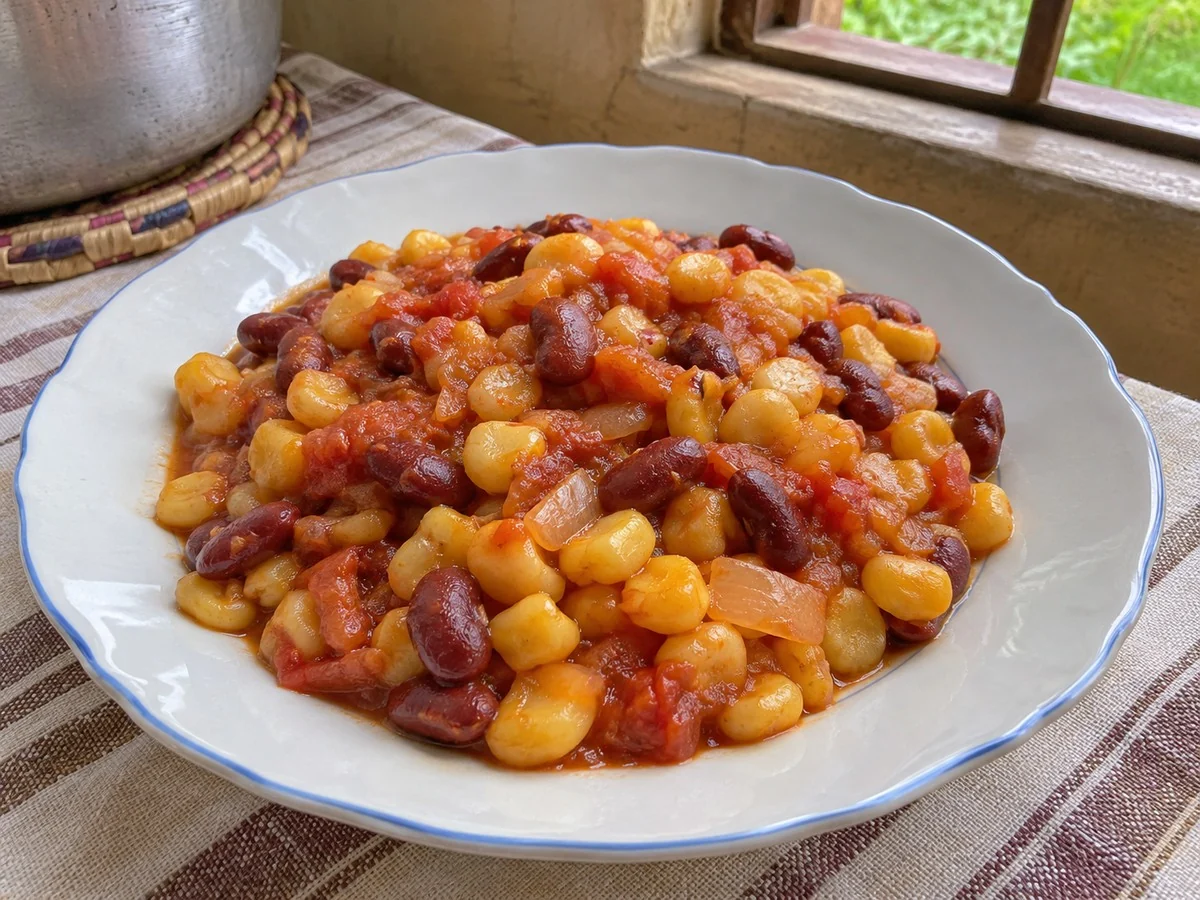
Ingredients
- 350 g cooked maize kernels
- 400 g cooked drained beans
- 200 g tomatoes
- 120 g onion
- 20 ml vegetable oil
- 220 ml water
- ≈2 g fine salt
Preparation
Drain the maize and beans separately. Remove any bits of cob from the kernels if they were cut from whole ears. Peel and finely slice the onion. Dice the tomatoes and keep their juice on the board or in a small bowl.
Heat the oil and add the onion. Stir over medium heat until soft, giving its moisture time to evaporate. Add the tomatoes and their juice and cook until the pieces crush easily against the base. If the tomatoes dry out before softening, add a spoonful of the measured water.
Add the maize and then the beans. Stir gently to coat them. Pour in most of the hot water and hold back a few spoonfuls. Bring to a simmer, partly cover and cook for about twenty minutes. Run the spoon across the bottom regularly to check for sticking.
Once the flavours have come together, spoon out a few beans and crush them against the side. Fold this small amount of mash into the sauce, lifting the remaining beans and maize as you stir. If the sauce stays too thin, reduce for a few minutes uncovered. If it becomes too dry, add a spoonful of hot water and stir before adding more.
Taste the sauce together with a maize kernel and a bean. Adjust the salt a pinch at a time. Turn off the heat when the sauce still falls slowly from the spoon. Divide into four portions, taking both beans and maize in each spoonful.
Introduction
Ingredients and equipment
For four portions, use 350 g of cooked maize kernels, 400 g of cooked beans, 200 g of tomatoes, 120 g of peeled onion, 20 ml of vegetable oil, 220 ml of hot water and up to 2 g of salt. Weigh the maize and beans after draining. Check the drained weight of tinned maize. If the beans are packed in very salty liquid, rinse them and let them drain for a few minutes before weighing. If using dried beans, cook them in advance according to the supplier’s instructions until tender all the way through. That time is separate from the thirty-minute simmer.
Use a medium heavy-based casserole, a colander and a spoon wide enough to lift the kernels and beans from the bottom. Keep a small cup of hot water nearby to loosen the sauce if the beans absorb more liquid than expected. Allow fifteen minutes for preparation and about thirty minutes for the sauce and the final simmer.
Step-by-step preparation
1. Drain the maize and beans separately. Remove any bits of cob from the kernels if they were cut from whole ears. Peel and finely slice the onion. Dice the tomatoes and keep their juice on the board or in a small bowl.
2. Heat the oil and add the onion. Stir over medium heat until soft, giving its moisture time to evaporate. Add the tomatoes and their juice and cook until the pieces crush easily against the base. If the tomatoes dry out before softening, add a spoonful of the measured water.
3. Add the maize and then the beans. Stir gently to coat them. Pour in most of the hot water and hold back a few spoonfuls. Bring to a simmer, partly cover and cook for about twenty minutes. Run the spoon across the bottom regularly to check for sticking.
4. Once the flavours have come together, spoon out a few beans and crush them against the side. Fold this small amount of mash into the sauce, lifting the remaining beans and maize as you stir. If the sauce stays too thin, reduce for a few minutes uncovered. If it becomes too dry, add a spoonful of hot water and stir before adding more.
5. Taste the sauce together with a maize kernel and a bean. Adjust the salt a pinch at a time. Turn off the heat when the sauce still falls slowly from the spoon. Divide into four portions, taking both beans and maize in each spoonful.
Adjusting the texture
If the beans are fragile, give the maize a few minutes in the tomato sauce before adding them. That lets them warm through without breaking as you stir. If the maize is already very tender, reduce the tomato base for longer before combining the ingredients. The added water mainly controls thickness. How much you need depends on the tomatoes and how many beans you mash.
For eight portions, choose a casserole that lets you reach the base easily. Hold back some of the doubled liquid initially. A wider casserole may lose water faster, while a deeper fill in a pot of the same width may retain more steam. Adjust once the contents return to a simmer. For two portions, a small pan keeps the tomato from reducing before the maize and beans have taken up its flavour.
Serving and nutrition
Serve in warm bowls with cooked cabbage or greens on a small plate alongside. Taste a plain first bite to appreciate the onion base and the sweetness of the maize. Offer chilli at the table for anyone who wants it. If people are helping themselves, put a wide serving spoon in the casserole so it picks up both the sauce and the beans and maize.
Beans provide plant protein and fibre. Maize contributes mostly carbohydrates and adds more fibre. The amount of salt depends on the ingredients used and the final seasoning. The portions refer to the casserole alone. To calculate the weight per portion, weigh the finished dish after reducing and divide by four.
For a different presentation, reserve a spoonful of maize and a few beans before mashing the beans that will thicken the sauce. Divide the casserole and scatter the reserved kernels and beans over the bowls so both are visible at the first spoonful. Reserve only a little so the casserole remains well filled and the portions stay even.
Cultural context
Maize and beans are both part of the home cooking documented in the first volume. This East African-inspired casserole builds on those two staples. The maize has roughly equal standing with the beans, and tomato forms the sauce base. The proportions are specific to this adaptation and highlight the texture of maize beside the mealier beans. Simmering distinguishes it from sautéed maize. It also differs from rice and beans in its choice of starch and the way the two ingredients cook together.
Nutrition notes
Estimated nutrition per serving. Before adjustment for cooking losses · Calcium 78 mg · Iron 4.9 mg · Potassium 839 mg · Vitamin A 26 µg RAE · Vitamin C 19.9 mg