Boiled fresh maize
Fresh boiled maize is served in half ears that are easy to hold. The kernels are tender and juicy, with a sweetness that depends on the maturity of the ears. Lime and salt are served separately so everyone can season to taste. The ears cook in water and stay free of the brown marks found on grilled maize. Four ears give eight halves or four snack portions. A large pot holds whole ears, but you can halve them first to fit a shorter pan.
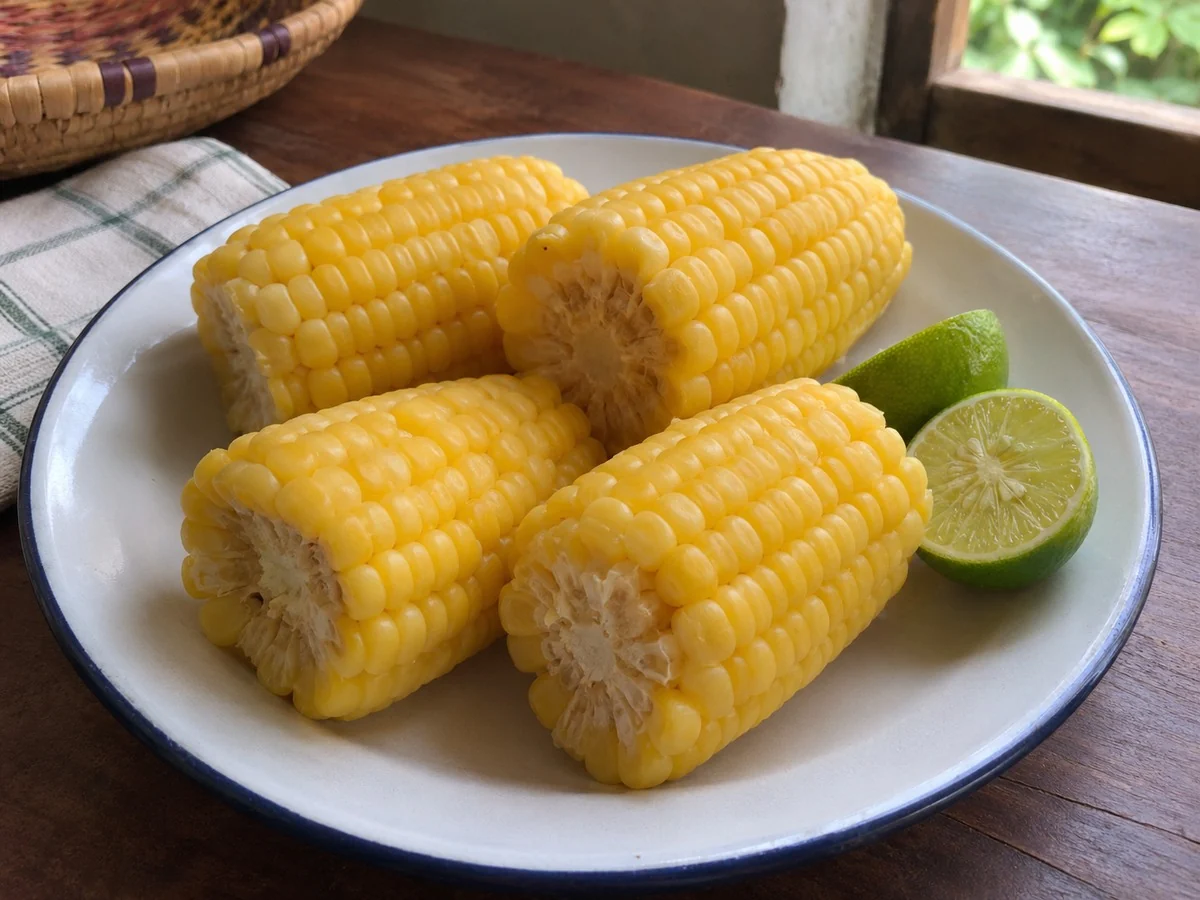
Ingredients
- 4 fresh ears of corn
- 2 L water
- 2 g fine salt
- 1 lime
Preparation
Put the ears in the pot and add water to cover. If they float, turn them during cooking or hold them under with a cooking basket. Leave room beneath the lid for the water to simmer, then put the pan on the heat.
When the water reaches a steady simmer, lower the heat and start timing. Put the lid on and keep the liquid from boiling over. Turn the ears once if those on top are partly out of the water. Use tongs rather than a short fork, since tongs grip the ears without piercing the kernels.
Start checking after about fifteen minutes if the maize is young. Pierce a kernel near the middle of an ear. It should yield without having to push the knife all the way to the cob. You can also remove a kernel, let it cool and taste it. If the skin is supple but the inside still firm, give it a few more minutes. A typical batch takes about twenty-five minutes in total.
Lift out the ears with the tongs and let them drain in a dish. If cooked whole, let them cool enough to handle before halving them. Share the larger and smaller pieces evenly. Serve lime wedges and the salt in a small separate dish.
Introduction
Ingredients and equipment
Allow four fresh ears of maize, about two litres of drinking water, two grams of fine salt and one lime. The amount of water assumes a pot big enough to take all four ears. Cover them with water or use a suitable cooking basket to hold them under. Set out kitchen tongs, a small knife to test doneness and a long dish for draining. Allow ten minutes to shuck and clean the ears and about twenty-five minutes at a simmer. Very young ears may be done sooner. Allow a little extra time for firmer maize.
Choosing and preparing the ears
Choose ears that feel heavy for their size. If they still have husks, look for ones that wrap well around the ears and have not dried completely. Peel back a leaf and look at the kernels near the tip. They can be a little smaller than those in the middle, but long stretches of flat rows reduce the yield. For a first batch, choose ears of similar diameter so they can all come out of the pan at the same time.
Pull the outer husk down towards the base, then remove the finer leaves and gather the silks by hand. Rinse the ears briefly and pull out any strands left between the kernels. Trim any projecting end of the cob on a stable board. Halve an ear that does not fit the pot. Use a board that will not slip and make the cut where the two pieces will be similar in length. Still check the kernels for tenderness during cooking.
Step-by-step preparation
1. Put the ears in the pot and add water to cover. If they float, turn them during cooking or hold them under with a cooking basket. Leave room beneath the lid for the water to simmer, then put the pan on the heat.
2. When the water reaches a steady simmer, lower the heat and start timing. Put the lid on and keep the liquid from boiling over. Turn the ears once if those on top are partly out of the water. Use tongs rather than a short fork, since tongs grip the ears without piercing the kernels.
3. Start checking after about fifteen minutes if the maize is young. Pierce a kernel near the middle of an ear. It should yield without having to push the knife all the way to the cob. You can also remove a kernel, let it cool and taste it. If the skin is supple but the inside still firm, give it a few more minutes. A typical batch takes about twenty-five minutes in total.
4. Lift out the ears with the tongs and let them drain in a dish. If cooked whole, let them cool enough to handle before halving them. Share the larger and smaller pieces evenly. Serve lime wedges and the salt in a small separate dish.
Adjustments
Very young ears will become tender sooner. Take them out when ready instead of waiting for the last ear. If all the kernels are firm, restore a steady simmer and make sure water circulates around the ears. Filling the pot to the rim restricts circulation. For eight ears, two pots or two batches make it easier to check doneness. Start timing a second batch once the water returns to a simmer. For a smaller portion, choose a smaller pan and judge cooking time by tenderness.
Serving and nutrition
Serve warm as a snack or alongside vegetables. Rub a lime wedge over the kernels just before eating and spread a pinch of salt over the moist surface. Lime adds enough acidity to lift the flavour on its own for many people. Arrange the half ears on a plate and keep the lime wedges in a separate bowl so water from the cobs does not collect around them. The kernels supply mostly carbohydrates and some fibre. Edible weight varies by ear. To estimate the portion, strip and weigh the kernels from a representative ear, leaving the cob out of the calculation.
To serve the maize with a sauce, cut the drained ears into shorter sections. Serve the sauce separately so the pieces are easy to pick up.
For a large meal, cut the lime before putting the ears in the water so they can go to the table soon after draining. To keep the salt from collecting in the grooves, turn the cob gently as you sprinkle it over several rows. With sweeter ears, try the lime by itself before adding more seasoning.
For four equal portions, pair the slimmer tips with thicker halves.
Cultural context
This home preparation uses an ingredient already present in the Ugandan collection. It complements the grilled and sautéed maize recipes. The grilled kernels take on the flavour of the coals. For the sautéed version, the kernels are cut from the cob before going into the pan. Here, the ears remain whole for most of the preparation and the kernels cook in water. The recipe gives quantities for serving and ways to judge tenderness when the ears are different sizes.
Nutrition notes
Estimated nutrition per serving. Before adjustment for cooking losses · Calcium 27 mg · Iron 1.6 mg · Potassium 217 mg · Vitamin A 5 µg RAE · Vitamin C 5.8 mg