Boiled yam
Boiled yam is served in large pieces that hold together on the plate but yield under a fork. When they come out of the pot, the pieces look matte and slightly moist. The centre can be floury or soft depending on the variety. This recipe uses only water and a little salt. It is designed to go with a sauce and uses evenly sized pieces so they cook together. Well-drained yam is easy to portion and holds up when you spoon sauce over it.
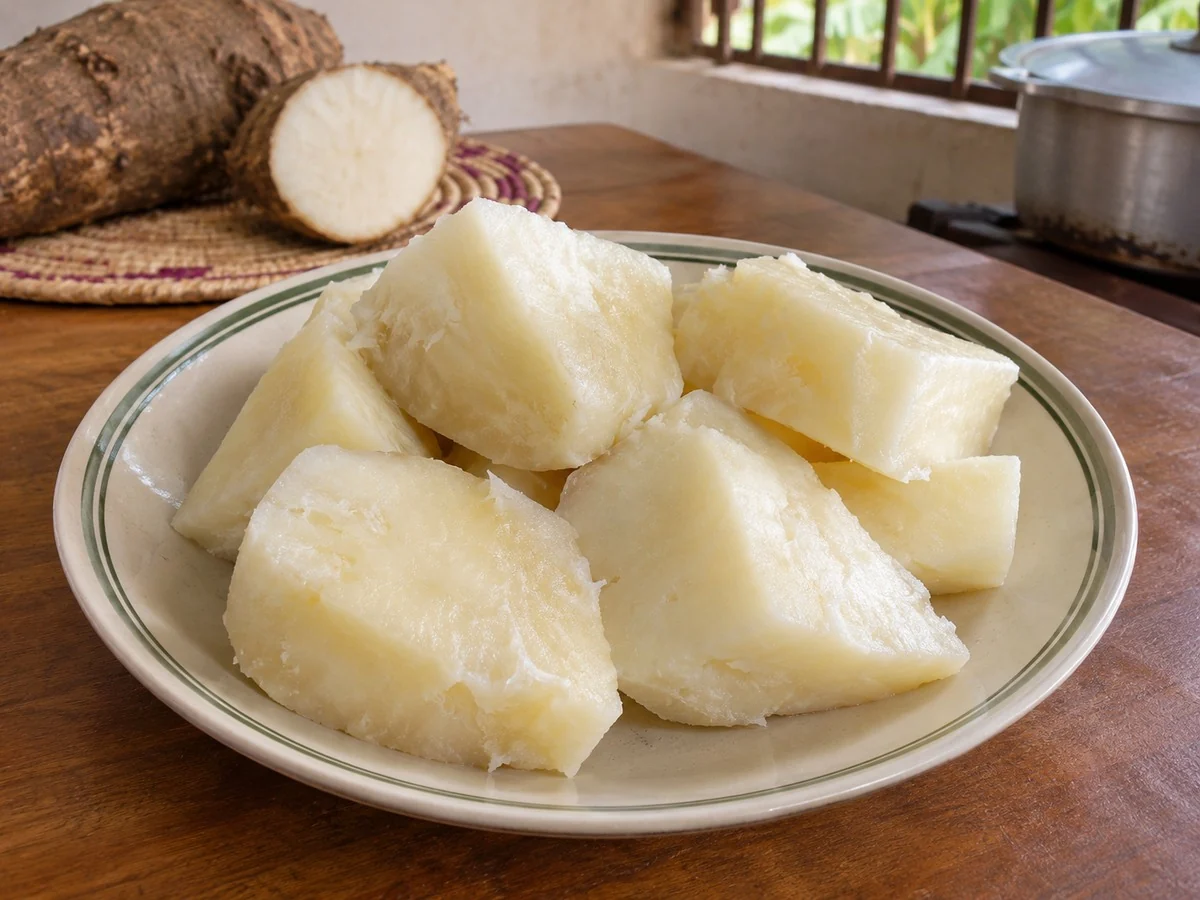
Ingredients
- 900 g peeled edible yam
- about 1.5 litres water
- 3 g fine salt
Preparation
Put the yam in the saucepan and add water to cover. Add the measured salt and bring to a simmer. Keep the water well below the rim. While it heats, set out the colander and prepare the accompanying sauce. Once the simmer is steady, lower the heat so the pieces do not keep knocking together.
Cook until tender. After about twenty minutes, lift one of the thickest pieces and pierce it in the centre. The tip should pass through without meeting a hard patch. If the centre resists, cook a few minutes longer and check another piece. Depending on the cut and variety, the cooking may exceed thirty minutes. If smaller pieces are already fragile, take them out before giving the larger ones more time.
When tender, drain the pieces and return them to the empty pan off the heat for about a minute. Let the surface steam escape. Transfer the yam with a wide spoon or spatula, particularly if the pieces split easily. Serve immediately or cover briefly while plating.
Introduction
Ingredients and preparation
For four servings, prepare 900 g of peeled edible yam, about 1.5 litres of water and 3 g of fine salt. The yam weight is for the usable pieces after peeling and trimming. Use enough water to cover the pieces in a medium saucepan. If the pan is very wide, use a closer-fitting one or add a little more water to cover. Set out a stable board, a sturdy knife, a colander and a fork to check doneness. Allow about fifteen minutes to prepare the yam and twenty to thirty at a simmer, or a few more for particularly large pieces.
Preparing and cutting the yam
Rinse the outside of the tuber before placing it on the board. If it rolls, cut a flat surface to steady it. Peel and trim it, then weigh the flesh. Cut pieces about four centimetres thick at the largest point. Aim for even thickness rather than perfect cubes. Group the smaller end pieces at serving to make a full portion. Rinse the cut pieces briefly and start cooking them promptly.
Some yams are easier to slice into thick rounds than to split lengthways. If the whole tuber is hard to hold, buy a precut section. Wedges cut from rounds work as well as cubes. Avoid leaving a thin point attached to a thick centre, since the tip may break off before the centre is tender. Trim it or halve the piece so it cooks evenly.
Step-by-step preparation
1. Put the yam in the saucepan and add water to cover. Add the measured salt and bring to a simmer. Keep the water well below the rim. While it heats, set out the colander and prepare the accompanying sauce. Once the simmer is steady, lower the heat so the pieces do not keep knocking together.
2. Cook until tender. After about twenty minutes, lift one of the thickest pieces and pierce it in the centre. The tip should pass through without meeting a hard patch. If the centre resists, cook a few minutes longer and check another piece. Depending on the cut and variety, the cooking may exceed thirty minutes. If smaller pieces are already fragile, take them out before giving the larger ones more time.
3. When tender, drain the pieces and return them to the empty pan off the heat for about a minute. Let the surface steam escape. Transfer the yam with a wide spoon or spatula, particularly if the pieces split easily. Serve immediately or cover briefly while plating.
Adjustments and variations
If the edge starts splitting while the inside is firm, turn down the heat and finish at a gentle simmer. A hard boil damages the outside before the centre is ready. If a few pieces are too soft to lift, scoop them up and serve them mashed. Mash after draining and add a spoonful of hot water if the flesh is very floury. Taste before adding more salt, especially if the sauce is already well seasoned.
For a half batch, use a small pan and keep the pieces just covered. The timing still depends on their thickness. For a larger batch, use two saucepans if your usual pot would leave the pieces deeply stacked. You can then lift out the ones that turn tender first. When serving with a stew, start the yam when the sauce is nearly ready. That makes it easier to serve the pieces hot without leaving them in the water.
Serving and nutrition
Divide into four portions before adding sauce. With okra in tomato sauce, serve the pods alongside and add a little sauce around the yam. Offer peanut sauce in a separate bowl so people can dip a bite or spoon it on. Yam supplies mostly carbohydrates and can be paired with pulses or fish. The quantities refer to the yam alone. To estimate serving weight, weigh the pieces once cooked and drained, then divide them evenly.
A small bite of plain yam helps you judge how it goes with a more strongly seasoned sauce. Keep larger pieces whole until serving. Cut them on the plate if you want them to absorb more sauce.
For a composed plate, arrange yam on one side and sauced vegetables on the other. For a shared dish, use a spatula to keep the edges intact. Serve a ladleful of sauce separately so each person can adjust their portion. This works especially well with floury yam, which quickly absorbs the juices after splitting.
Cultural context
The Centre for Research in Energy and Energy Conservation cookbook lists yam among Uganda’s everyday boiled staples. This measured home method leaves the yam plain so it can accompany stewed vegetables, okra sauce or fish. Yam here means the edible tuber sold under that name. Other staples in the collection, such as sweet potatoes and cassava, have their own recipes and preparation methods. Ask the seller for an edible yam meant for boiling.
Nutrition notes
Estimated nutrition per serving. Before adjustment for cooking losses · Calcium 58 mg · Iron 3.6 mg · Potassium 862 mg · Vitamin A 7 µg RAE · Vitamin C 29.2 mg