Squash leaves in sesame sauce
Squash leaves take on the flavour of gently softened onion and sesame sauce. Prepare them separately before combining them with the sauce. This gives you time to remove the tough fibres and check tenderness before adjusting the final consistency. The sauce should be loose enough to serve with kalo. Pure sesame paste makes a pale beige sauce in which the green leaves stay visible. Serve by the spoonful, with the starch alongside.
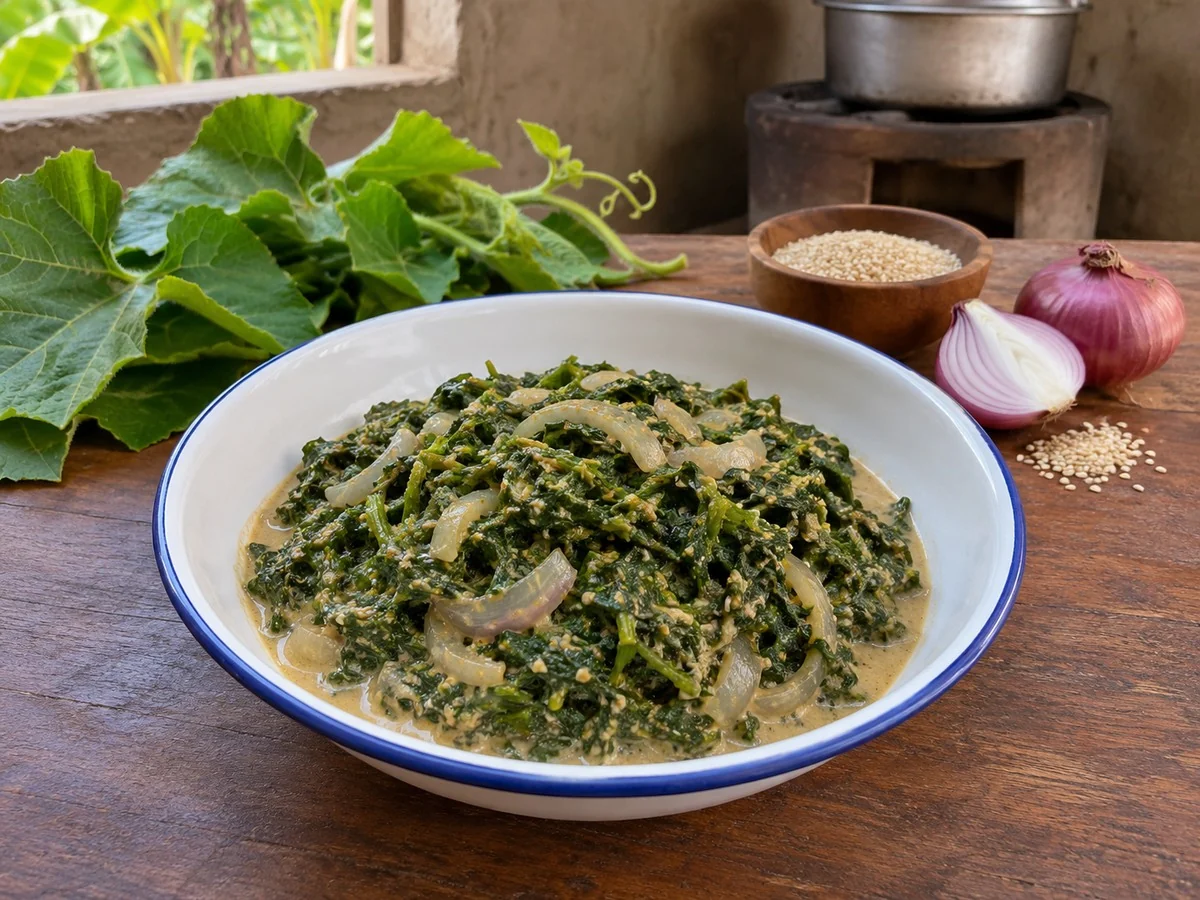
Ingredients
- 500 g tender edible squash leaves, trimmed
- 80 g pure tahini
- 100 g onion
- 180 ml water for the sauce
- 10 ml oil
- about 2 g salt
- extra water for boiling
Preparation
Bring the water for the preliminary cooking to a simmer. Add any prepared stalk pieces first, then the leaves. Use a spoon to wilt the leaves down without trapping them under the lid. Stir to bring the top leaves into the water. Towards the end, taste a thin rib. It should be easy to chew.
Drain the tender greens. Leave them in the colander for a few minutes and turn them lightly to release water trapped between the leaves. Let them drain longer if a lot of liquid still comes out. Measure the water for the sauce separately.
Slice the onion and sauté it in the 10 ml of oil over medium heat. Stir until soft. In a wide pan, bring the pieces towards the centre with a spatula so they colour evenly. Lower the heat when the onion is ready.
Stir the sesame paste in the jar before weighing it. Beat in the 180 ml of water gradually with a spoon. The first splash may make the paste stiff. Continue adding water in small amounts until you have a pourable cream. Pour it over the onion and add the drained leaves.
Simmer gently for about six minutes. Lift the leaves from the bottom to distribute the sesame. Taste before salting. Take the pan off the heat when the sauce coats a leaf but still flows in the pan. If it thickens too quickly, stir in a few spoonfuls of hot water.
Introduction
Ingredients and equipment
For four portions, weigh out 500 g of tender, edible squash leaves after sorting, 80 g of pure sesame paste, 100 g of peeled onion, 180 ml of water for the sauce, 10 ml of vegetable oil and about 2 g of salt. Have extra water for the preliminary cooking, which will be drained. Buy leaves identified and sold as food, with small leaves still pliable. Use a saucepan, a colander, a sauté pan and a small bowl. Allow about twenty minutes for trimming and cutting and twenty-five for the two cooking stages.
Removing fibres
Lay a leaf on the board and look at the rib where it extends into the stalk. Remove thick ribs before cutting. Bend a piece of any young stalk you want to keep. If long strands appear, pull them along the stalk or discard that piece. The tender flesh is still usable. Weigh the leaves only after trimming, since large bunches can contain many stalks.
Wash in plenty of water and lift the leaves out, leaving grit at the bottom. Repeat if necessary. Drain in a colander and cut into short strips. Keep small stalk pieces apart if you plan to give them a brief head start in the water. An even cut makes mixing easier at the end. If the leaves are very small, leave a few whole to give the sauce texture.
Step-by-step preparation
1. Bring the water for the preliminary cooking to a simmer. Add any prepared stalk pieces first, then the leaves. Use a spoon to wilt the leaves down without trapping them under the lid. Stir to bring the top leaves into the water. Towards the end, taste a thin rib. It should be easy to chew.
2. Drain the tender greens. Leave them in the colander for a few minutes and turn them lightly to release water trapped between the leaves. Let them drain longer if a lot of liquid still comes out. Measure the water for the sauce separately.
3. Slice the onion and sauté it in the 10 ml of oil over medium heat. Stir until soft. In a wide pan, bring the pieces towards the centre with a spatula so they colour evenly. Lower the heat when the onion is ready.
4. Stir the sesame paste in the jar before weighing it. Beat in the 180 ml of water gradually with a spoon. The first splash may make the paste stiff. Continue adding water in small amounts until you have a pourable cream. Pour it over the onion and add the drained leaves.
5. Simmer gently for about six minutes. Lift the leaves from the bottom to distribute the sesame. Taste before salting. Take the pan off the heat when the sauce coats a leaf but still flows in the pan. If it thickens too quickly, stir in a few spoonfuls of hot water.
Adjustments and serving
If more water comes out of the leaves in the sauté pan, briefly reduce the sauce uncovered. If the leaves look compact, separate them with two spoons before cooking any longer. Tangled leaves can make the mixture look too thick even when the sauce is loose. Taste a coated leaf and look at what remains in the spoon before making an adjustment.
Serve kalo on a plate and the sauce in a separate bowl. It also works with rice or steamed squash wedges. The leaves provide fibre, and the sesame paste contributes fat. Sesame is an allergen. The portions refer to the greens alone. To give everyone the same amount of sauce, divide the leaves first, then spoon the remaining liquid over them.
A lighter sauce
For a lighter sauce, start with a little less sesame paste and add the remainder after tasting. For a double batch, use a sauté pan in which you can easily lift the greens and stir across the whole base. Reduction depends on how wide the pan is. A tall narrow saucepan retains more steam. Try a few minutes uncovered before changing the amount of sesame.
The strength of the sesame paste depends on how dark the seeds were toasted. Taste it before adding it. A deeply toasted paste may call for less next time, especially with delicately flavoured greens. If testing the recipe more than once, note which paste you used so you can reproduce the result with another jar.
Cultural context
The Mildmay Institute of Health Sciences cookbook lists squash leaves among the greens used in sauces thickened with seeds. This home adaptation uses sesame and an onion base, with its own choice of paste and proportions. The squash leaves with tomatoes in the first volume have a different flavour. Here, the sesame goes in after the leaves have been cooked and drained, so you can adjust the sauce independently of how long the thick ribs take to soften.
Nutrition notes
Estimated nutrition per serving. Before adjustment for cooking losses · Calcium 640 mg · Iron 5.2 mg · Potassium 757 mg · Vitamin A 140 µg RAE · Vitamin C 16.5 mg