Amaranth leaves with okra and peanut paste
This amaranth-leaf sauce is thick and supple. Okra cooks with the greens, and thinned peanut paste adds further body and a toasted flavour. The greens cook in water, then simmer gently once the paste has been added. The leaves should still be visible in the finished sauce. Serve with sweet potato, whose sweetness contrasts with the vegetal taste of amaranth.
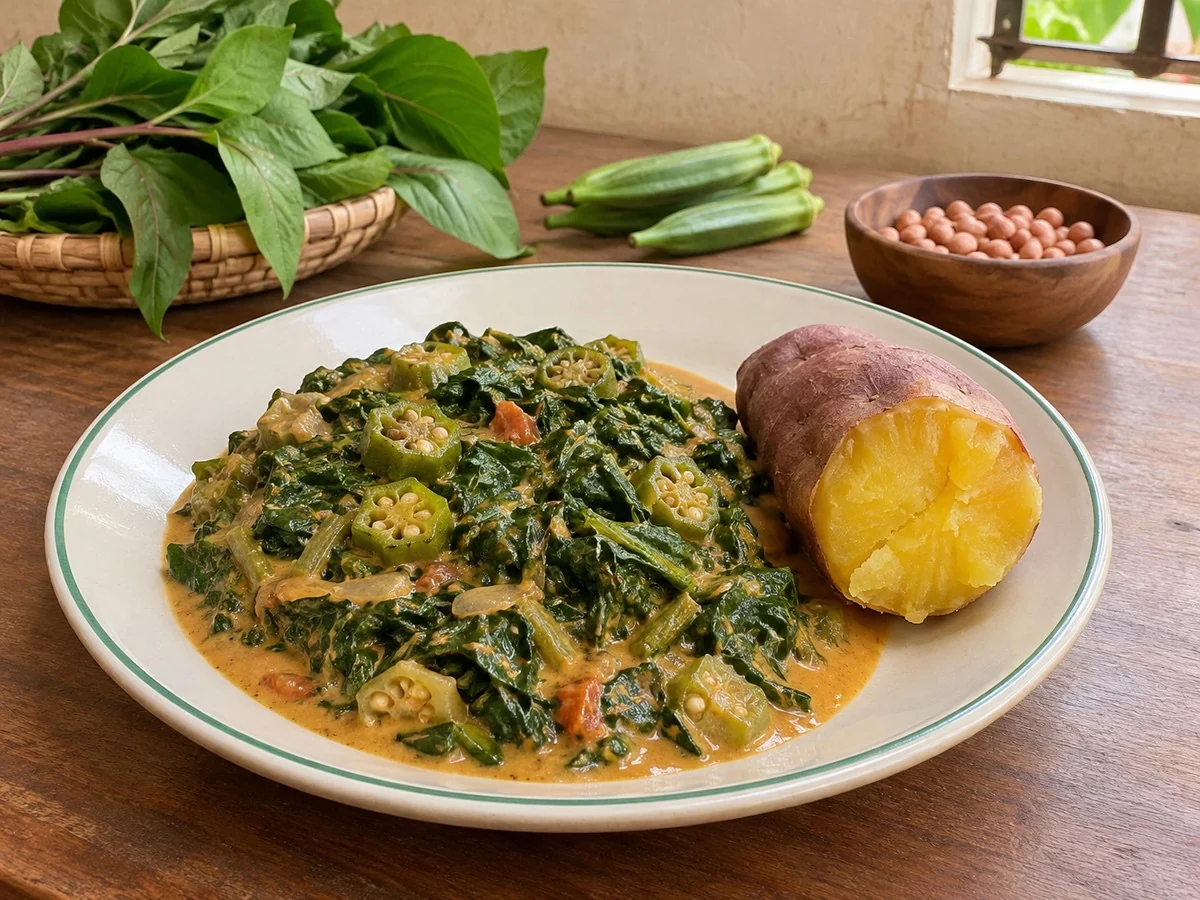
Ingredients
- 450 g edible amaranth leaves, trimmed
- 100 g okra
- 110 g pure unsweetened peanut paste
- 300 ml water
- about 2 g salt
Preparation
Heat 300 ml of water in the saucepan. When it simmers, add the okra and greens. If the leaves rise above the rim, add them in batches, turning them with a spoon until they wilt. Partly cover and stir once or twice to immerse the top leaves.
Simmer about twelve minutes, then test a leaf and an okra round. If the small stalks are still fibrous, cook a little longer. The liquid should thicken slightly. Leave some for loosening the peanut paste. Add a few spoonfuls of hot water if the pan starts running dry.
Put the peanut paste in a bowl. Take hot cooking liquid from the pan and stir it in a spoonful at a time. The paste may stiffen at first. Keep adding liquid gradually until it forms a smooth, lump-free cream loose enough to pour over the greens.
Add the cream back in batches, sliding the spoon under the leaves and lifting between additions. Cook over low heat for about eight minutes and scrape the bottom regularly. Keep the simmer gentle so the bubbles do not throw up splashes. If the sauce catches, add a little hot water and lower the heat straight away.
Once the texture is even, taste a bite of greens with sauce and add salt if needed. Tilt the spoon to judge thickness. The sauce should fall slowly while still clinging to the leaves. At the table, serve the greens and sauce together in each spoonful.
Introduction
Ingredients and timing
Prepare 450 g of edible amaranth leaves weighed after trimming, 100 g of okra, 110 g of pure unsweetened peanut paste, 300 ml of water plus a few spoonfuls of hot water if needed, and about 2 g of salt. For bunches of greens, allow enough extra weight to remove the thick stalks before weighing. Choose okra with bases the knife can cut easily. Allow fifteen minutes for preparation and about twenty-five for cooking. Have a medium saucepan, a bowl and a colander ready to move directly from washing to cooking.
Preparing the greens and okra
Pull the large stalks away from the bunch. Keep the youngest tips if they bend easily. Wash the greens and let them drain. Wash two handfuls separately if the bunch is thick so the water reaches every leaf. Cut short strips so the greens coat evenly and are easy to portion. Wash the okra before cutting, remove the hard stalk end and slice it into fairly even rounds.
Stir the peanut paste in the jar if oil has risen to the surface. The first spoonfuls of a separated paste contain more oil, so mix it thoroughly before weighing. Choose a peanut-based paste and taste for salt. If it is already salted, start cooking without adding any more.
Step-by-step preparation
1. Heat 300 ml of water in the saucepan. When it simmers, add the okra and greens. If the leaves rise above the rim, add them in batches, turning them with a spoon until they wilt. Partly cover and stir once or twice to immerse the top leaves.
2. Simmer about twelve minutes, then test a leaf and an okra round. If the small stalks are still fibrous, cook a little longer. The liquid should thicken slightly. Leave some for loosening the peanut paste. Add a few spoonfuls of hot water if the pan starts running dry.
3. Put the peanut paste in a bowl. Take hot cooking liquid from the pan and stir it in a spoonful at a time. The paste may stiffen at first. Keep adding liquid gradually until it forms a smooth, lump-free cream loose enough to pour over the greens.
4. Add the cream back in batches, sliding the spoon under the leaves and lifting between additions. Cook over low heat for about eight minutes and scrape the bottom regularly. Keep the simmer gentle so the bubbles do not throw up splashes. If the sauce catches, add a little hot water and lower the heat straight away.
5. Once the texture is even, taste a bite of greens with sauce and add salt if needed. Tilt the spoon to judge thickness. The sauce should fall slowly while still clinging to the leaves. At the table, serve the greens and sauce together in each spoonful.
Adjustments and variations
A thick peanut paste can make the sauce firmer than expected even when weighed accurately. After adding water, let the sauce simmer briefly before adding more. If the result is too loose, uncover the pan and reduce while stirring the bottom. The okra may continue thickening the sauce, so test it before reducing further. If it stands before serving, stir once to redistribute the sauce.
With very tender amaranth leaves, simmer the okra alone for a few minutes before adding the greens. For a double batch, use a saucepan wide enough to reach the leaves with the spoon as they wilt. Begin with enough water to moisten the base evenly. Adjust the texture before loosening the paste rather than adding all the liquid at the end. For cowpea leaves, follow the dek boo recipe and adjust the timing to the leaves.
Serving and nutrition
Serve large pieces of sweet potato alongside the sauce so they hold their texture. Kalo or posho can also take a spoonful of sauce. If serving this as a starter among several dishes, use smaller bowls and offer the starch separately. Peanut paste provides fat and protein, and the vegetables provide fibre. This dish contains peanuts. Accompaniments are outside the stated quantities and can change the nutritional composition of the meal.
When plating, lift a portion of greens with a small ladle, then spoon in sauce from the bottom. This keeps the first plate from receiving most of the greens and the last mostly sauce.
For a family-style meal, place the bowl of greens among the plates of starch and provide a separate clean spoon for the peanut sauce.
Cultural context
The Mildmay Institute of Health Sciences cookbook describes leafy vegetables cooked with okra and thickened with peanut paste. It mentions doodo, bugga and nakati among the greens used. This adaptation uses edible amaranth, with measured quantities for four servings. The peanut and okra distinguish it from the doodo in the manuscript. The sesame dek boo in this batch starts with cowpea leaves and uses a different seed paste.
Nutrition notes
Estimated nutrition per serving. Before adjustment for cooking losses · Calcium 453 mg · Iron 9.2 mg · Potassium 879 mg · Vitamin A 264 µg RAE · Vitamin C 82.7 mg