Nakati with eggs
Nakati with eggs is primarily a dish of tender greens. The egg binds the leaves into soft clusters among visible pieces of onion and sweet pepper. Cooking happens in two stages. Boil the greens first, then toss them in a frying pan with the aromatics and eggs. Draining between the two stages is important. Water left in the pan slows the setting of the eggs and makes the mixture uneven. Serve this version with a starch or as a light dish.
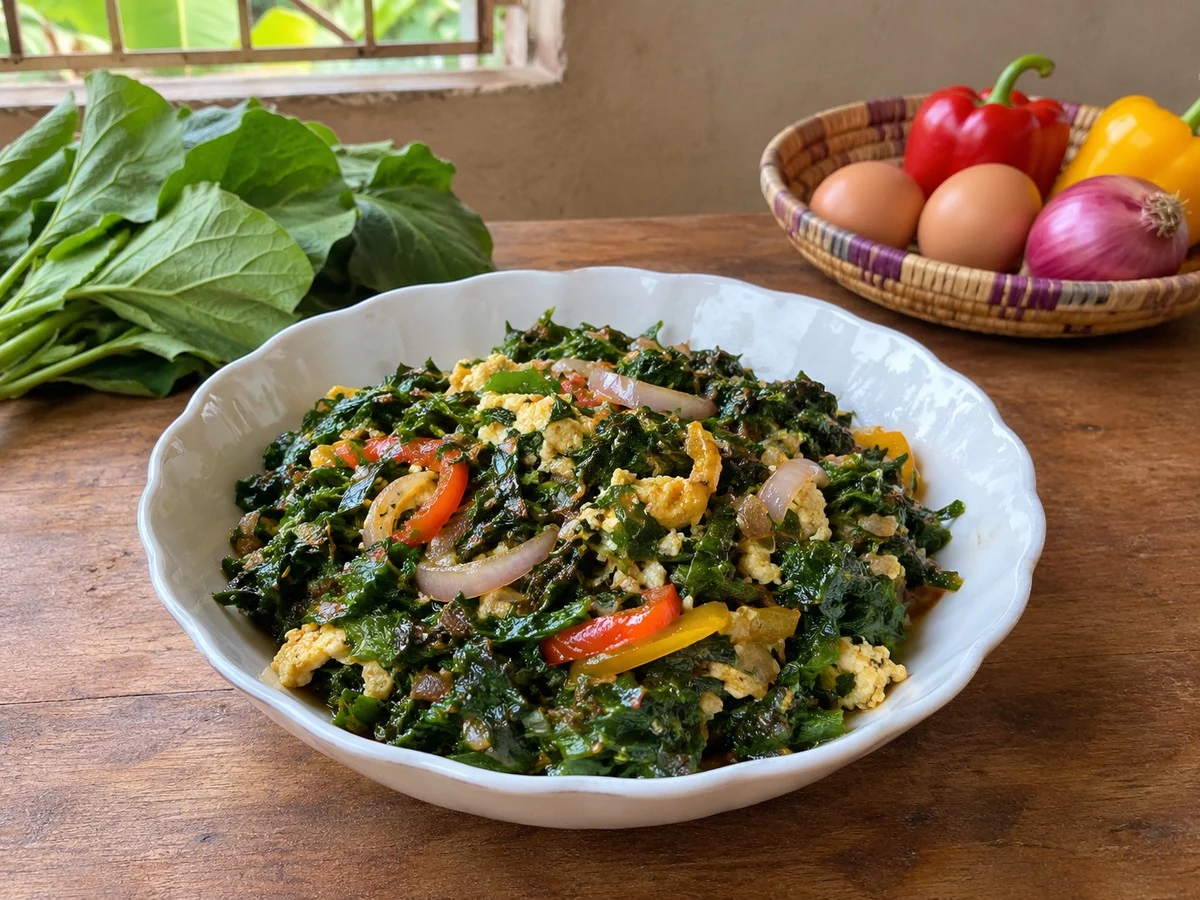
Ingredients
- 450 g trimmed edible nakati leaves
- 4 eggs
- 100 g onion
- 80 g bell pepper
- 20 ml oil
- water for cooking the leaves
- about 2 g salt
Preparation
Sort the greens and remove any stalks that resist twisting. Wash in several changes of water, lifting them out each time to leave the grit behind. Drain and slice into short strips. Cut any thicker tips more finely so they cook at the same rate.
Bring a saucepan of water to a simmer and add the leaves. Stir to submerge them. Towards the end of cooking, taste a small stalk to judge tenderness. Take the greens out when pliable and drain for a few minutes, turning them in the colander. Press them lightly with the back of a spoon if they still hold water.
While the greens drain, slice the onion and cut the pepper into small strips. Heat the oil over medium heat. Sauté the onion, add the pepper and wait until the pieces soften. The pepper should keep its colour. If the base of the pan browns too much, reduce the heat and stir.
Add the nakati and lift it with a spatula to mix it with the onion. If water comes out, stir uncovered until it evaporates. Meanwhile, crack the eggs into a bowl, add some of the salt and beat just until the whites and yolks are combined.
Lower the heat and pour the eggs over the leaves, distributing them across the pan. Wait for the edges to begin setting. Draw the spatula from the edges towards the centre, then turn small sections to expose moist areas to the heat. Continue gently until the eggs are fully set. Taste before adding the remaining salt and serve.
Introduction
Ingredients and preparation
For four portions, allow 450 g of edible nakati weighed after trimming, four eggs, 100 g of peeled onion, 80 g of deseeded sweet pepper, 20 ml of oil, water for cooking and about 2 g of salt. Remove thick stalks before weighing. Fine, pliable tips can stay with the leaves. Set out a saucepan, a colander, a small mixing bowl for the eggs and a wide, flat-based frying pan. Allow fifteen minutes to sort, wash and cut the ingredients, then about twenty minutes to precook and drain the greens and finish the dish. Timing varies with the tenderness of the leaves.
Step-by-step preparation
1. Sort the greens and remove any stalks that resist twisting. Wash in several changes of water, lifting them out each time to leave the grit behind. Drain and slice into short strips. Cut any thicker tips more finely so they cook at the same rate.
2. Bring a saucepan of water to a simmer and add the leaves. Stir to submerge them. Towards the end of cooking, taste a small stalk to judge tenderness. Take the greens out when pliable and drain for a few minutes, turning them in the colander. Press them lightly with the back of a spoon if they still hold water.
3. While the greens drain, slice the onion and cut the pepper into small strips. Heat the oil over medium heat. Sauté the onion, add the pepper and wait until the pieces soften. The pepper should keep its colour. If the base of the pan browns too much, reduce the heat and stir.
4. Add the nakati and lift it with a spatula to mix it with the onion. If water comes out, stir uncovered until it evaporates. Meanwhile, crack the eggs into a bowl, add some of the salt and beat just until the whites and yolks are combined.
5. Lower the heat and pour the eggs over the leaves, distributing them across the pan. Wait for the edges to begin setting. Draw the spatula from the edges towards the centre, then turn small sections to expose moist areas to the heat. Continue gently until the eggs are fully set. Taste before adding the remaining salt and serve.
What to look for
Keep the heat low enough for the eggs to set before the leaves dry out. Any clear liquid you see before the eggs go in often comes from greens drained too quickly. Let it cook off uncovered a little longer. Once the eggs are in, lift the mixture in small sections. Vigorous stirring breaks it into tiny pieces, while gentler movements keep the leaves visible.
For a larger batch, sauté the greens in batches or use two pans. A crowded pan holds steam and makes the eggs set less evenly. For two portions, halve the quantities and use a smaller pan so the egg stays in contact with the vegetables instead of spreading in a thin film over the base. Season after combining. The onion and pepper may provide enough sweetness that you need less than the full amount of salt.
Variations and serving
For a firmer result, let the egg set slightly longer before moving the spatula through it. For small clusters, start as soon as the edges firm up. Offer a squeeze of lime at the table if desired. Serve with fully prepared edible cassava, posho or cooked sweet potato. Keep the starch on the side to preserve the contrast between its firm texture and the supple greens.
Eggs supply some of the protein and are an allergen. The servings cover the sautéed nakati alone. If you add sesame or peanut sauce, identify it separately. When portioning, lift the greens and eggs together so the last plate does not end up with mostly one ingredient.
Timing the meal
If serving posho, have it ready before beating the eggs so you can serve the greens as soon as the eggs set. Warm cold plates, especially when serving the greens in a shared dish. Diced raw tomatoes can be served separately. Their juices contrast with the greens on the plate. Keep them off the heat so the liquid does not interfere with the eggs setting. Offer a thick sauce separately with the starch rather than pouring it over the greens as they leave the pan.
Cut the posho into portions before bringing the frying pan to the table. The nakati can then be served while the leaves are still supple.
Cultural context
Nakati here means the edible leaves of African eggplant grown for food. The Mildmay Institute of Health Sciences cookbook lists nakati among its leafy vegetables. In another recipe it braises sukuma wiki and adds beaten egg. This recipe applies that second technique to nakati, as a variation on the plain nakati in the first volume. It needs a drier pan and attention to how the eggs set. Spinach gives a milder and often wetter variation.
Nutrition notes
Estimated nutrition per serving. Before adjustment for cooking losses · Calcium 414 mg · Iron 6.3 mg · Potassium 649 mg · Vitamin A 407 µg RAE · Vitamin C 119.6 mg