Okra in tomato sauce
Okra in tomato sauce is made with small pods left whole. They cook in an onion and tomato base until a knife tip slides in easily, while keeping their shape so they can be served individually. The sauce is more reduced than the one used for cowpeas and okra. Trimming the pods without slicing them keeps their outlines clean and prevents the dish from turning into a purée. Serve four side portions with plain rice or a piece of posho.
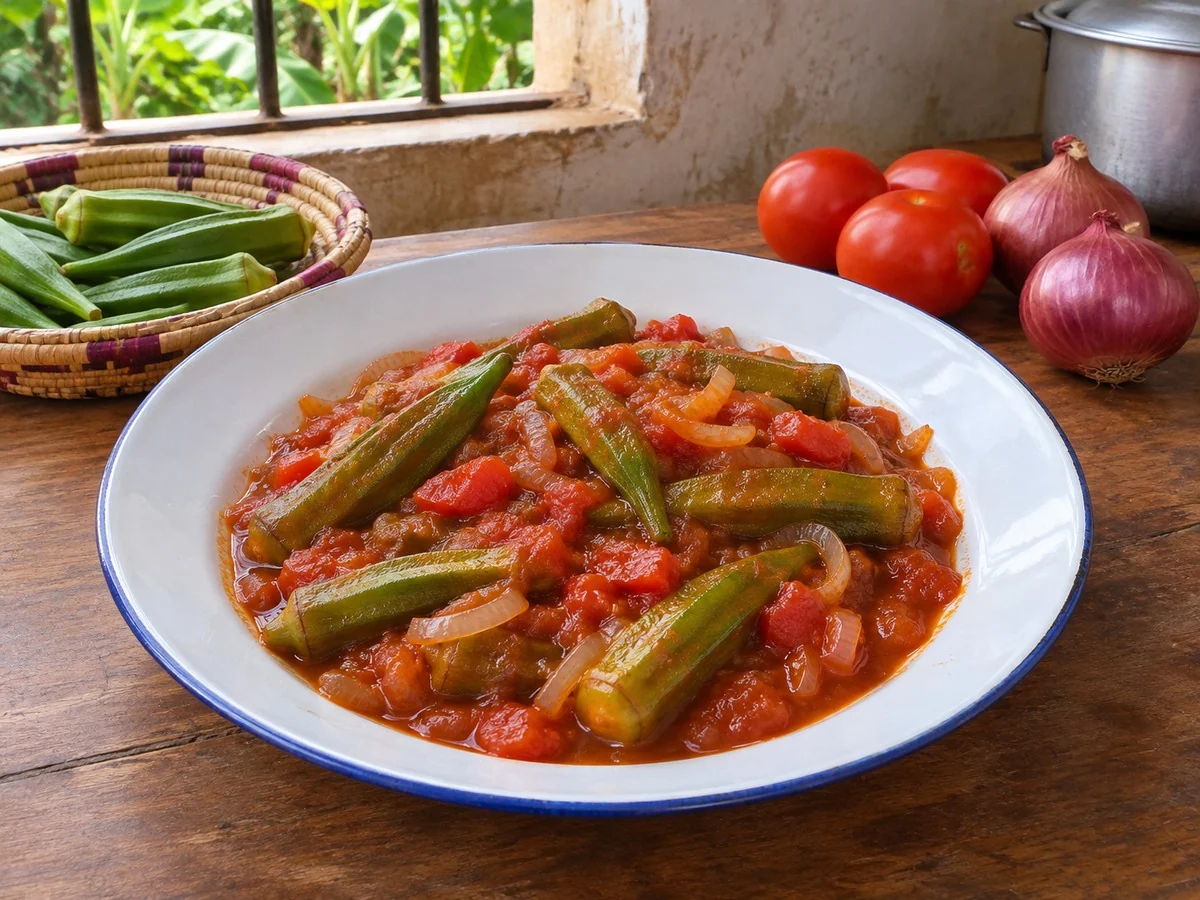
Ingredients
- 450 g young okra pods
- 300 g ripe tomatoes
- 90 g onion
- 15 ml neutral oil
- up to 80 ml water
- about 2 g salt
Preparation
Slice the onion and dice the tomatoes. Catch their juice in a bowl if there is a lot. Heat the oil in the sauté pan over medium heat, add the onion and stir until it softens enough to bend under a spoon.
Add the tomatoes and their juice and reduce over medium heat for about eight minutes. Crush any large pieces that stay firm and scrape the bottom. The sauce should thicken but stay moist enough for the okra to cook without sticking.
Lay the pods over the sauce. Pour some of the measured water down the side of the pan. Cover and cook at a gentle simmer for eight to ten minutes. Halfway through, turn a few pods with a spatula or shake the pan gently. Add the remaining water if the tomato thickens before the pods are tender.
Pierce a large pod near its base. The knife tip should go in easily. If the smaller pods are ready while the larger ones are still firm, lift the small ones into a bowl and briefly continue cooking the rest. Taste a bite with the sauce before adding salt.
If the sauce is still thin, remove the tender pods and reduce the juices uncovered for a few minutes. Return the pods and coat them by gently shaking the pan back and forth. Serve without crushing the tips.
Introduction
Ingredients and timing
Allow 450 g of young okra, 300 g of ripe tomatoes, 90 g of peeled onion, 15 ml of neutral oil, up to 80 ml of water and about 2 g of fine salt. Weigh the okra after trimming the thick stalks. Use a lidded sauté pan wide enough for a loose single layer of pods. Allow fifteen minutes for preparation and about twenty minutes to cook. Larger pods may need a little longer. Watery tomatoes may also need extra time to reduce before you add the okra.
Choosing the pods
A young pod holds its shape without feeling hard or dry, and its tip gives slightly under pressure. Pick pods of similar length so they finish at roughly the same time. If your batch contains both small and larger pods, sort them on the board and put the larger ones into the pan first. The base should cut without having to push hard on the knife.
Wash and dry the whole pods. Trim the stalks, keeping the base intact where possible. This helps them cook without exposing the whole cavity. A pod with a small nick is fine and will release a little more thickener, which helps when the tomato sauce is thin. Leave most pods unslit so the finished vegetables still look whole.
Step-by-step preparation
1. Slice the onion and dice the tomatoes. Catch their juice in a bowl if there is a lot. Heat the oil in the sauté pan over medium heat, add the onion and stir until it softens enough to bend under a spoon.
2. Add the tomatoes and their juice and reduce over medium heat for about eight minutes. Crush any large pieces that stay firm and scrape the bottom. The sauce should thicken but stay moist enough for the okra to cook without sticking.
3. Lay the pods over the sauce. Pour some of the measured water down the side of the pan. Cover and cook at a gentle simmer for eight to ten minutes. Halfway through, turn a few pods with a spatula or shake the pan gently. Add the remaining water if the tomato thickens before the pods are tender.
4. Pierce a large pod near its base. The knife tip should go in easily. If the smaller pods are ready while the larger ones are still firm, lift the small ones into a bowl and briefly continue cooking the rest. Taste a bite with the sauce before adding salt.
5. If the sauce is still thin, remove the tender pods and reduce the juices uncovered for a few minutes. Return the pods and coat them by gently shaking the pan back and forth. Serve without crushing the tips.
Adjusting the sauce
If clear juices separate from the tomato pieces, crush a little tomato flesh with a spoon and stir it in. The sauce is ready when it lightly coats the back of the spoon. Reduction is quicker in a wide frying pan than in a narrow saucepan, so allow for the change when adding water. Reserve a few spoonfuls of the measured amount for adjustments, especially with tomatoes that look less juicy.
For a slightly thicker sauce, slice two pods and add them to the tomato base before the whole ones. This keeps both textures. For a large batch, avoid piling up the pods. Two small sauté pans often cook more evenly than one deep pile. Pods near the surface otherwise take longer than the ones immersed in sauce.
Serving
Divide the pods before adding the sauce to give each plate a similar amount of vegetables. With white rice, serve the sauce alongside so the grains remain visible. With posho, put the okra in a small bowl so each person can take a pod with its sauce. A little chilli at the table lets people season their own servings. The recipe provides fibre, and the quantities cover the vegetables and sauce alone. Count rice, posho or other accompaniments separately.
For a group, use a wide spoon and lift the most delicate pods first, placing them straight into the serving dish so they keep their shape. Spoon the tomato and onion into the spaces between the pods. If the pods differ in size, divide the larger ones among the portions or halve them when serving.
Cultural context
The Ugandan cookbook from the Mildmay Institute of Health Sciences lists okra among the vegetables added to leafy sauces, where it helps build texture. This home recipe puts it centre stage with tomatoes. The quantities and the way the whole pods are cooked are specific to this adaptation. Leaving out peanut and sesame pastes lets you taste the okra and the tomato juices distinctly. In the same collection, the cowpea recipe uses rounds with more cut surface in contact with the liquid, giving a different sauce.
Nutrition notes
Estimated nutrition per serving. Before adjustment for cooking losses · Calcium 114 mg · Iron 1.6 mg · Potassium 642 mg · Vitamin A 81 µg RAE · Vitamin C 55.0 mg