Cowpeas in okra sauce
Cowpeas in okra sauce brings together tender beans and recognisable rounds of okra in a red onion and tomato sauce. Start with cooked cowpeas and give the okra time to thicken the tomato base before combining them. The dish is served by the spoonful. It should be thick enough to sit alongside posho while leaving some sauce at the bottom of the bowl. The okra provides all the thickening, with no need for flour or seed paste.
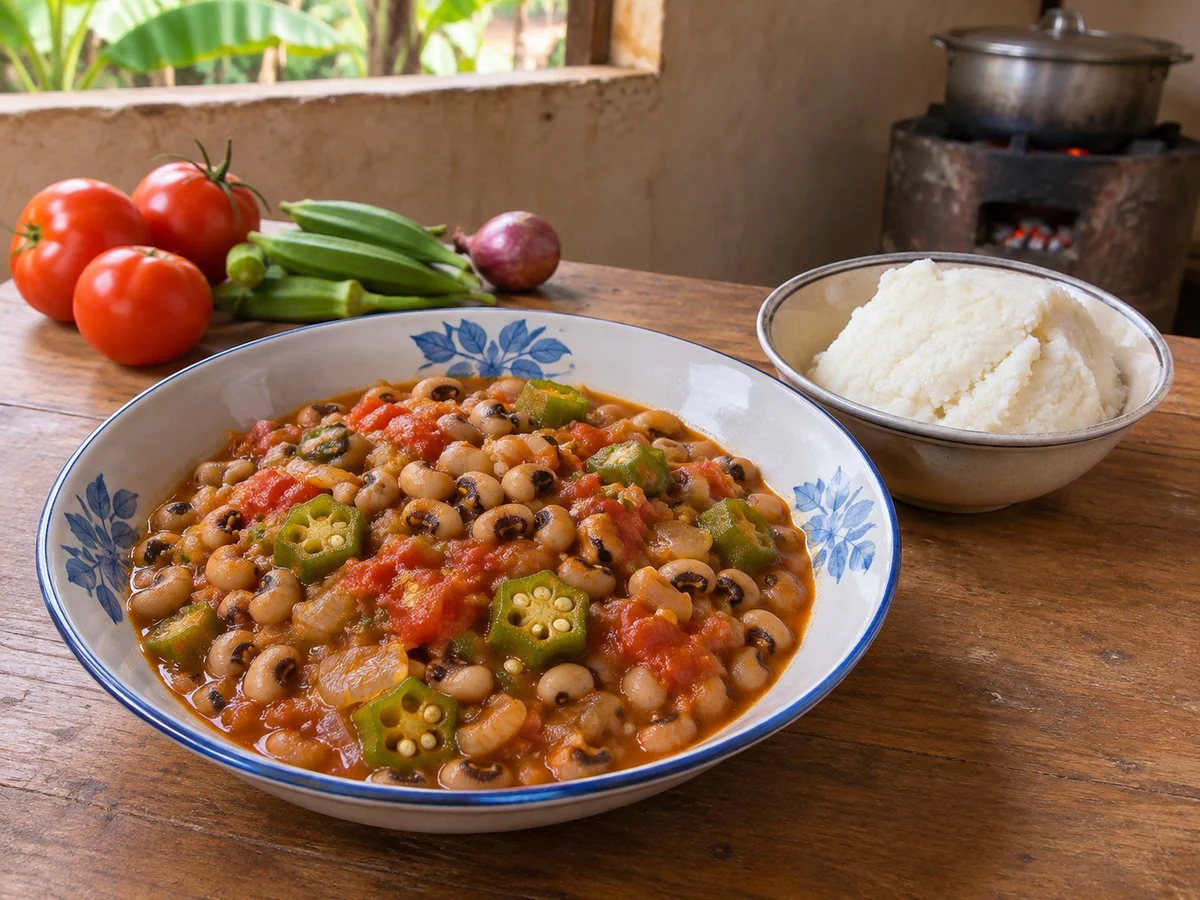
Ingredients
- 550 g cooked cowpeas, drained
- 220 g fresh okra
- 200 g ripe tomatoes
- 100 g onion
- 250 ml water
- 15 ml oil
- up to 2 g salt
Preparation
Finely dice the onion. Chop the tomatoes and save the juice. Rinse the whole okra pods, then drain and pat them dry before cutting them into rounds about one centimetre thick. Thinner rounds expose more surface to the liquid and thicken it sooner.
Heat the oil over medium heat and add the onion. Stir until it softens and becomes translucent. Add the tomatoes and their juice. Let the pieces soften and collapse for a few minutes. Run the spoon along the bottom occasionally. If the onion starts to brown before the tomatoes release their juice, add a spoonful of the measured water.
Add the okra and most of the water. Partially cover the pan and simmer for about twelve minutes. The liquid should look thicker when lifted with a spoon. If a lot of thin liquid remains, move the lid farther aside to let more steam escape.
Add the drained cowpeas. Stir by sliding the spoon under the beans and gently lifting them. Cook for about eight more minutes, keeping just enough liquid in the pan for the sauce to stay loose. Taste a bean with a little sauce before adding salt gradually.
Check one of the thickest okra rounds for tenderness and assess the consistency of the sauce. A spoonful should hold some cowpeas, a few pieces of okra and a little sauce. If anything is still too firm, cook for a few more minutes and add a little of the reserved water. Divide the beans among the portions before adding the remaining sauce.
Introduction
Portions and equipment
Allow four servings and about fifteen minutes for preparation. Cooking takes around twenty-five minutes once the beans are ready. If starting with dried cowpeas, follow the supplier’s soaking and cooking instructions before you begin. The beans should be tender all the way through. The tomato sauce warms and flavours them. Use a medium heavy-based saucepan, a fine colander and a spoon that lets you stir without crushing the beans.
Ingredients
Use 550 g of cooked cowpeas, weighed after draining, 220 g of fresh okra, 200 g of ripe tomatoes, 100 g of peeled onion, 250 ml of water, 15 ml of oil and up to 2 g of salt. If the cowpeas are packed in brine, rinse them and let the colander finish dripping before weighing. Choose okra pods that slice easily. Large pods that resist the knife often stay fibrous even after simmering. The tomatoes should be ripe enough to crush with a spoon. A fleshier tomato releases less juice, so you may need all 250 ml of water.
Step-by-step preparation
1. Finely dice the onion. Chop the tomatoes and save the juice. Rinse the whole okra pods, then drain and pat them dry before cutting them into rounds about one centimetre thick. Thinner rounds expose more surface to the liquid and thicken it sooner.
2. Heat the oil over medium heat and add the onion. Stir until it softens and becomes translucent. Add the tomatoes and their juice. Let the pieces soften and collapse for a few minutes. Run the spoon along the bottom occasionally. If the onion starts to brown before the tomatoes release their juice, add a spoonful of the measured water.
3. Add the okra and most of the water. Partially cover the pan and simmer for about twelve minutes. The liquid should look thicker when lifted with a spoon. If a lot of thin liquid remains, move the lid farther aside to let more steam escape.
4. Add the drained cowpeas. Stir by sliding the spoon under the beans and gently lifting them. Cook for about eight more minutes, keeping just enough liquid in the pan for the sauce to stay loose. Taste a bean with a little sauce before adding salt gradually.
5. Check one of the thickest okra rounds for tenderness and assess the consistency of the sauce. A spoonful should hold some cowpeas, a few pieces of okra and a little sauce. If anything is still too firm, cook for a few more minutes and add a little of the reserved water. Divide the beans among the portions before adding the remaining sauce.
What to look for
Sliced okra can give the sauce a distinctly stretchy texture. That is expected, and it can be adjusted. Cut thicker rounds if you want less thickening. If the finished sauce is too dense, add hot water a little at a time and stir gently. Pouring in a large amount at once makes the consistency harder to control. If the dish is too thin, reduce it uncovered. Taste for salt after reducing, especially when using tinned cowpeas.
For a double batch, choose a larger pan so you can lift the beans without crushing them. Cold cowpeas from the fridge take longer to come back to a simmer. Start timing the last stage when the liquid begins moving again around the edges. For a half batch, a small saucepan helps the tomato and okra retain enough liquid with proportionally less added water. Pay particular attention to the bottom of the pan.
Variations and serving
For a hotter dish, offer chilli on the side. For a smoother sauce, crush a spoonful of cowpeas against the side of the pan, then stir them back in. This adds body without changing the ingredients. Serve posho on a plate alongside the cowpeas, or add plain rice if you prefer to soak up more of the sauce. Cooked greens make a separate side. Use small bowls if the dish will be shared with several starches.
The cowpeas supply plant protein and fibre. Okra and tomato also contribute fibre and give the sauce volume. The stated cooking times depend on the maturity of the okra, how much water the cooked cowpeas have absorbed and the width of the saucepan. The portions refer to the recipe on its own. To record the serving size, weigh the finished dish and divide by four, tracking any accompaniments separately.
If you want to serve the sauce with millet, start cooking the millet while the okra simmers. The cowpeas can stand while you plate the accompaniments, but give them a stir before serving because they settle at the bottom. Start dividing the beans from the first ladleful to keep the portions similar. If serving cooked leaves alongside, season them lightly so that the tomato’s acidity still comes through.
Cultural context
Cowpeas are among the pulses documented in meals in eastern and northern Uganda. The Mildmay Institute of Health Sciences cookbook also describes okra as an ingredient that can thicken vegetable dishes. This adaptation combines cooked cowpeas with fresh okra. It uses the seeds of the cowpea. The leaves used in dek boo need different sorting and cooking. If buying tinned cowpeas, choose plain ones and check the actual weight of the beans after draining off the liquid.
Nutrition notes
Estimated nutrition per serving. Before adjustment for cooking losses · Calcium 97 mg · Iron 3.7 mg · Potassium 800 mg · Vitamin A 47 µg RAE · Vitamin C 32.1 mg