Steamed squash
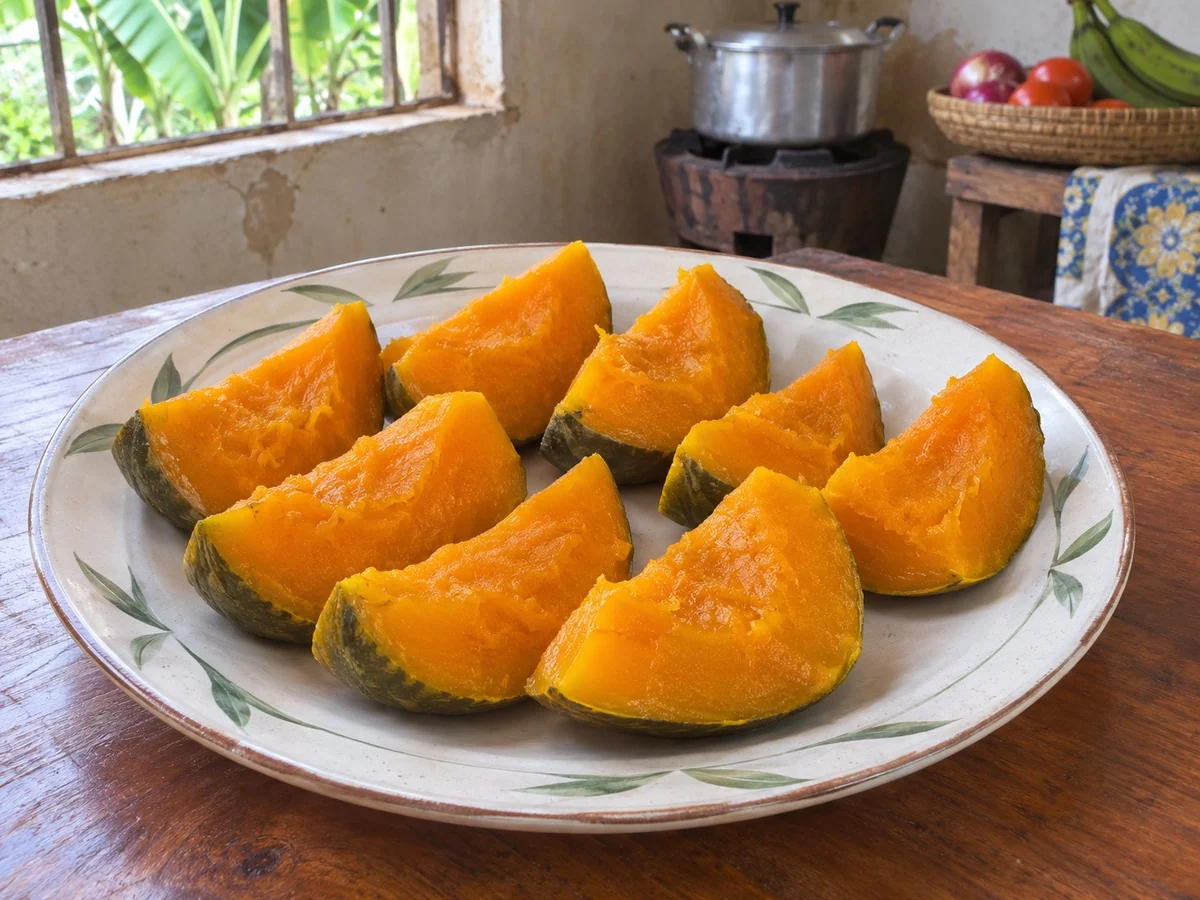
Steamed squash is served in tender wedges that hold their shape, with a moist surface and flesh soft enough to scoop with a spoon. Steaming works particularly well when the squash accompanies a full-flavoured sauce, such as thinned seed paste or beans in tomato sauce. The seasoning is light, so the choice of squash and its doneness directly affect the result. The recipe makes four side portions.
Ingredients
- 900 g edible squash, weighed after removing the seeds
- about 600 ml water for steaming
- 2 g fine salt
Preparation
Pour the water into the pot and check the clearance between the liquid and the basket before heating it. You should be able to set the basket in place without water coming up through its openings. Arrange the wedges with a little space between them. If the basket is small, cook two batches so the thickest pieces do not end up under a pile.
Bring the water to a simmer, set the basket in place and cover. Lower the heat to maintain steady steam. Keep the lid closed for the first few minutes. Check the water level if the sound of the simmer changes or the steam subsides. Top up with a little hot water in the bottom of the pot if needed.
After about twenty-five minutes, lift the lid away from you and test the largest wedge. Pierce the flesh in the centre and then close to the skin. If the tip only goes through the surface layer, cover and cook a few more minutes. If the wedges are different sizes, remove the tender ones first.
Lift the wedges out with a wide spatula. Let the surface steam disperse briefly, then distribute the salt over the flesh. Serve two wedges per person, dividing the smaller pieces evenly. Use plates with enough space to serve the sauce alongside the squash.
Introduction
Ingredients, equipment and timing
You will need 900 g of edible squash after removing the seeds and fibres, with the skin left on for cooking, about 600 ml of water to produce steam and 2 g of fine salt. The water quantity is a starting point. Adjust it to the width of your pot and the height of the basket. The base of the basket must stay above the water throughout cooking. Keep some hot water aside if the pot is wide or its lid lets much steam escape.
Set out a stable board, a large spoon for scooping out the seeds, a sturdy knife and a lidded pot with a steamer basket. Allow about fifteen minutes for preparation and twenty-five to thirty minutes of steaming, timed from when the water reaches a steady simmer. If the wedges are particularly thick, add a few minutes and test the flesh next to the skin before turning off the heat.
Choosing and cutting the squash
Choose a firm squash sold as food. Dense-fleshed squash holds together better when the wedges are transferred to plates. A moister squash yields softer flesh that can break more easily when lifted. To compare two varieties, cook a few pieces of equal thickness and note how long it takes the flesh next to the skin to become tender.
Wash and dry the outside so the squash sits securely on the board. Halve it, scoop out the centre and weigh the stated amount. Cut eight wedges, aiming for similar thickness at the widest point. A narrow piece from near one end can be served alongside another wedge. If the skin is too hard to cut through easily, buy a piece already cut by the seller. Leave the skin on during cooking to support the flesh, then remove it at serving if it is still tough.
Step-by-step preparation
1. Pour the water into the pot and check the clearance between the liquid and the basket before heating it. You should be able to set the basket in place without water coming up through its openings. Arrange the wedges with a little space between them. If the basket is small, cook two batches so the thickest pieces do not end up under a pile.
2. Bring the water to a simmer, set the basket in place and cover. Lower the heat to maintain steady steam. Keep the lid closed for the first few minutes. Check the water level if the sound of the simmer changes or the steam subsides. Top up with a little hot water in the bottom of the pot if needed.
3. After about twenty-five minutes, lift the lid away from you and test the largest wedge. Pierce the flesh in the centre and then close to the skin. If the tip only goes through the surface layer, cover and cook a few more minutes. If the wedges are different sizes, remove the tender ones first.
4. Lift the wedges out with a wide spatula. Let the surface steam disperse briefly, then distribute the salt over the flesh. Serve two wedges per person, dividing the smaller pieces evenly. Use plates with enough space to serve the sauce alongside the squash.
Adjustments and variations
For a shallow pot, cut shorter wedges and check that they do not touch the lid. Smaller pieces often cook more quickly. Start tasting or testing when the colour and appearance of the flesh change. If the squash is too soft to lift intact, scoop it out with a spoon and serve it in large pieces. It still pairs well with beans or a spoonful of odii.
For a more even texture, mash the hot flesh with a fork. Stop as soon as the pieces come together. For a particularly dry variety, add one or two spoonfuls of hot water. The resulting mash is easy to serve by the spoonful, especially alongside a thick sauce. If the squash is very sweet, offer a little lime juice to add drop by drop at the table.
Serving and nutrition
Serve two wedges with stewed beans, dek boo or peanut sauce. If using odii directly as a condiment, serve it in a little bowl so everyone can choose how much to take. A first bite of plain squash lets you gauge its sweetness. Tomato sauce adds a bright note and a seed-based condiment makes the dish feel richer. The quantities in this recipe apply to the squash alone.
Orange-fleshed squash contributes carotenoids. The amount depends on the variety and the weight of flesh eaten, particularly if the skin is left behind. The basic recipe calls for water and salt and pairs well with a pulse dish. Sesame or peanut accompaniments change the composition of the meal and the allergens to mention. Keep the squash and sauce separate until serving if you want everyone to adjust the seasoning for themselves.
Cultural context
The Ugandan cookbook from the Centre for Research in Energy and Energy Conservation lists squash among everyday cooked foods, alongside staples such as yam and matooke. This recipe uses that reference as a starting point for a home steaming method. A separate entry in the manuscript cooks squash leaves in sauce. Here, the flesh of the squash is cooked and served in pieces, with seasonings and accompaniments on the side. The version is presented without assigning it a local name or suggesting that it belongs to a specific region.
Nutrition notes
Estimated nutrition per serving. Before adjustment for cooking losses · Calcium 43 mg · Iron 2.2 mg · Potassium 630 mg · Vitamin A 160 µg RAE · Vitamin C 18.0 mg