Peanut and sesame odii
Odii is a seed paste that can be spread thinly or loosened and stirred into a sauce. In this version, roasted peanuts give the paste its creamy body and sesame contributes a lingering note reminiscent of seeds toasting in a pan. A small portion is enough to accompany a piece of ripe banana or a bite of prepared cassava. The recipe makes about twelve condiment portions. Use a machine that can grind nuts and oilseeds without added water.
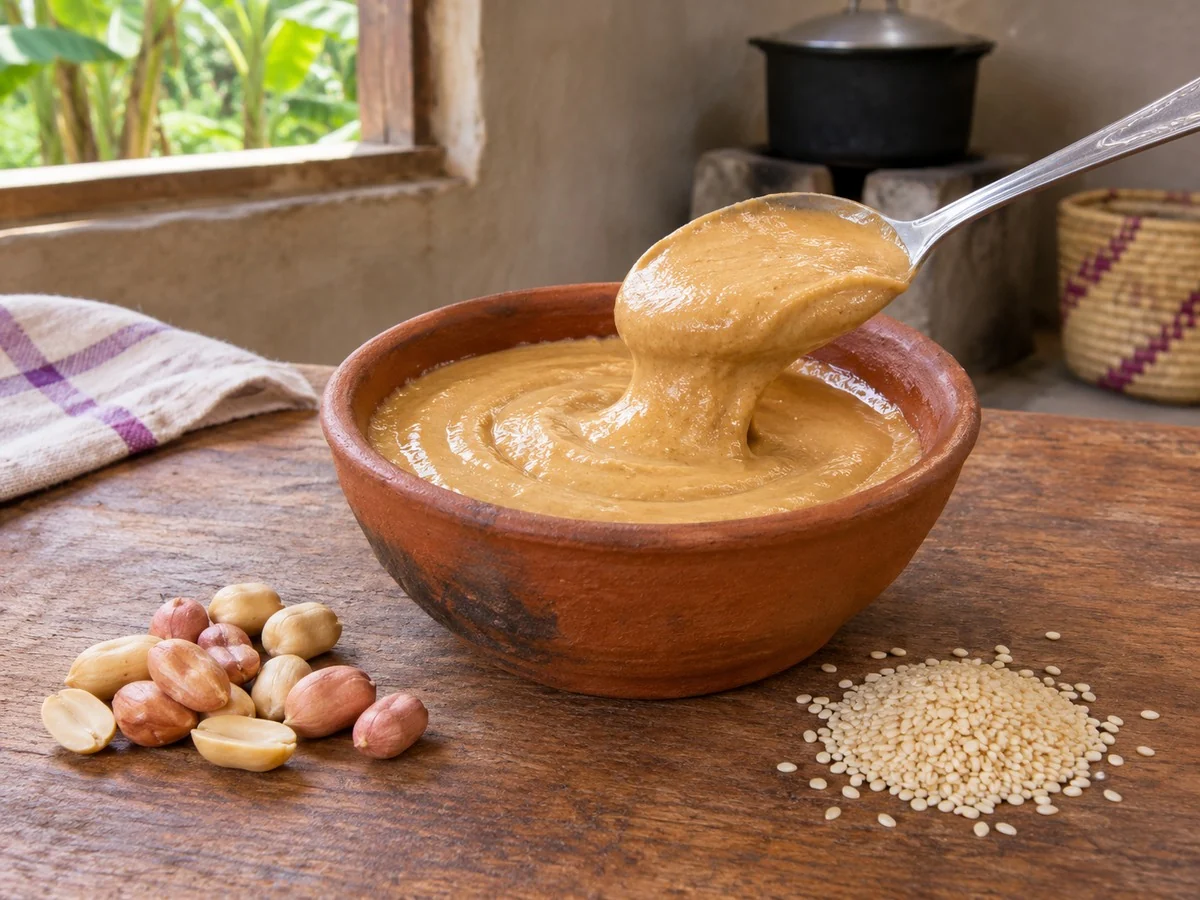
Ingredients
- 200 g unsalted roasted peanuts
- 100 g roasted sesame seeds
- up to 1 g fine salt
Preparation
Spread the peanuts on a plate and check them for shell fragments. Weigh the ingredients and salt separately. Set aside a small spoonful of sesame if you want the finished paste to have a slightly grainy texture. Keep the rest within reach to add as soon as the peanuts start to soften.
Put the peanuts in the processor bowl and work in short bursts. At first the texture will be uneven and sandy. Switch the appliance off before scraping the sides with the spatula. Push the ground peanuts back towards the centre and resume grinding. When the grains start to clump together and look slightly glossy, the peanuts are releasing their oil.
Add the sesame gradually. Pulse again and stop regularly to scrape down the bowl. If the mixture forms a stationary ring around the blade, switch off and push it back towards the centre. Let the processor cool down if it becomes hot. The paste is ready when you can spread it with the back of a spoon.
Add some of the salt and taste the paste on a piece of banana or the starch you intend to serve with it. Add the remaining salt only if needed. If you reserved sesame seeds, fold them in with the spatula to keep their texture. Transfer the paste to a small bowl and scrape the processor bowl thoroughly.
Introduction
Ingredients and equipment
Allow 200 g of unsalted roasted peanuts and 100 g of toasted sesame seeds. Both weights are for ingredients ready to grind. Choose peanuts without a coating, sugar or flavourings. If they still have their thin skins, rub them between your hands and separate the skins before weighing. The sesame seeds may be pale or lightly golden, provided they smell pleasant. Add up to 1 g of fine salt. The basic recipe relies entirely on the oils naturally present in the peanuts and seeds.
Set out scales, a bowl for each ingredient, a flexible spatula, a small dry serving dish and a food processor with a blade suitable for grinding nuts and seeds. A modest-sized processor bowl helps the blade reach the mixture. In a machine intended only to blend liquids, the ingredients may cling to the sides while the motor spins without engaging them. Check the manual for the permitted load and how long to pause between rounds of grinding.
Step-by-step preparation
1. Spread the peanuts on a plate and check them for shell fragments. Weigh the ingredients and salt separately. Set aside a small spoonful of sesame if you want the finished paste to have a slightly grainy texture. Keep the rest within reach to add as soon as the peanuts start to soften.
2. Put the peanuts in the processor bowl and work in short bursts. At first the texture will be uneven and sandy. Switch the appliance off before scraping the sides with the spatula. Push the ground peanuts back towards the centre and resume grinding. When the grains start to clump together and look slightly glossy, the peanuts are releasing their oil.
3. Add the sesame gradually. Pulse again and stop regularly to scrape down the bowl. If the mixture forms a stationary ring around the blade, switch off and push it back towards the centre. Let the processor cool down if it becomes hot. The paste is ready when you can spread it with the back of a spoon.
4. Add some of the salt and taste the paste on a piece of banana or the starch you intend to serve with it. Add the remaining salt only if needed. If you reserved sesame seeds, fold them in with the spatula to keep their texture. Transfer the paste to a small bowl and scrape the processor bowl thoroughly.
Recognising the stages of grinding
The mixture behaves differently at each stage. A loose powder that falls freely is the earliest stage. Small lumps indicate that the ground ingredients are starting to stick together. A continuous, slightly glossy paste is ready to spread. Wait until that stage before deciding that the mixture seems short of liquid. Adding water to the bowl would make it harder to obtain a smooth spread. When you use odii in a sauce, add water later, in the separate bowl where you loosen that portion of paste.
If the sesame seems overpowering, try the paste on a plain food before changing the mixture. A bite of cassava brings out less bitterness than tasting the paste from a spoon. For a milder batch next time, choose more lightly toasted sesame or reduce the proportion. If the paste is thicker than expected and the blade no longer turns freely, serve it thick and avoid heating the motor further. A small spatula will help you spread it more thinly at the table.
Serving as a condiment or in a sauce
To serve it as a condiment, place shallow spoonfuls beside ripe bananas, cooked sweet potatoes or fully prepared edible cassava. Let everyone add the paste to taste. To enrich a sauce, take only the amount you need. Put it in a separate bowl and stir in a little hot cooking liquid from the pan, adding it gradually until the paste has the consistency of a pourable cream. Stir the loosened paste back into the dish over low heat until evenly dispersed. This keeps the remaining condiment as it is and prevents pockets of thick paste forming in the sauce.
The actual yield depends on how much paste stays in the processor. For twelve servings, aim for about 25 g per portion before allowing for that loss. This condiment contains peanuts and sesame. Both contribute fat and also provide protein. Pre-salted roasted ingredients or commercially prepared products can have a different nutritional profile. If several condiments are being served, put the paste in a dedicated dish with its own spoon. For a first batch, prepare the quantity you expect to serve and follow the storage directions for the ingredients you used when keeping any remainder.
If serving odii at a family meal, put a small amount in the serving bowl to start. Keep the rest aside for topping up. This also lets you serve a plain vegetable or starch on the same plate and adjust the amount of paste with each bite.
Cultural context
An article in the Daily Monitor describes how odii is used in northern Uganda, drawing in part on an account from Gulu. The paste is described as an everyday food that can be served directly with another food or incorporated into a dish of meat, fish or leafy greens. The ratio of two parts peanuts to one part sesame is the one used in this home version. It gives a paste in which the sesame is apparent while the peanut remains the main flavour. Use the ratio as a starting point for a first batch, with pre-roasted ingredients and light seasoning.
Nutrition notes
Estimated nutrition per serving. Before adjustment for cooking losses · Calcium 72 mg · Iron 1.5 mg · Potassium 141 mg · Vitamin A 0 µg RAE · Vitamin C 0.2 mg