Dek boo with sesame
In this dek boo, dark cowpea leaves retain their distinct vegetal flavour beneath a sesame sauce thick enough to cling to a bite of kalo. Okra plays a quiet but important part. When sliced, it gives the liquid a supple consistency that helps spread the sesame paste evenly around the leaves. Tomato adds acidity and little flecks of red. Offer the dek boo as a side dish, with the starch served separately so everyone can take as much as they like.
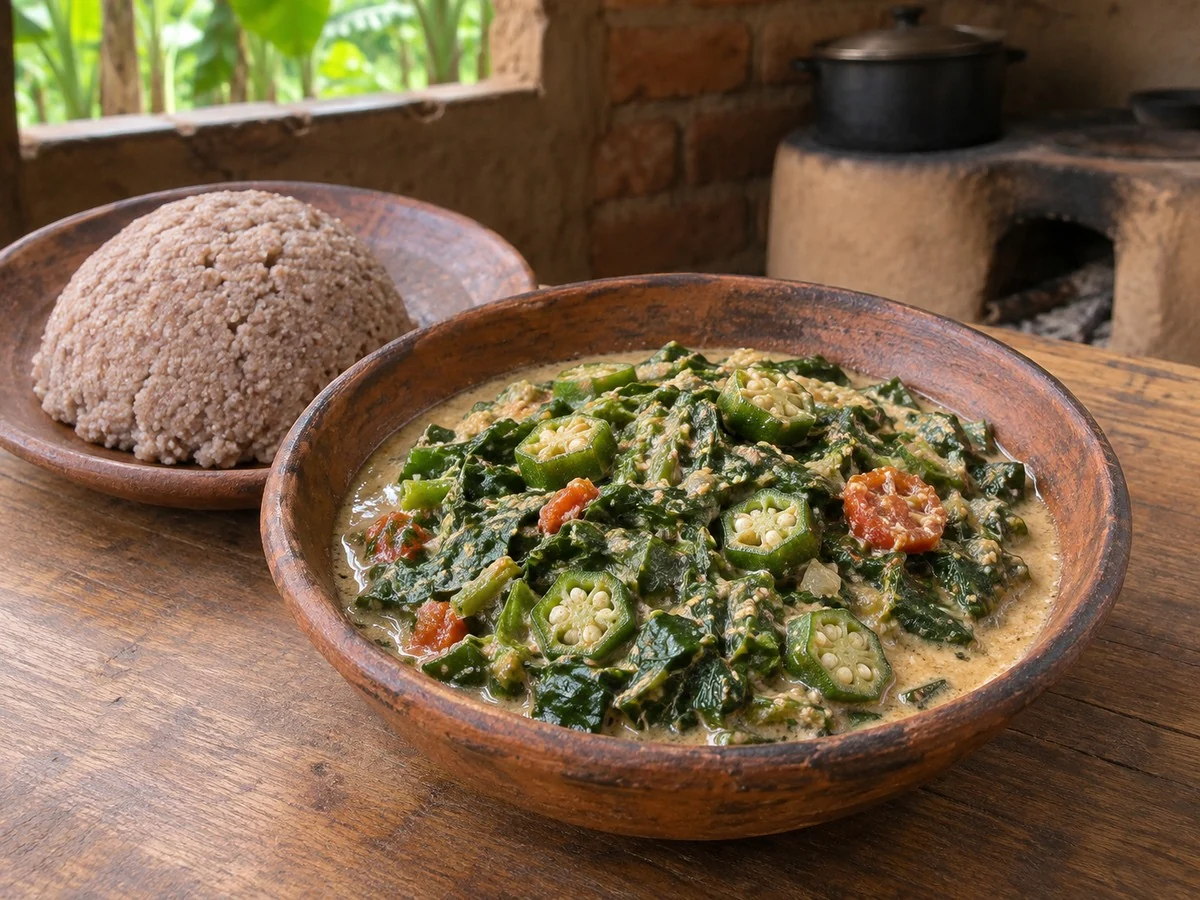
Ingredients
- 500 g trimmed cowpea leaves
- 120 g okra
- 90 g plain sesame paste
- 250 g ripe tomatoes
- 350 ml water
- about 2 g salt
Preparation
Wash the leaves in plenty of water. Lift them into the colander and check the bottom of the bowl. Repeat if you find any grit. Let the leaves drain and cut them into strips short enough to distribute easily through the sauce.
Trim the tough ends of the okra and slice the pods into rounds. Dice the tomatoes finely, keeping their juice. Combine the tomato, okra and 350 ml of water in the saucepan. Bring to a steady simmer and cook for about eight minutes. The liquid will draw out in slight threads when you run a spoon along the bottom.
Add the leaves in two or three batches, lifting and turning them with a spoon. Partly cover the pan and cook for ten to twelve minutes. Taste a leaf and a slice of okra. Both should be tender. If the leaves are still firm, give them a few more minutes before adding the sesame.
Scoop out a small ladleful of cooking liquid. Add it to the sesame paste in the bowl, a spoonful at a time, stirring as you go. Add a little more liquid if the mixture is still too thick to run off the spoon. Pour it gradually into the pan, lifting the leaves from the bottom to the surface to spread the paste evenly.
Simmer gently for about five minutes, scraping the bottom regularly. Add a little hot water if the sauce stiffens around the spoon, or let it reduce briefly if it runs like broth. Add some of the salt, taste it with a piece of leaf and finish seasoning to taste.
Introduction
Portions and timing
For four side portions, allow about twenty minutes for preparation and twenty-five for cooking. Washing takes a while if the leaves are gritty. Sort them first, then prepare the okra and tomato while they drain. Set out a medium saucepan, a colander, a board and a small bowl for loosening the sesame paste. The initial 350 ml of water can evaporate quickly in a wide saucepan. Keep a cup of hot water nearby if you are using one, so the base of the pan stays moist.
Ingredients
Use 500 g of edible cowpea leaves, weighed after sorting. Choose supple leaves and tender tips, picking out the thick, fibrous stems by hand before weighing. Allow 120 g of fresh okra after trimming the tough bases, and 250 g of ripe tomatoes. You will also need 90 g of pure sesame paste, ideally made from toasted seeds, 350 ml of drinking water for cooking and about 2 g of fine salt, adjusted to taste. If oil has separated in the jar, stir the paste before weighing it. A seasoned paste would change both the flavour and the amount of salt needed.
Step-by-step preparation
1. Wash the leaves in plenty of water. Lift them into the colander and check the bottom of the bowl. Repeat if you find any grit. Let the leaves drain and cut them into strips short enough to distribute easily through the sauce.
2. Trim the tough ends of the okra and slice the pods into rounds. Dice the tomatoes finely, keeping their juice. Combine the tomato, okra and 350 ml of water in the saucepan. Bring to a steady simmer and cook for about eight minutes. The liquid will draw out in slight threads when you run a spoon along the bottom.
3. Add the leaves in two or three batches, lifting and turning them with a spoon. Partly cover the pan and cook for ten to twelve minutes. Taste a leaf and a slice of okra. Both should be tender. If the leaves are still firm, give them a few more minutes before adding the sesame.
4. Scoop out a small ladleful of cooking liquid. Add it to the sesame paste in the bowl, a spoonful at a time, stirring as you go. Add a little more liquid if the mixture is still too thick to run off the spoon. Pour it gradually into the pan, lifting the leaves from the bottom to the surface to spread the paste evenly.
5. Simmer gently for about five minutes, scraping the bottom regularly. Add a little hot water if the sauce stiffens around the spoon, or let it reduce briefly if it runs like broth. Add some of the salt, taste it with a piece of leaf and finish seasoning to taste.
What to look for and how to adjust
Leave the okra rounds intact. The visible slices give the sauce more texture than a smooth purée. If the tomato and okra base thickens before the leaves go in, lower the heat and add a little water. Once the sesame is in the pan, add any extra water in small amounts. The sauce should fall from the spoon in a short ribbon. It will thicken a little during serving. If the dish has been standing for a few minutes, stir it gently before deciding whether it needs water.
If you are cooking for two, halve the weights and use a narrower saucepan. Taste the leaves at the same stage, since a smaller batch may still take just as long to soften. For a double batch, choose a pan with enough room to add the leaves without packing them down. Drop them in by the handful, then start timing once they are all in the pan.
Variations and serving
For a peanut-flavoured version, replace half the sesame with pure roasted peanut paste and loosen the two pastes together. This changes the flavour and the allergens. If cowpea leaves are unavailable, use edible amaranth leaves and describe the finished dish as an amaranth-leaf adaptation. Start checking for tenderness a few minutes earlier, as the leaves and stalks can be thinner. For the preparation in the source recipe, look for cowpea leaves from a seller who can identify them.
Use a bowl wide enough to spoon out the sauce easily. Offer plain kalo or posho on the side. Cooked sweet potato also works as an accompaniment. Taste the sauce with your chosen starch before adding more salt, since the starch changes how the seasoning comes across. This dish contains sesame. The leaves and okra provide fibre, and the sesame paste contributes mostly fat. The nutritional value of a serving depends on the actual portion and any accompaniments.
To keep the textures distinct on the plate, spoon the sauce over the starch just before eating.
Cultural context
The ETH Zurich MAS NADEL programme’s cookbook documents a version of dek boo associated with the Acholi people, based on Bella Vicky Ato’s account and recipe. Cowpea leaves form the base. Her entry mentions ways of thickening the leaves with peanut or sesame paste and recalls a meal served communally. This home version uses sesame alone, along with fresh okra. The quantities are adapted from that reference and the short ingredient list makes each contribution easy to identify. Here, boo refers to the cowpea leaves. The term should be kept specific to these leaves.
Nutrition notes
Estimated nutrition per serving. Before adjustment for cooking losses · Calcium 532 mg · Iron 9.3 mg · Potassium 958 mg · Vitamin A 296 µg RAE · Vitamin C 97.2 mg