Coffee and brown sugar barbecue sauce
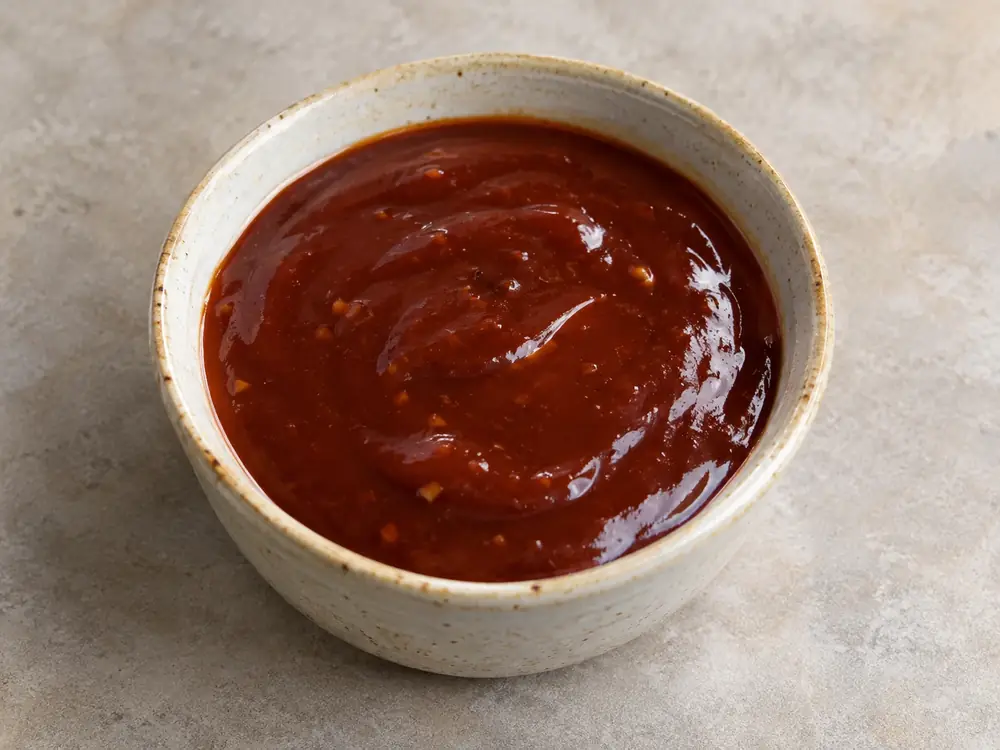
Tomato, mild coffee, vinegar and sugar combine with mustard and smoked paprika into a spreadable thin coating. Approximately 350 g yields several condiment portions, not a main meal. This contemporary sauce differs from monkey gland sauce and peri-peri in the first manuscript without claiming a particular South African tradition. Coffee adds background aroma; sugar should not hide burnt or intensely bitter infusion.
Ingredients
- 150 g plain tomato purée
- 120 ml mild filtered coffee
- 60 ml vinegar
- 50 g brown sugar
- 15 g mustard
- 2 g smoked paprika
- up to 2 g salt
- 1 finely chopped garlic clove
- a little corrective water if necessary
Preparation
Method at a glance — Combine ingredients and finely chopped garlic. Simmer about 20–25 minutes, stirring, until lightly coating. Taste and loosen with a little water if too concentrated. Cool promptly and refrigerate.
Measuring before reduction — Choose plain tomato purée, not a presweetened seasoned sauce. Make mild unflavoured filtered coffee and taste before adding: bitterness concentrates. Peel and chop garlic finely so it cooks during reduction rather than leaving large raw fragments. Measure vinegar, sugar, mustard and smoked paprika. Paprika varies in strength; choose for diners. Mustard already supplies salt, so retain some of the maximum allowance until final tasting.
Gentle simmering — Combine in a small suitable saucepan, warm progressively and simmer about twenty to twenty-five minutes. Stir across base frequently as tomato and sugar thicken. Lower heat instead of allowing a splattering fierce boil with dry edges. Sauce should coat a spoon but remain spreadable, not sticky paste. If too concentrated, add a little measured water and reassess rather than forcing reduction to an exact weight. Pan width and heat influence evaporation and yield. A very broad vessel dries a small batch rapidly; use one suited to volume. Taste early once flavours join and again near finishing. Reduction changes sugar, salt and acidity together. Burnt bitterness cannot be repaired by extra sugar, cream or condiments. Remove from heat when intended consistency arrives.
Preparing separate service portions — Weigh finished sauce after cooking to choose an appropriate container rather than promising false precision. Spoon a small serving quantity into its own bowl with a clean utensil, keeping reserve apart. Condiment portions adjust to the food and should not cover all other flavours. A separate portion is needed for cooking brushes and a second for table service. Sugar and vinegar do not turn this formula into a shelf-stable preserve. Hot filling alone is not canning. Cool reserve promptly in a shallow clean vessel, refrigerate at 4 °C or below, close once cold and date. Consume within 48 hours or freeze small portions promptly. Reheat only needed portions completely if serving warm, then allow pleasant temperature. Repeatedly heating the same pot degrades texture and complicates storage.
Finishing food and conclusion — Sweet sauce browns quickly at strong heat. Brush mainly near the end of cooking, with the food's own doneness checked independently. Dark sauce colour does not establish cooked meat. A brush that touched raw meat never returns to reserve. Offer modest amounts with vegetables, grain patties or cooked meat, counted separately. Tomato should remain identifiable with discreet coffee rather than become an excessively sweet burnt glaze. Enjoy your meal!
Introduction
Tomato, mild coffee, vinegar and sugar combine with mustard and smoked paprika into a spreadable thin coating. Approximately 350 g yields several condiment portions, not a main meal. This contemporary sauce differs from monkey gland sauce and peri-peri in the first manuscript without claiming a particular South African tradition. Coffee adds background aroma; sugar should not hide burnt or intensely bitter infusion.
Planning
Approximately 350 g according to reduction; preparation 10 min; cooking approximately 20–25 min; prompt cooling.
Enjoy your meal
Enjoy your meal!