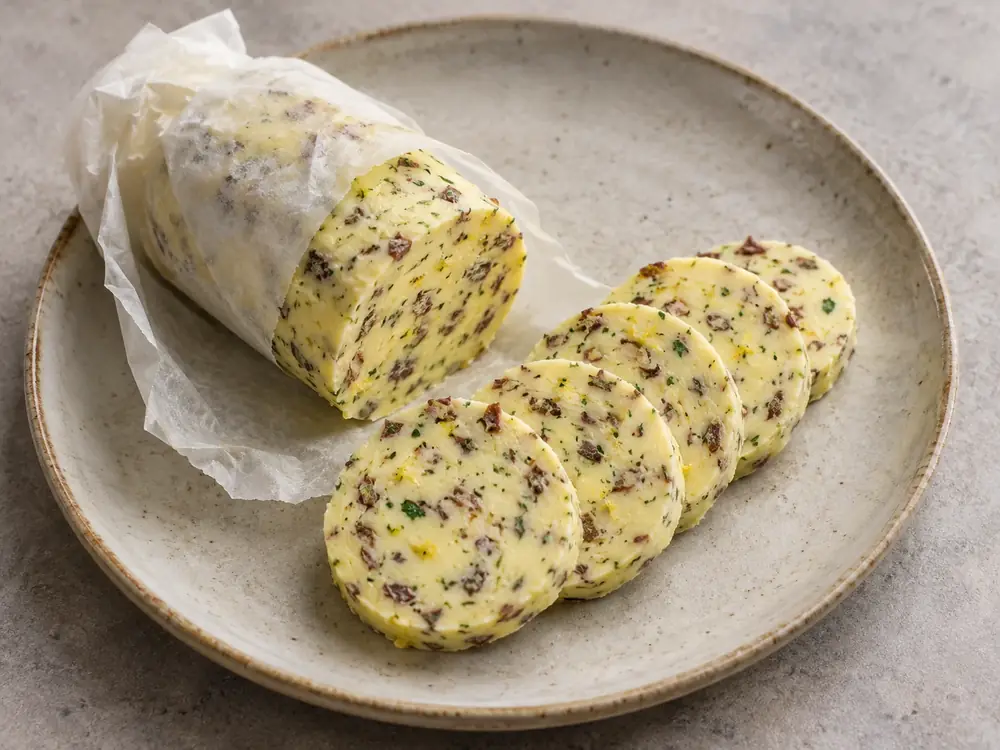
Biltong and lemon compound butter
Purchased ready-to-eat biltong, parsley and lemon flavour butter that firms cold into small discs. Each modest portion melts on completed food, bringing concentrated flavour. This contemporary ingredient-based recipe describes neither biltong production nor raw-meat preservation. Follow its commercial storage directions. Moist butter mixed with fresh herbs is not rendered table- or cupboard-stable by dried meat.
Rating · 5/5 (1 ratings)
Ingredients
- 100 g softened unsalted butter
- 35 g very finely chopped ready-to-eat biltong
- 10 g parsley
- zest of half a lemon
- 5 ml lemon juice
- pepper
- added salt 0 g
Preparation
Method at a glance — Mix soft butter, biltong, parsley, zest, measured juice and pepper. Shape a log in baking paper and refrigerate at least 1 hour. Cut ten portions and place one on already-cooked vegetables or meat.
Softening and chopping — Let weighed butter become spreadably soft, never liquid. Complete melting promotes separation during cooling. In hot kitchens remove shortly before mixing rather than all morning. Prepare paper and a clean chilling container. Final weight gives a more accurate portion reference than visually guessed discs. Inspect biltong for overly hard parts and chop very finely with a knife or brief pulses. Long fibres catch knives and pull filling from slices. Wash and thoroughly dry parsley, then weigh 10 g leaves and tender stems and chop finely. Wash lemon, take only coloured half-zest and measure 5 ml strained juice. This small liquid quantity refreshes without waterlogging butter.
Mixing and shaping — Work butter with a spatula, add remaining ingredients and distribute evenly. No extra salt is planned because biltong is seasoned. Taste a separate small portion with a clean utensil that does not return from the mouth. Judge alongside the intended cooked food, where concentration is lower than butter alone. Place on paper and shape an even log, approximately 3 cm diameter if useful. Close ends without squeezing filling out. Refrigerate at least an hour, longer for an initially very soft mixture. If interrupted, return to cold instead of leaving the raw mixed condiment exposed. Check temperature and wet herbs before trying to remedy excess fluidity with unrelated additions.
Clean handling and immediate cold holding — Prepare all ingredients and maintain a clean workspace, keeping utensils away from raw meat or fish. Fresh herbs are washed, drained and dried before weighing. Lemon is flavour, not validation of room-temperature storage. Transfer closed to refrigeration at 4 °C or below and use within 48 hours, or freeze promptly in separate wrapped dated portions. An oil or fat coating does not replace cold. For slicing, mark ten sections first. A gently warmed then wiped blade can cut firm butter without melting the whole log. Remove serving rounds and return main reserve immediately. Do not leave all portions on plates throughout preparation of a main dish.
Serving and conclusion — Place one round on vegetables or meat just cooked. Butter melting cannot replace that food's own cooking. Keep serving discs separate from reserve and never return a piece that touched a plate or raw ingredient. More lemon character is best explored first through a little extra zest rather than much juice. Fine chopping and restrained portions lift food without becoming an excessive fatty sauce that hides it. Enjoy your meal!
Introduction
Purchased ready-to-eat biltong, parsley and lemon flavour butter that firms cold into small discs. Each modest portion melts on completed food, bringing concentrated flavour. This contemporary ingredient-based recipe describes neither biltong production nor raw-meat preservation. Follow its commercial storage directions. Moist butter mixed with fresh herbs is not rendered table- or cupboard-stable by dried meat.
Planning
Approximately 150 g, giving 10 portions near 15 g; preparation 15 min; chilling at least 1 h; no cooking.
Enjoy your meal
Enjoy your meal!