Cucumber and mustard relish
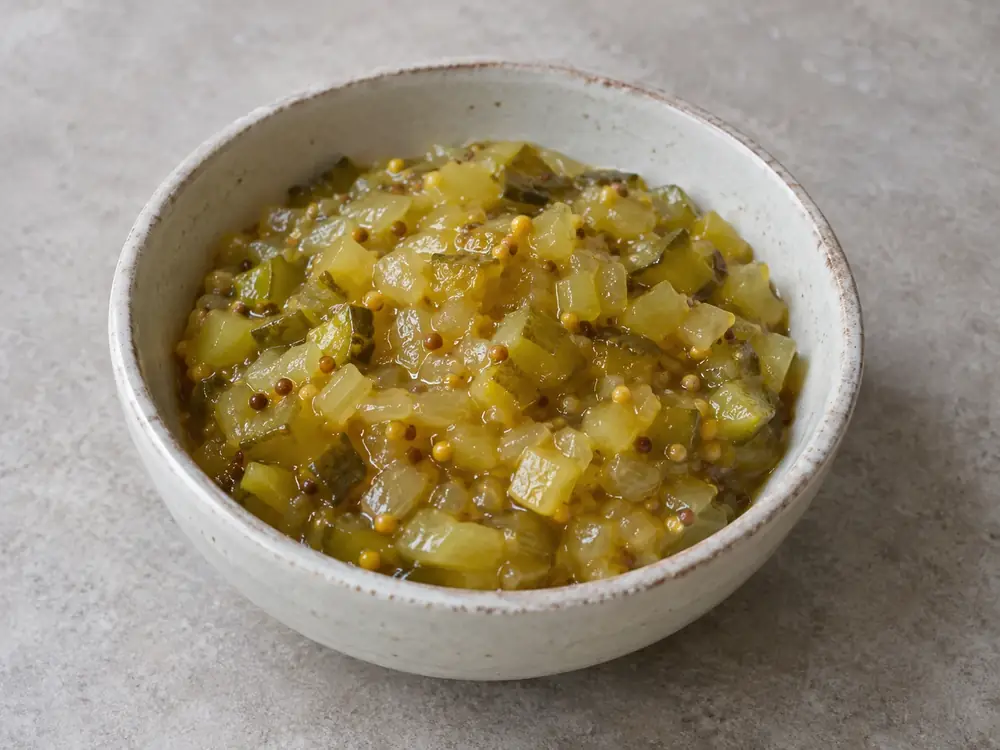
Small cucumber and onion pieces cook with vinegar, sugar and mustard seed. A little starch binds juices for sandwiches or alongside grilled food. Yield varies with draining and evaporation; weigh finished relish rather than guarantee an exact jar weight. This contemporary condiment claims no precise South African specialty. It differs from raw sambal by cooking and from atchar in composition. It is short refrigerated storage, not a tested long-life preserve.
Ingredients
- 600 g prepared cucumber, watery seed core removed if necessary
- 1 onion
- 100 ml food vinegar with labelled acidity of at least 5%
- 60 g sugar
- 15 g mustard seeds
- 5 g starch
- 4 g salt
- 30 ml cold water for starch
Preparation
Method at a glance — Chop cucumber and onion, mix salt and drain 30 minutes. Squeeze and discard released water. Simmer vegetables with vinegar, sugar and mustard seeds about 15 minutes. Mix starch with cold water, stir again and add, cooking about 2 minutes. Cool promptly, refrigerate at 4 °C or below and consume within 48 hours. This is not a shelf-stable canning formula.
Draining with texture — Wash cucumber, trim ends and peel thick or very bitter skin. Remove a large watery core before weighing 600 g usable flesh. Dice small rather than purée so pieces remain visible. Chop onion similarly. Mix 4 g salt and drain in a colander over a bowl about thirty minutes, then squeeze. Do not automatically rinse, which changes salt and reintroduces water. Released draining liquid does not enter the saucepan.
Measured acidity and cooking — Combine pressed vegetables, measured labelled-acidity vinegar, sugar and mustard seeds. Bring to a calm simmer about fifteen minutes while stirring. Seeds remain distinct and cannot be exchanged gram-for-gram with salty diluted prepared mustard. Pieces should soften without disappearing. Variable cucumber moisture does not justify excessive reduction solely to reach nominal yield. If base threatens burning before tenderness, lower heat and add only a very small amount of water.
Binding near the end — Disperse 5 g starch in 30 ml cold water. Stir again immediately before pouring because powder settles. Add to simmering relish and cook around two minutes, mixing. Juices should coat pieces without thick paste. A cooled test spoonful gives a better set assessment than hot appearance; wait before any second binding. Record drained weight for later variation rather than adding starch blindly. Taste a cooled little portion; hot acidity can seem stronger. Avoid large sugar additions to mask temporary perception or burnt bitterness. Small hot-water additions can loosen over-concentration, not repair burning. Stop once intended consistency is reached.
Clean serving and short storage — Transfer to a clean shallow vessel, cool promptly and refrigerate at 4 °C or below. Close once cold and date. Sugar and vinegar do not turn simple hot filling into shelf-stable preservation; do not place this jar in a cupboard. Use within 48 hours of preparation. Take a small portion with a clean utensil into a serving bowl, keeping main reserve separate. A relish portion is condiment, not main dish. Offer a little first so it does not hide food, with more available. If serving warm, reheat only required quantity completely then allow comfortable eating temperature; repeated heating complicates storage and degrades texture. Serve in sandwiches, with patties or alongside grilled food. Fine pieces and light binding matter more than prolonged sweet reduction. Enjoy your meal! Preservation distinction retained from the French manuscript, consulted on 22 November 2026: https://extension.umn.edu/food/preparing/cooking-at-home/food-preservation/pickling
Introduction
Small cucumber and onion pieces cook with vinegar, sugar and mustard seed. A little starch binds juices for sandwiches or alongside grilled food. Yield varies with draining and evaporation; weigh finished relish rather than guarantee an exact jar weight. This contemporary condiment claims no precise South African specialty. It differs from raw sambal by cooking and from atchar in composition. It is short refrigerated storage, not a tested long-life preserve.
Planning
Approximately 500–650 g according to draining and reduction; preparation 20 min; draining rest 30 min; cooking approximately 17–20 min; prompt cooling.
Enjoy your meal
Enjoy your meal!