Carrot and pineapple cake
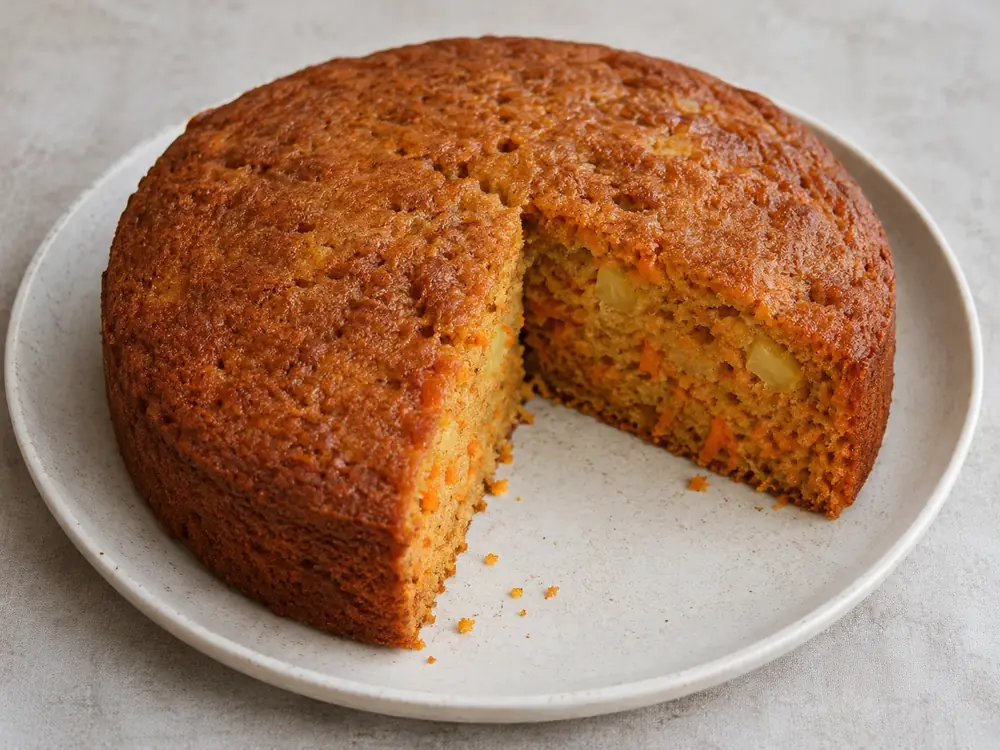
Grated carrots and diced pineapple moisten cinnamon-flavoured oil batter. A roughly 24 cm round tin gives ten portions, with tender crumb rather than a compact wet central mass. Weigh produce after preparation and pineapple after draining. This contemporary family cake claims no exclusive South African origin or invented tradition. Icing is unnecessary; any cream-cheese addition needs its own quantities and cold storage separately.
Ingredients
- 220 g flour
- 250 g peeled raw carrots ready to grate
- 150 g pineapple flesh, very well drained and blotted, in small dice
- 3 eggs
- 140 g sugar
- 120 ml oil
- 10 g baking powder
- 3 g cinnamon
- 2 g salt
Preparation
Method at a glance — Beat eggs, sugar and oil. Fold in combined flour, baking powder, cinnamon and salt, then carrots and well-drained pineapple. Transfer to a lined 24 cm tin and bake about 45–55 minutes at 175 °C until a skewer carries no raw batter. Rack to cool.
Preparing carrots and pineapple differently — Peel and wash carrots before weighing 250 g. Fine-to-medium strands cook within batter, while thick ribbons stay firmer and make irregular slices. Equal-weight carrot purée is not interchangeable because water distribution and texture change. Do not squeeze carrots hard like fritter potatoes: their moisture belongs to the formula. Drain pineapple, weigh 150 g, dice small and blot surface water. Fresh fruit needs skin, eyes and hard core removed before weighing. Canned fruit is weighed drained, with no syrup poured into batter. Free pineapple water, rather than inherent carrot moisture, is the principal excess to remove. Confusing the two can dry cake without solving baking defects.
Mixing promptly — Prepare tin, preheat to 175 °C and weigh powders before grating, limiting waiting after carrots begin releasing water or browning. Beat eggs, sugar and mild-flavoured oil until distributed, not a stiff foam. Combine flour, baking powder, cinnamon and salt separately, then fold into wet ingredients and scrape the base. Add carrots and pineapple briefly, spreading evenly rather than one damp pile. Pour and level, baking without prolonged waiting once baking powder is wet.
Mixing a baking powder batter — Weigh ingredients and prepare the tin before wetting flour. Distribute fresh dry-stored baking powder evenly to prevent irregular rising and unpleasant pockets. This is not baker's yeast and requires no long warm fermentation. Once wet ingredients join, mix briefly and bake without unnecessary delay. Scrape bowl edges and base with a spatula. Small irregularities are preferable to prolonged vigorous mixing that develops elasticity unsuited to tender crumb. Distribute fillings without wet clumps and drain canned products before weighing when specified. Respect the stated consistency: pouring batter is different from roll-out dough. Do not add flour merely for a perfectly smooth surface. Unexpected runniness calls for checking missing dry ingredients, measurements or watery products. Record useful corrections rather than progressively changing the formula without a reference. Bake centrally in a preheated oven. Thickness and tin material affect duration. A good crust can conceal wet crumb; probe a crumb area away from cheese or other misleading filling. Protect fast-browning tops and continue moderately. Rest briefly before unmoulding, then rack once stable. Trapped steam wets sides and early slicing compresses crumb. Cool leftovers promptly and refrigerate egg, cheese or meat preparations for use within 48 hours. Reheat portions rather than the entire product repeatedly. Freeze separate wrapped portions promptly for longer storage, dated with preparation day.
Judging fruit-moist crumb — Bake approximately forty-five to fifty-five minutes. Test central crumb away from a large pineapple piece. Fruit moisture differs from raw batter on a skewer. If top darkens early, protect and continue until interior cooks. Retain first-trial tin dimensions: a deeper cake needs longer and a thin one dries faster. Use comparable tins for doubling rather than unchanged timing in one deep vessel.
Cooling, service and conclusion — Rest briefly, unmould and rack until cold or only warm before cutting ten slices with a clean blade. Early cutting compresses moist crumb and creates apparent pasty bands. Cinnamon is clearer once cake is not burning-hot. Serve plain with a drink or separately counted fruit. A little orange zest may complement cinnamon as a variation without unmeasured juice. Cool promptly, refrigerate and use within 48 hours or freeze individual portions. Lack of cream topping does not justify long counter storage. Pineapple draining and finely grated carrot produce repeatable moisture. Enjoy your meal!
Introduction
Grated carrots and diced pineapple moisten cinnamon-flavoured oil batter. A roughly 24 cm round tin gives ten portions, with tender crumb rather than a compact wet central mass. Weigh produce after preparation and pineapple after draining. This contemporary family cake claims no exclusive South African origin or invented tradition. Icing is unnecessary; any cream-cheese addition needs its own quantities and cold storage separately.
Planning
10 portions; preparation 25 min; baking approximately 45–55 min; cooling before slicing.
Enjoy your meal
Enjoy your meal!