Naartjie upside-down cake
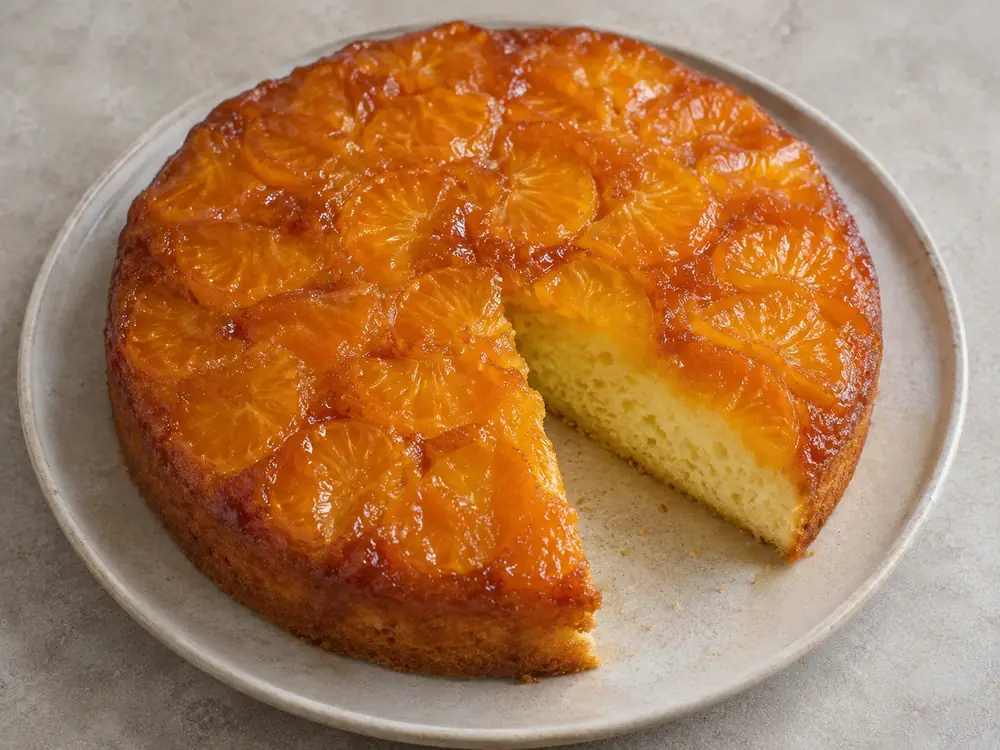
Mandarin segments appear above a thin caramel layer after the butter-yoghurt cake is inverted. A 22 cm tin gives eight portions. Remove seeds and thick membranes for pleasant cutting. This contemporary cake claims no precise traditional South African specialty. Naartjie locates local fruit vocabulary, not exclusive origin of upside-down technique. Caramel should be amber without bitterness obscuring citrus.
Ingredients
- 4 medium mandarins, approximately 300 g prepared segments
- 160 g flour
- 100 g softened butter
- 100 g sugar for batter
- 2 eggs
- 80 g plain yoghurt
- 8 g baking powder
- 50 g sugar and 20 ml water for caramel
- 1 g salt
Preparation
Method at a glance — Make light caramel with its 50 g sugar and water and pour into a suitable 22 cm tin. Peel mandarins and arrange segments over caramel. Cream butter and batter sugar, add eggs then flour, baking powder, salt and yoghurt. Cover fruit and bake 35–40 minutes at 180 °C. Rest 10 minutes and invert carefully.
Fruit before caramel — Peel and segment fruit, remove thick white threads, seeds and resistant membranes, retaining segments where possible. Blot abundant free juice and aim near 300 g usable fruit. Choose a caramel-resistant non-leaking tin, ideally one-piece metal. Prepare stable support, dry hand protection, fruit and batter ingredients before caramel so it does not harden while equipment is sought. Heat 50 g sugar with 20 ml water in a small saucepan to dissolve and then light amber. Do not stir with a spoon during colouring; swirl carefully if needed. Pour immediately into tin and tilt with protection to coat base. Never touch or taste hot caramel. Arrange segments evenly. Caramel may set on contact and loosen again during baking; do not add cold water in the tin.
Making yoghurt batter — Preheat to 180 °C. Cream 100 g soft butter and 100 g batter sugar, adding eggs individually. Combine flour, baking powder and salt; fold in with measured yoghurt, mixing briefly after flour. Drop small spoonfuls over fruit to avoid moving it and level gently. Bake approximately thirty-five to forty minutes, probing central crumb rather than only fruit-caramel beneath. Protect top if needed before centre finishes. Keep weighed prepared fruit and specified tin dimensions for a first attempt. Depth changes heating, and two comparable tins suit doubling better than one deep vessel. Baking powder must distribute evenly. Scrape flour pockets and avoid kneading cake batter. Moist fruit does not justify a raw floury centre.
Preparing the serving plate — Choose a plate wider than the tin with space to catch hot fruit juice and caramel. Have it ready before cake comes out. Hold plate and tin securely with dry protection during turning and keep clear of drips. Do not rescue a stuck segment with fingers; a suitable spatula and brief wait usually allow replacement.
Unmoulding and storage — Rest around ten minutes, loosen rim if needed and invert. Wait briefly before lifting; gently replace any stuck segment without recovering burnt caramel. Do not cool completely in the tin first because hardened caramel increases sticking. Wait before slicing, however, since hot crumb compresses. Serve warm or cooled with fruit visible. Promptly cool remaining portions, refrigerate and use within 48 hours, or freeze dated portions where suitable. Refrigeration cannot correct underbaking. Prepared fruit, moderate caramel and timely inversion preserve the pattern without sacrificing crumb. Enjoy your meal! Source for naartjie consulted on 22 November 2026: https://www.dsae.co.za/entry/naartjie/e05049
Introduction
Mandarin segments appear above a thin caramel layer after the butter-yoghurt cake is inverted. A 22 cm tin gives eight portions. Remove seeds and thick membranes for pleasant cutting. This contemporary cake claims no precise traditional South African specialty. Naartjie locates local fruit vocabulary, not exclusive origin of upside-down technique. Caramel should be amber without bitterness obscuring citrus.
Planning
8 portions; preparation 25 min; baking approximately 35–40 min; resting 10 min before unmoulding.
Enjoy your meal
Enjoy your meal!