Amasi panna cotta with berries
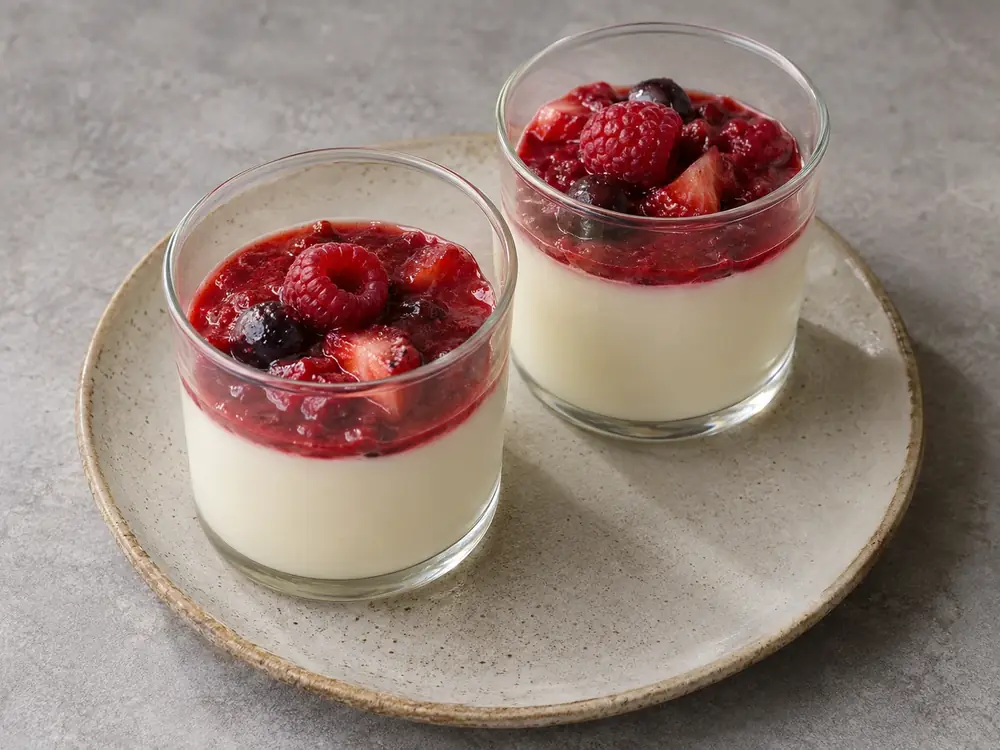
Sweetened cream combines with amasi added after heating, giving six soft wobbling desserts in glasses. These are not formulated for unmoulding; glasses permit modest gelatin. Italian panna cotta inspires this contemporary use of a dairy product associated with South African tables, without a local traditional attribution. Commercial amasi must be pasteurised, properly chilled and within date. Acidity does not make cream room-temperature stable.
Ingredients
- 300 ml cream
- 250 ml commercial pasteurised-milk amasi
- 70 g sugar
- 5 g sheet gelatin, checked against packet strength
- cold water for hydration
- 250 g prepared berries
- 15 ml lemon juice
- added salt 0 g
Preparation
Method at a glance — Soften gelatin in cold water. Warm cream and sugar, remove heat and dissolve squeezed gelatin. Cool to warm without setting, incorporate amasi and divide among glasses. Chill 4 hours. Crush half the berries with lemon, combine remaining fruit and serve over set creams.
Preparing gelatin and glasses — Weigh 5 g rather than count leaves: weights and strengths vary. Check packet against total liquid, retaining one reference for a first trial. Soften separated leaves in enough cold water as instructed, then drain and gently squeeze. Prepare six similar 150–180 ml glasses with room for berries on a refrigerator-fitting tray. Measure cream and keep amasi chilled. Gently homogenise a normal slight separation, never use abnormal-smelling or questionable product in hope heating repairs it.
Heating only the sweetened cream — Warm cream and sugar while stirring until dissolved, without prolonged boiling. Remove heat and dissolve gelatin completely, examining for fragments and straining while fluid if needed. Cool to warm but do not allow a thick set. Add amasi progressively and gently. Boiling liquid can separate fermented dairy; already-setting gelatin makes threads. Organisation of glasses and dairy avoids interruption at this temperature window.
Even setting — Share comparable volumes, chill at least four hours and longer for deep or initially warmer containers. Cover once cooled and test a portion: surface should hold with a slight wobble. Warm and cold components need gradual mixing for even temperature. Do not whisk violently to hide setting fragments; gentle reheating is only possible if composition allows. Four hours is an indicative minimum, not a guarantee for a large deep mould. Gelatin is animal-derived: identify origin where relevant. Agar does not substitute gram-for-gram, requiring another heating method and texture formulation. Keep glasses cold rather than unmoulding a deliberately soft formulation.
Preparing cold fruit topping — Wash fresh berries according to type, dry and discard damaged ones. Crush about half with 15 ml lemon, then fold in remaining fruit. Frozen fruit follows package preparation, including cooking where recommended, and cools completely before topping. Keep garnish separate if prepared the previous day, refrigerating and stirring before service. Fruit can release much juice. Add a modest quantity and offer remainder alongside rather than emptying the whole bowl over creams. Never use hot fruit to create a supposed smooth layer on set dessert. Taste before extra sugar, because cream already contains 70 g.
Serving, storage and conclusion — Top only when creams are set and near serving. Maintain refrigeration and consume within 48 hours including setting time; those hours do not precede the start of storage. Cover after cooling and keep table-served portions out of the communal batch. A different fruit is a declared variation, not justification for equal-weight gelling-agent exchanges. Warm-stage amasi, fully dissolved gelatin and cold topping preserve a delicate contrast. Enjoy your meal! Source of ingredient context consulted on 22 November 2026: Rediscover Dairy — https://www.rediscoverdairy.co.za/ask-dairy-maas/
Introduction
Sweetened cream combines with amasi added after heating, giving six soft wobbling desserts in glasses. These are not formulated for unmoulding; glasses permit modest gelatin. Italian panna cotta inspires this contemporary use of a dairy product associated with South African tables, without a local traditional attribution. Commercial amasi must be pasteurised, properly chilled and within date. Acidity does not make cream room-temperature stable.
Planning
Serves 6; preparation 20 min; heating 5 min; chilling at least 4 h.
Enjoy your meal
Enjoy your meal!