Honeybush semolina cream
Fine wheat semolina cooks in milk and honeybush, enriched with egg and butter. Six chilled portions should be supple yet spoonable. This means fine wheat semolina, not precooked couscous or maize flour: grain choice changes time and texture. This contemporary dessert uses honeybush aromatically without medical promises or a specific traditional South African name. It differs from soji techniques by cooking semolina directly in liquid without prior roasting.
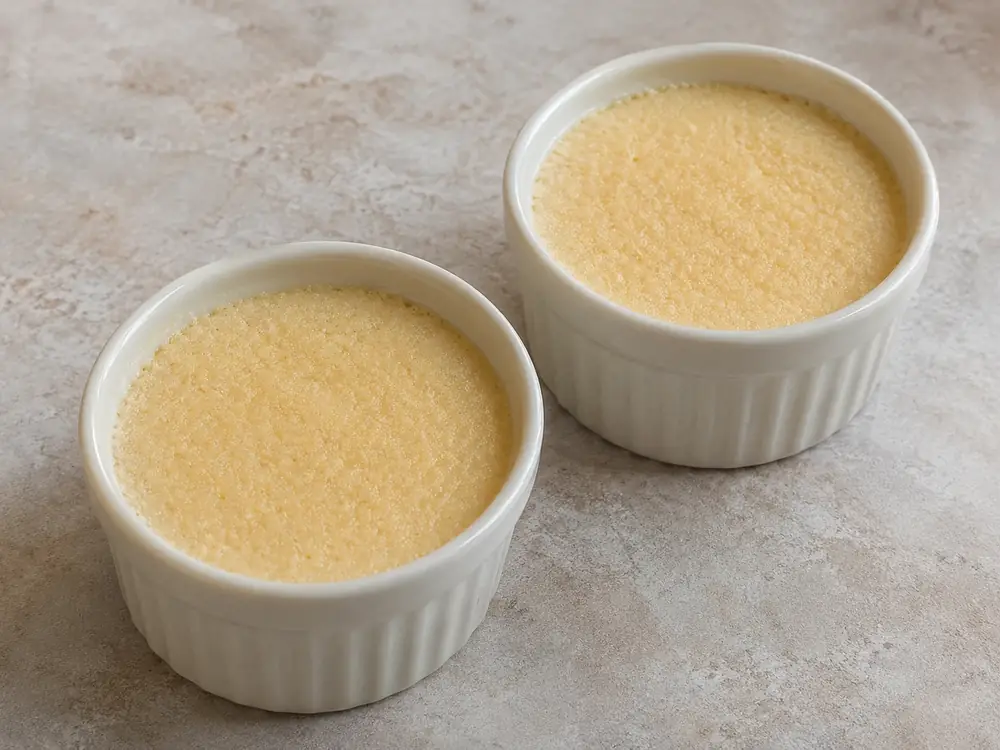
Ingredients
- 600 ml milk
- 200 ml brewed strained honeybush
- 90 g fine wheat semolina
- 70 g sugar
- 1 egg
- 20 g butter
- 1 g salt
Preparation
Method at a glance — Heat milk, strained infusion and salt. Rain semolina in while whisking, then cook gently 7–8 minutes or as the product requires, stirring. Beat egg with sugar, temper gradually with hot semolina and return. Heat gently while stirring to at least 71 °C centrally without fierce boiling; indicative 2 minutes does not replace checking. Remove heat, add butter and divide into six. Cool promptly and chill at least 2 hours.
Infusing and organising — Brew plain honeybush following packet, filter and measure 200 ml ready liquid. Strong vanilla- or fruit-flavoured blends obscure the intended character. Remove plant fragments. Combine with milk and salt. Weigh semolina in an easy-pouring container and prepare six similarly sized ramekins on a tray. Shallower portions cool more readily than very deep vessels.
Adding semolina gradually — Bring liquid to a simmer and pour semolina progressively while whisking, not all at the centre. Lower heat and cook about seven to eight minutes, scraping the entire base. Thickening alone does not prove coarse grains cooked: taste before egg addition and follow product timing. Hard grain flavour needs time, not extra sugar or stronger heat that burns milk. If overly firm before grains cook, add a little measured hot milk and record it. The mixture stays supple before egg.
Cooking egg within the cream — Beat egg and sugar separately. Whisk in a ladle of hot semolina, then another as needed, before returning to saucepan. Tempering avoids lumps but does not itself cook egg. Heat gently, stirring to at least 71 °C centrally under the manuscript's egg reference, without strong boiling. The two-minute estimate is organisational only. Remove and stir in butter until melted without whipping in much air. Divide immediately; further chilling firms texture without gelatin or extra powder.
Avoiding lumps and cooling — Measure before heating and have clean receiving containers ready. A thick pan and whisk or spatula reaching corners prevent sticking. If a base burns, do not scrape black particles throughout; transfer unaffected cream and assess. Move shallowly and cool promptly, using an external cold-water bath if helpful, then refrigerate. Never leave a large hot pan for hours. Hot consistency is looser than cold; wait before diagnosing weak set. Raw powder added afterwards makes lumps and floury taste. Record semolina reference, egg size and milk type for future batches. Small measured adjustments differ from unrecorded substantial dilution.
Resting, storage and conclusion — Chill at least two hours, protecting ramekins once steam dissipates. Serve chilled with optional separately prepared fruit; a very sweet compote can hide honeybush. Keep garnishes at compatible temperatures rather than pouring hot mixture onto a firm cold layer. Use clean spoons and never return table-served portions to the communal container. Refrigerate and consume within 48 hours including setting time. A firm portion may be softened gently with a spoon but not flooded with unmeasured liquid. Broad glasses offer shallower layers and faster cooling. Quiet regular cooking gives better results than overly concentrated infusion. Enjoy your meal! Source of ingredient context consulted on 22 November 2026: South African Honeybush Tea Association — https://sahta.co.za/honeybush/honeybush-species/
Introduction
Fine wheat semolina cooks in milk and honeybush, enriched with egg and butter. Six chilled portions should be supple yet spoonable. This means fine wheat semolina, not precooked couscous or maize flour: grain choice changes time and texture. This contemporary dessert uses honeybush aromatically without medical promises or a specific traditional South African name. It differs from soji techniques by cooking semolina directly in liquid without prior roasting.
Planning
Serves 6; preparation 10 min; cooking approximately 15 min; chilling at least 2 h.
Enjoy your meal
Enjoy your meal!