Biltong and olive savoury loaf
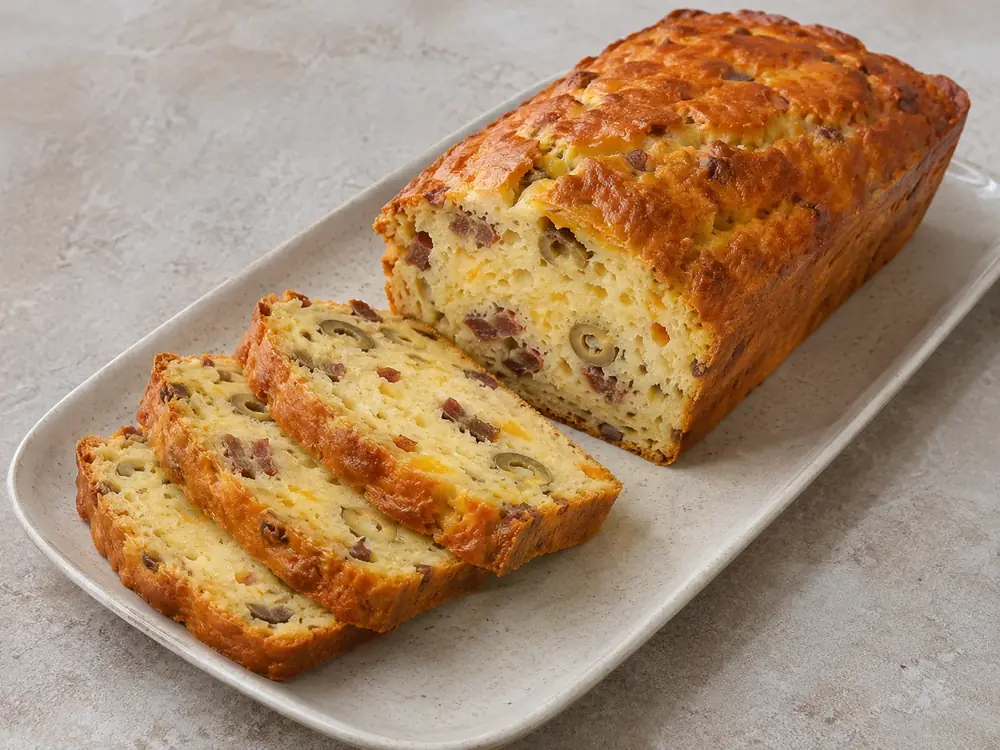
Purchased biltong, olives and cheddar give flavour to an egg, milk and oil batter. A roughly 24 cm tin provides ten slices for light meals with raw vegetables or small sharing portions. The three additions are salty, so no added salt is planned. This contemporary savoury loaf uses biltong as a South African-linked ingredient without describing its manufacture or a raw-meat preservation method. Loaf form itself is not assigned a particular regional tradition.
Ingredients
- 180 g flour
- 3 eggs
- 100 ml milk
- 60 ml oil for batter
- 8 g baking powder
- 70 g chopped ready-to-eat biltong
- 80 g pitted olives, drained weight
- 80 g cheddar
- pepper
- added salt 0 g
Preparation
Method at a glance — Combine flour and baking powder. Beat eggs, milk and oil separately, then fold into dry ingredients. Add biltong, chopped olives and cheddar. Pour into a lined loaf tin and bake about 40–45 minutes at 180 °C. Test crumb, rest 10 minutes and unmould onto a rack.
Preparing evenly distributed pieces — Finely chop 70 g ready-to-eat biltong after removing very tough parts. Long fibres catch on the slicing knife. Drain olives before weighing 80 g, cut and check for stone fragments. Grate cheddar. Preheat to 180 °C and line the tin; all measured oil belongs in batter, with paper avoiding uncounted greasing oil. Choose mild-flavoured oil if biltong and olives should remain prominent.
Combining bowls briefly — Mix flour and baking powder in one bowl. Beat eggs, milk and oil in another. Pour wet into dry and fold just until homogeneous, scraping the base for flour pockets. Add biltong, olives, cheese and pepper without prolonged working. Batter should pour while suspending pieces. Watery olives call for better draining next time rather than automatic extra flour. Level without firmly compacting. If rinsing salty olives, drain and dry afterwards. Biltong and cheddar vary in salt too: taste small ready-to-eat additions separately before considering later-recipe adjustments. Do not taste raw egg batter. Lightly salted salad is more suitable than another strong salty sauce.
Mixing a baking powder batter — Weigh ingredients and prepare the tin before wetting flour. Distribute fresh dry-stored baking powder evenly to prevent irregular rising and unpleasant pockets. This is not baker's yeast and requires no long warm fermentation. Once wet ingredients join, mix briefly and bake without unnecessary delay. Scrape bowl edges and base with a spatula. Small irregularities are preferable to prolonged vigorous mixing that develops elasticity unsuited to tender crumb. Distribute fillings without wet clumps and drain canned products before weighing when specified. Respect the stated consistency: pouring batter is different from roll-out dough. Do not add flour merely for a perfectly smooth surface. Unexpected runniness calls for checking missing dry ingredients, measurements or watery products. Record useful corrections rather than progressively changing the formula without a reference. Bake centrally in a preheated oven. Thickness and tin material affect duration. A good crust can conceal wet crumb; probe a crumb area away from cheese or other misleading filling. Protect fast-browning tops and continue moderately. Rest briefly before unmoulding, then rack once stable. Trapped steam wets sides and early slicing compresses crumb. Cool leftovers promptly and refrigerate egg, cheese or meat preparations for use within 48 hours. Reheat portions rather than the entire product repeatedly. Freeze separate wrapped portions promptly for longer storage, dated with preparation day.
Checking crumb and cooling — Bake forty to forty-five minutes approximately. Probe central crumb away from melted cheese; there must be no raw batter. Protect a rapidly browning top and continue. Narrow deep tins need longer than broad ones. Rest ten minutes, then rack and allow crumb to firm before slicing, particularly with fleshy olives. Very hot loaf crumbles and can seem underdone simply because it has not set structurally. Serve with separately prepared tomatoes, cucumber or leaves rather than automatic salty sauce. For picnics, cool promptly and transport chilled: dry purchased biltong does not make this moist milk-egg-cheese loaf room-temperature stable. Refrigerate remaining slices for use within 48 hours or freeze portions. Less salty olives are a declared variation. Fine chopping and careful draining give neat crumb with flavour through each slice. Enjoy your meal!
Introduction
Purchased biltong, olives and cheddar give flavour to an egg, milk and oil batter. A roughly 24 cm tin provides ten slices for light meals with raw vegetables or small sharing portions. The three additions are salty, so no added salt is planned. This contemporary savoury loaf uses biltong as a South African-linked ingredient without describing its manufacture or a raw-meat preservation method. Loaf form itself is not assigned a particular regional tradition.
Planning
1 loaf of 10 portions; preparation 20 min; baking 40–45 min.
Enjoy your meal
Enjoy your meal!