Mushroom-stuffed bread rolls
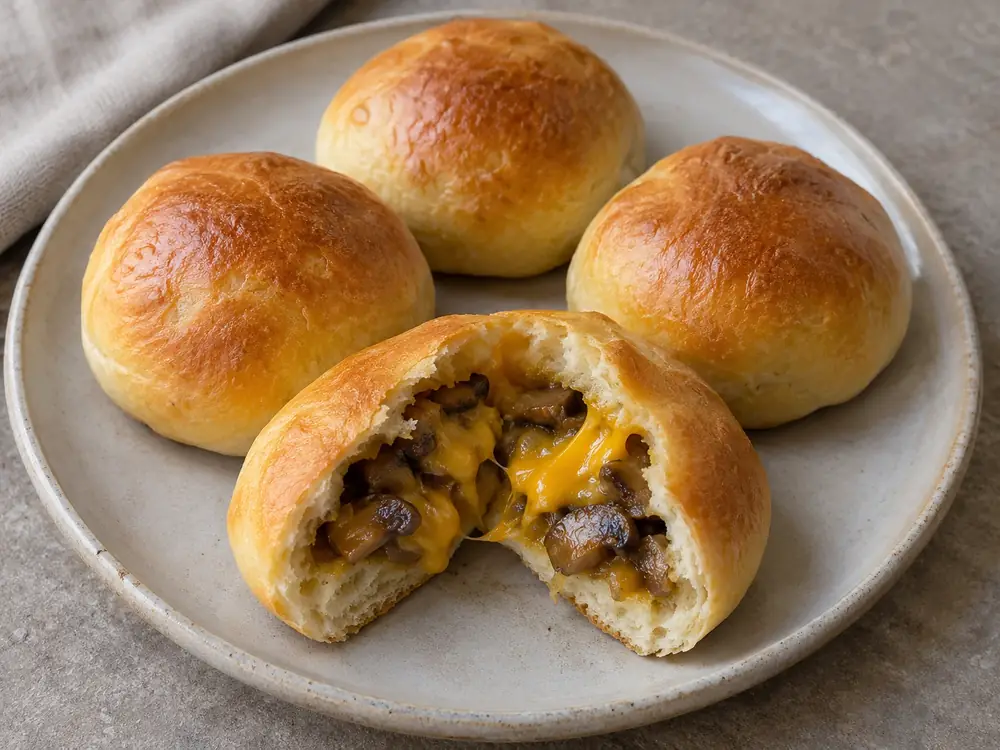
These ten oven-baked yeast rolls enclose mushroom, onion and cheddar, using an oil dough rather than a fried shell. Filling must be dry enough to remain enclosed through rising. Excessive or hot filling opens rolls. This contemporary preparation is neither assigned a traditional South African name nor equated with vetkoek. Two pieces give five modest portions with salad, or one serves alongside soup; ten rolls do not mean ten complete meals.
Ingredients
- 350 g flour
- 210 ml lukewarm water
- 5 g dry baker's yeast
- 25 ml oil
- 350 g mushrooms
- 1 onion
- 60 g cheddar
- 5 g salt
Preparation
Method at a glance — Knead flour, yeast, water, 10 ml oil and 3 g salt about 8 minutes; rise 1 hour. Fry onion and mushrooms in remaining oil, season with remaining salt, reduce dry and cool. Divide dough into ten, fill with mushrooms and cheddar, close seam underneath. Rise 30 minutes and bake 25 minutes at 190 °C.
Preparing dough and mushrooms — Combine measured flour, suitable yeast, lukewarm water, 10 ml oil and 3 g salt. Knead roughly eight minutes until supple, cover and rise approximately an hour. Retain 2 g salt for filling. Clean mushrooms, dice finely and slice onion. Fry both in a broad pan in the remaining 15 ml oil until tender and free water has evaporated. Add reserved salt cautiously with forthcoming cheddar in mind. Raw mushrooms would release water inside baking bread.
Cooling and dividing — Spread cooked vegetables in a clean dish to cool promptly. Grate cheddar and add once mushrooms are cold or barely warm. Divide filling visually into ten; excess can be served separately rather than forced into undersized discs. Gently release gas after first rising, divide dough into ten roughly equal pieces near 58 g according to losses, round and relax briefly. Flatten discs with centres slightly thicker than edges to protect filling when gathering. Place one filling portion centrally, gather and pinch clean edges, ensuring no mushroom crosses the join. Set seam-down on lined tray with expansion space. Cover lightly and allow approximately thirty minutes' second rising. If joins open, gently close without crushing all dough. Remove excess through a slightly enlarged opening rather than force escaped filling back through a tiny gap. Very cold filling can lengthen the final rise; observe volume instead of excessive heat to meet a timer.
Understanding dough and fermentation — Weigh flour and measure water. Absorption varies, so reserve a little water for adjustment instead of immediately adding much flour. Slight stickiness may improve with working and resting. Use a scraper or lightly oiled hands; bench flour is a small handling aid, not an unlimited ingredient. Use suitable instant dry yeast or follow the manufacturer's rehydration directions. Water must be lukewarm, never scalding. Knead until supple and cohesive; stated minutes are a domestic guide. Allow overheated dough to relax rather than beating it violently. Cover against skin formation and choose a temperate draught-free place away from strong direct heat. Judge increased volume: cool kitchens lengthen rising and warm ones shorten it. Baker's yeast and baking powder serve different purposes and cannot be exchanged at equal weight. After the first rise gently release large gas pockets, shaping without tearing. Protect the second rise and allow expansion room. Fragile collapsed dough may have overproved; baking cannot always restore it. Volume and touch complement the timer. Preheat in good time, check the underside and cool on a rack for steam release. Wait before slicing because very hot crumb compresses and appears wet. Cool bread with perishable fillings promptly, refrigerate uneaten portions and use within 48 hours, or freeze properly wrapped portions promptly. Reheat through the centre. Freezing preserves an already correctly prepared product; it does not remedy underbaking or excessive room-temperature waiting.
Baking and conclusion — Preheat to 190 °C and bake approximately twenty-five minutes, checking bases and firm sides. Melted cheese can look wet immediately on cutting, so rack around fifteen minutes before opening a test roll. Crumb around filling must be cooked without a pasty band. Serve warm with separately prepared vegetable soup or leaves. A little thyme is a variation that does not increase moisture substantially. Cool uneaten moist-filled rolls promptly, refrigerate and reheat completely, protecting tops if needed. Good sealing and cold dry filling matter as much as rising in producing even rolls. Enjoy your meal!
Introduction
These ten oven-baked yeast rolls enclose mushroom, onion and cheddar, using an oil dough rather than a fried shell. Filling must be dry enough to remain enclosed through rising. Excessive or hot filling opens rolls. This contemporary preparation is neither assigned a traditional South African name nor equated with vetkoek. Two pieces give five modest portions with salad, or one serves alongside soup; ten rolls do not mean ten complete meals.
Planning
10 rolls; preparation 35 min; rising approximately 1 h 30; total cooking approximately 40–45 min including 25 min baking; filling cooling additionally required.
Enjoy your meal
Enjoy your meal!