Grape and rosemary focaccia
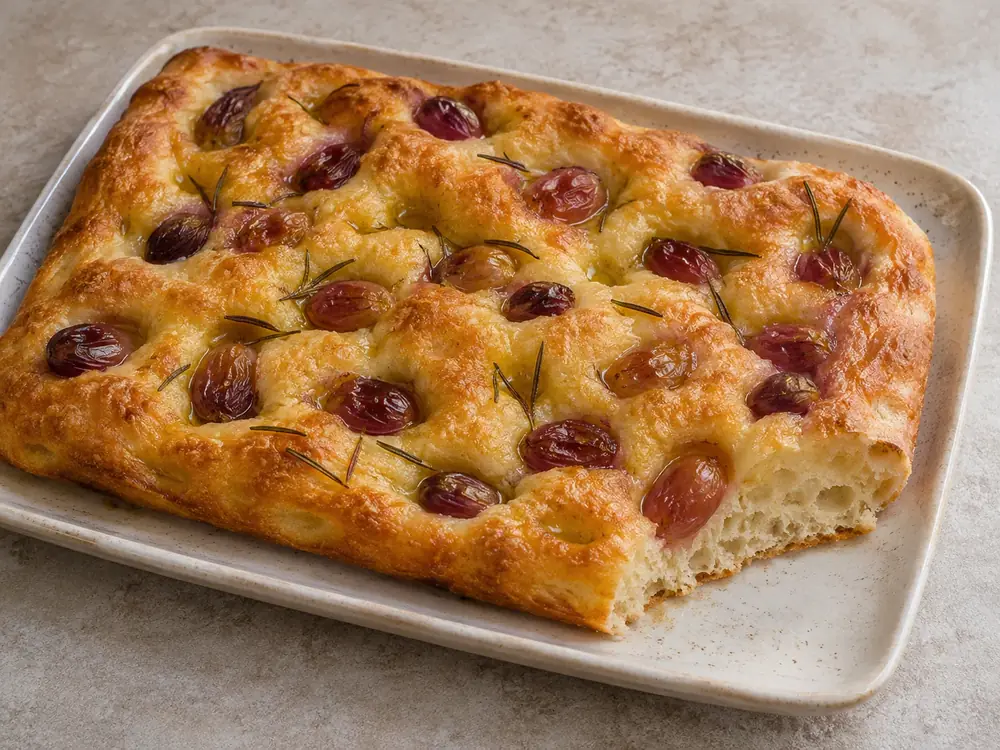
Fresh grapes and rosemary top olive-oil dough, giving twelve squares from the stated tray. Seek supple crumb under lightly golden surface, with grapes splitting and flavouring dimples. Bread can accompany salad or cheese without becoming a very sweet dessert. Focaccia is Italian and Mediterranean in inspiration; this contemporary combination around Cape-available grapes invents no South African heritage name. The 5 g sugar is not a cake-level sweetening; fruit supplies most sweetness, balanced by rosemary and salt.
Ingredients
- 400 g flour
- 260 ml lukewarm water
- 5 g suitable instant dry baker's yeast or prepared according to manufacturer
- 50 ml oil, with 25 ml in dough, 10 ml for tray and 15 ml on top
- 250 g seedless grapes
- 6 g salt
- 5 g sugar
- a little rosemary
Preparation
Method at a glance — Knead flour, suitably prepared yeast, sugar, water, 25 ml oil and salt about 8 minutes. Cover and rise about 1 hour. Stretch onto a 25 × 35 cm tray oiled with 10 ml oil and rise about 45 minutes. Dimple, press in washed dried grapes, scatter rosemary and remaining 15 ml oil. Bake about 25 minutes at 210 °C, then rack.
Allocating oil and stretching — Measure oil's three uses beforehand so all 50 ml do not accidentally enter kneading. Knead the stated ingredients about eight minutes until supple, cover and allow roughly one hour, following volume increase rather than forcing speed in an overheated oven. Oil the tray with its reserved share. Stretch dough gently towards corners; if it retracts, wait five to ten minutes instead of tearing. Keep depth even and cover lightly for approximately forty-five minutes more. Wash, destem and dry grapes. Halve very large ones and dry released surface juice. Chop a small quantity of rosemary leaves rather than adding woody branches or many whole needles. Distribute grapes before pressing so central and edge portions receive similar amounts. Place cut faces upward or angled without crushing. Wet bunches bring unnecessary surface water. Later use a bread knife and separate rows first to avoid dragging a whole crumb strip with grape skin.
Understanding dough and fermentation — Weigh flour and measure water. Absorption varies, so reserve a little water for adjustment instead of immediately adding much flour. Slight stickiness may improve with working and resting. Use a scraper or lightly oiled hands; bench flour is a small handling aid, not an unlimited ingredient. Use suitable instant dry yeast or follow the manufacturer's rehydration directions. Water must be lukewarm, never scalding. Knead until supple and cohesive; stated minutes are a domestic guide. Allow overheated dough to relax rather than beating it violently. Cover against skin formation and choose a temperate draught-free place away from strong direct heat. Judge increased volume: cool kitchens lengthen rising and warm ones shorten it. Baker's yeast and baking powder serve different purposes and cannot be exchanged at equal weight. After the first rise gently release large gas pockets, shaping without tearing. Protect the second rise and allow expansion room. Fragile collapsed dough may have overproved; baking cannot always restore it. Volume and touch complement the timer. Preheat in good time, check the underside and cool on a rack for steam release. Wait before slicing because very hot crumb compresses and appears wet. Cool bread with perishable fillings promptly, refrigerate uneaten portions and use within 48 hours, or freeze properly wrapped portions promptly. Reheat through the centre. Freezing preserves an already correctly prepared product; it does not remedy underbaking or excessive room-temperature waiting.
Topping, baking and conclusion — Preheat to 210 °C. Dimple with lightly oiled fingers without collapsing all dough. Press grapes just enough to hold, scatter rosemary and drizzle reserved surface oil. Do not pour a large unmeasured quantity of grape juice. Bake about twenty-five minutes, checking top and base and protecting edge fruit if sugars darken rapidly. Release from tray onto a rack and wait until warm before slicing. Serve squares with separately prepared rocket salad or tomatoes. For a quieter flavour reduce rosemary rather than removing defining fruit. Promptly cool uneaten moist grape-containing portions, refrigerate and use within 48 hours, or freeze portions. Oven warming refreshes crumb. Good rising and measured oil let fruit garnish the bread without overwhelming it. Enjoy your meal!
Introduction
Fresh grapes and rosemary top olive-oil dough, giving twelve squares from the stated tray. Seek supple crumb under lightly golden surface, with grapes splitting and flavouring dimples. Bread can accompany salad or cheese without becoming a very sweet dessert. Focaccia is Italian and Mediterranean in inspiration; this contemporary combination around Cape-available grapes invents no South African heritage name. The 5 g sugar is not a cake-level sweetening; fruit supplies most sweetness, balanced by rosemary and salt.
Planning
1 tray of 12 portions; preparation 25 min; rising approximately 1 h 45; baking 25 min.
Enjoy your meal
Enjoy your meal!