Sorghum and seed crackers
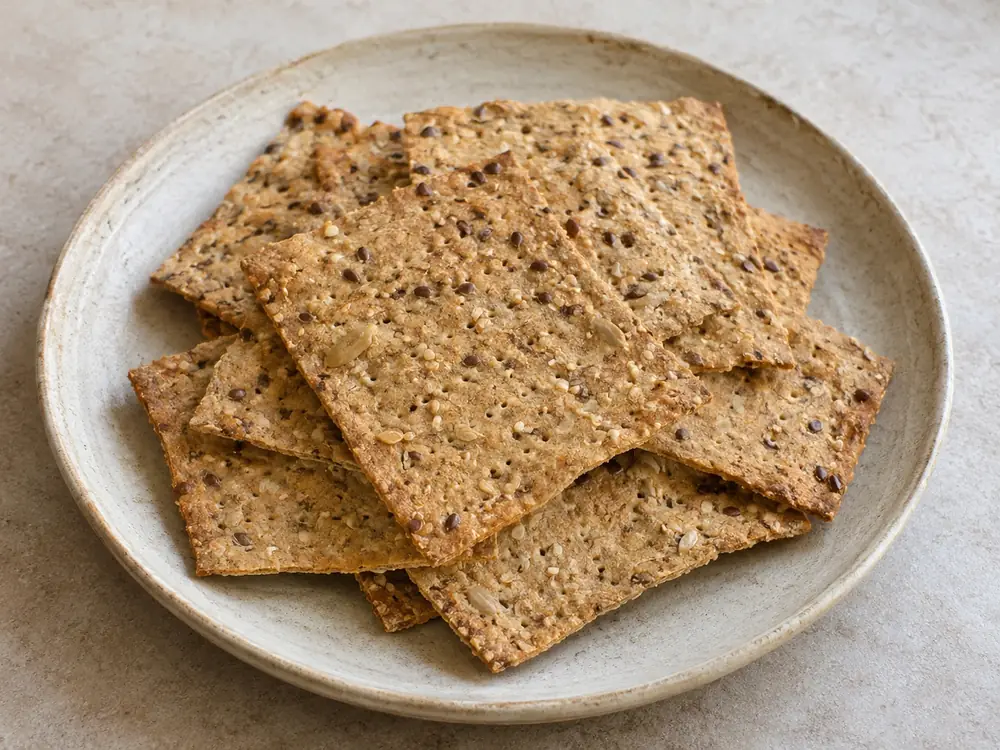
These thin crisp sheets combine sorghum, wheat and seeds. Wheat helps rolling, so they are not gluten-free. Sorghum means food-grade flour, not roughly crushed whole grain: coarse texture changes absorption and fragility. This contemporary savoury biscuit uses an ingredient important in many African cuisines without claiming a traditional South African cracker. Yield depends on cutting size; uniform thickness matters more than an exact number.
Ingredients
- 120 g food-grade sorghum flour
- 100 g wheat flour
- 50 g edible seeds, large ones chopped
- 35 ml oil
- 100–120 ml water according to absorption
- 3 g salt
Preparation
Method at a glance — Mix flours, seeds and salt. Add oil then sufficient water for firm dough. Roll between baking paper to 2 mm, cut forty rectangles and prick. Bake 15–18 minutes at 180 °C, removing golden edges before the centre if needed. Cool on a rack.
Seeds and hydration — Use 50 g edible seeds, for example sesame and roughly chopped sunflower seeds. Large whole seeds tear a 2 mm sheet, so reduce them where necessary. Check freshness and reject rancidity. More seeds make the sorghum-rich dough more fragile. Combine flours, seeds and salt, add oil and approximately 100 ml water, then gather with a spatula. Add remaining water gradually rather than automatically using 120 ml. Rest five to ten minutes before final judgement as flour absorbs moisture.
Rolling evenly — Roll between paper to roughly 2 mm, lifting the top occasionally to release folds. Rework a thick centre instead of baking an uneven sheet. Clean thickness guides can help. Cut approximately forty rectangles around 5 × 8 cm according to available area; adapt declared yield to actual geometry. Separate slightly or leave nearly adjoining only with cuts through the sheet. Prick to limit large bubbles. Use two trays if necessary. Larger pieces support spreads and smaller ones suit eating alone, but both retain thin regular thickness. An uncut slab may retain a damp centre; precutting permits edge removal. Chop seeds exceeding dough thickness to prevent holes. A five-to-ten-minute absorption rest is preferable to repeatedly adding water or flour without waiting.
Working and baking without excess correction — Measure everything and combine uniformly, incorporating oil before water. Do not seek bread elasticity. Stop at cohesion and add moisture only in small steps. Sorghum flour may need time before apparent crumbliness resolves. Use paper to limit bench flour; if it sticks, release gently rather than tugging. Smaller pieces cook first and may be removed independently. Inspect underside and centre as well as seed-dependent colour. Dark trays may need bottom-heat moderation with a second tray. Bake fifteen to eighteen minutes at 180 °C, watching as edges begin colouring. Remove ready outer pieces and extend damp centres. A hot cracker can remain slightly flexible but should snap when cold. If still soft after cooling, dry briefly at a gentler oven temperature rather than burning the edges. Let firm before racking; do not stack hot fragile pieces.
Serving, storage and conclusion — Cool completely before a clean dry closed box. This dough has no egg or cheese and is best baked promptly for consistent hydration. These dry crackers are better kept out of humid refrigeration, which softens them. Prefer consumption within four to five days, checking texture and seed freshness. Humidity-softened crackers may regain crunch in the oven, but abnormal smell or mould requires disposal rather than rescue. Serve with cheese, a spread or soup counted separately, keeping wet components apart until eating. Thin even rolling and complete drying matter more than dark colouring. Enjoy your meal!
Introduction
These thin crisp sheets combine sorghum, wheat and seeds. Wheat helps rolling, so they are not gluten-free. Sorghum means food-grade flour, not roughly crushed whole grain: coarse texture changes absorption and fragility. This contemporary savoury biscuit uses an ingredient important in many African cuisines without claiming a traditional South African cracker. Yield depends on cutting size; uniform thickness matters more than an exact number.
Planning
Approximately 40 crackers; preparation 20 min; baking about 18 min.
Enjoy your meal
Enjoy your meal!