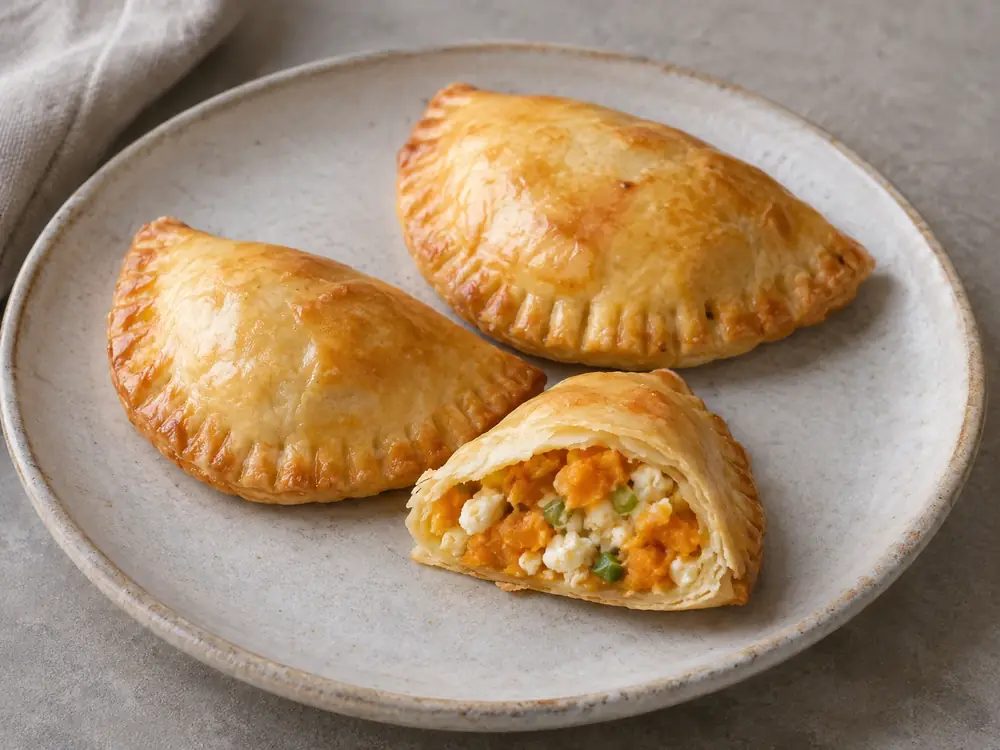
Sweet potato and feta turnovers
Baked half-moons enclose sweet potato mash, feta and spring onion. Twelve pieces give six modest two-turnover portions or a sharing platter. Filling is cooked first; the oven cooks pastry and heats the centre. Seek golden shells around supple filling without leaking liquid. This contemporary recipe is not named samoosa and does not replace a traditional fried preparation. Shortcrust gives a different texture. Feta supplies salt; the 1 g is a maximum correction after tasting mash, before egg wash.
Ingredients
- 2 shortcrust pastry sheets of 230 g each
- 400 g peeled sweet potato
- sufficient cooking water
- 120 g feta
- 1 spring onion
- 1 egg for glazing
- 15 ml oil for mash
- up to 1 g salt
- pepper
Preparation
Method at a glance — Boil sweet potato dice about 20 minutes, drain, let steam dry and mash with oil. Cool promptly, combine with feta, spring onion and pepper; salt only if needed. Cut approximately twelve 11–12 cm pastry discs. Fill moderately, moisten edges, fold and seal. Egg wash, make small vents and bake about 22–25 minutes at 190 °C until golden with cooked bases. Rack briefly.
Cooking then drying filling — Weigh peeled sweet potato, cut regular dice and simmer about twenty minutes until tender. Drain thoroughly and briefly return to the hot pan off heat for steam release. Fork-mash for structure rather than blending. Mix in 15 ml oil and spread broadly to cool promptly. Crumble feta, wash and chop spring onion, then combine with cold mash. Taste pepper and salt. Hot filling softens pastry butter and encourages tears. Dry watery mash before cheese instead of relying on oven absorption.
Cutting twelve shells — Roll the two sheets sufficiently thin for approximately twelve discs of 11–12 cm, subject to actual sheet dimensions. Cut available pieces first, chill scraps and gather without lengthy kneading, rolling again only once. If smaller discs are necessary, reduce filling per piece and declare the changed yield. Reserve surplus mash instead of overfilling. Record diameter and approximate filling weight for repeatability. Divide filling before assembly. Place on one half of each disc, leaving clean edges. Moisten lightly, fold, release large air pockets and press closed, marking with a fork without piercing. Avoid a thick seam that cooks more slowly than the rest.
Controlling assembly and baking — Preheat before loading. Temperatures refer to a conventional domestic oven; adjust a strong fan oven by observing both colour and internal cooking. Choose trays or tins allowing portions room without crowding. Thin assemblies cook faster than deep ones even at identical ingredient quantities. Prepare utensils and paper before handling pastry. Cool filling and drain watery ingredients, distributing them evenly. Keep closing edges clean; remove escaped filling rather than reinforcing seams with thick raw pastry. Bake centrally with space for circulation. Avoid unnecessary early opening and turn an unevenly colouring tray only once structure has set. Two trays need not finish simultaneously; a small trial can establish suitable timing without changing the formula. Examine bases and filling-adjacent pastry as well as surface colour. Protect a darkening top and continue more gently. A pale top does not justify stronger heat if the base is already brown. Remove burnt leaked deposits without tearing shells. Transfer onto racks once stable so trapped steam does not soften bases. Keep moist accompaniments separate until serving. Cool cheese, egg or cooked-vegetable leftovers promptly, refrigerate and use within 48 hours. Brief oven reheating preserves crispness better than a closed cover, but the centre must also become hot.
Glazing and finishing — Arrange on a lined tray, brush beaten egg lightly and cut a small steam vent without blocking it with glaze. Bake twenty-two to twenty-five minutes at approximately 190 °C, adjusting for size and thickness, until pastry is cooked below and golden above. Rest briefly on a rack; filling can burn while shells feel warm. Serve with leaves or lemon-dressed cucumber counted separately. Dried-surface parsley is a variation without substantial added moisture. Prepare filling and pastry separately in the refrigerator the previous day, assembling on meal day. Thorough draining, measured filling and clean thin seams reward careful assembly. Enjoy your meal!
Introduction
Baked half-moons enclose sweet potato mash, feta and spring onion. Twelve pieces give six modest two-turnover portions or a sharing platter. Filling is cooked first; the oven cooks pastry and heats the centre. Seek golden shells around supple filling without leaking liquid. This contemporary recipe is not named samoosa and does not replace a traditional fried preparation. Shortcrust gives a different texture. Feta supplies salt; the 1 g is a maximum correction after tasting mash, before egg wash.
Planning
Approximately 12 turnovers; preparation 30 min; total cooking 42–45 min; filling cooling additionally required.
Enjoy your meal
Enjoy your meal!