Quick beer and cheddar bread
Flour, baking powder, beer and cheddar make a quick loaf without prolonged kneading or fermentation. Its crumb is denser and more crumbly than yeast bread, suited to fairly thin slices alongside soup or salad. Quantities fit a roughly 24 cm loaf tin, yielding twelve slices according to cutting.
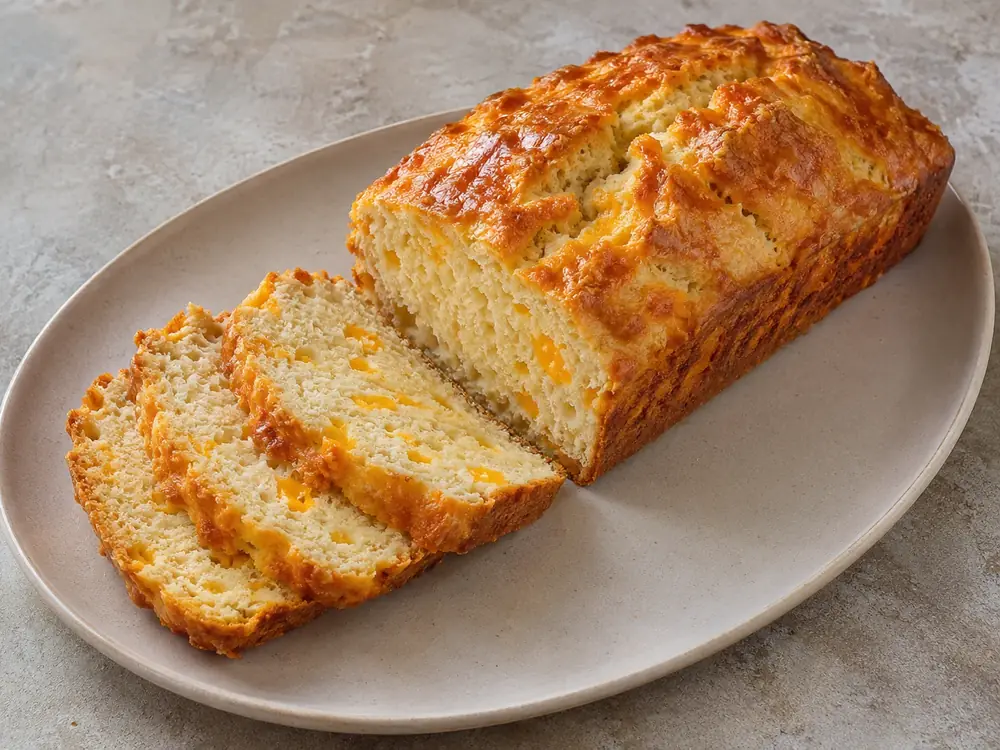
Ingredients
- 350 g flour
- 12 g baking powder
- 330 ml mildly bitter pale beer
- 100 g cheddar
- 25 g melted butter for the surface
- 15 g sugar
- 4 g salt
Preparation
Method at a glance — Combine flour, baking powder, sugar and salt. Add beer and cheddar, stirring only until moistened. Transfer to a lined loaf tin and drizzle melted butter over the top. Bake 45–50 minutes at 180 °C until a skewer shows no wet raw dough. Cool on a rack and wait 20 minutes before slicing.
Preparing tin and cheese — Preheat to 180 °C. Line the tin with baking paper projecting slightly over long sides for lifting. A very small tin risks overflow or a wet centre while edges brown. Grate cheddar instead of using large cubes to distribute flavour and keep crumb more even. Melt butter and cool slightly; it belongs on top, not automatically inside batter. Measure 330 ml beer rather than emptying an oversized bottle. Organise ingredients so the mixture can enter the oven promptly after liquid addition. Measure foamy beer once foam subsides, not by apparent volume in a large glass.
Moistening without kneading — Thoroughly combine flour, baking powder, sugar and salt dry. Add beer and cheddar, folding with a spatula just until no dry flour remains. Batter should stay thick and irregular, not become a smooth stretchable dough ball. Transfer and level gently. Drizzle butter over the surface without a deep hollow collecting all fat. Bake about forty-five to fifty minutes. Check centre and sides: topping should be golden and a skewer in crumb should show no raw batter. Melted cheese on the skewer differs from wet floury dough and should not automatically trigger prolonged baking.
Checking the base — Butter can brown the top before the bottom finishes. Lift carefully once sufficiently firm and inspect the base: no soft dough should cling to paper. If underdone, return briefly to oven protecting the top. Using the same tin and precisely measured beer next time helps comparison. Do not judge by colour alone when a thick loaf hides moisture centrally.
Mixing baking-powder batter — Weigh ingredients and prepare tin before wetting flour. Distribute baking powder evenly to prevent irregular rise and unpleasant pockets. Check freshness and dry storage. This is chemical raising agent, not baker's yeast, and needs no long warm fermentation. After wet ingredients join, mix briefly and bake without unnecessary delay. Use a spatula and scrape bowl edges so flour does not remain at the bottom. Minor irregularities are preferable to vigorous overworking, which develops an elastic texture unsuitable for tender quick bread. Distribute additions evenly without wet clumps. Any declared jarred or canned variation requiring drained weight must be drained before weighing. Respect intended consistency rather than treating a spoonable batter as roll-out dough. Do not add flour merely for a perfectly smooth surface. If unexpectedly runny, check missing dry ingredients, measurement errors or watery substitutions. Record necessary corrections instead of gradually changing the formula without a reference.
Baking and allowing structure to set — Preheat and bake centrally. Thickness and tin material affect duration. A good crust can hide wet crumb; probe a crumb area away from cheese or filling that might mislead. Protect fast-browning top and continue at moderate heat if needed. Rest briefly before unmoulding, then rack once stable. Cooling matters: trapped steam wets sides and premature cutting compresses crumb. Cool leftovers promptly and refrigerate this cheese-containing loaf for use within 48 hours. Reheat portions rather than the entire loaf repeatedly. For longer storage, freeze separated wrapped slices promptly, labelled with preparation date.
Cooling before the first slice — Let loaf firm briefly in the tin, lift with paper and place on a rack. Wait at least twenty minutes before cutting. Very hot slices compress and can seem sticky despite correct baking. Saw gently with a bread knife without heavy pressure. Serve with vegetable soup or seasoned tomatoes, accounting for cheese already present. Another firm cheese is a variation with comparable flavour and salt considered. Very sweet or thick liquid cannot directly replace beer without altering moisture and taste. Refrigerate or freeze promptly cooled slices. Brief oven or toaster reheating refreshes the dense crumb. Enjoy your meal!
Introduction
Flour, baking powder, beer and cheddar make a quick loaf without prolonged kneading or fermentation. Its crumb is denser and more crumbly than yeast bread, suited to fairly thin slices alongside soup or salad. Quantities fit a roughly 24 cm loaf tin, yielding twelve slices according to cutting.
Cultural context
These home proportions belong to the broad quick-bread family, not yeast-raised potbrood. Pale beer with little bitterness suits the base better than strongly hopped beer. Baking does not guarantee total alcohol removal. A version excluding alcohol must start with an appropriate product rather than rely solely on oven time.
Planning
1 loaf of 12 slices; preparation 15 min; baking 45–50 min.
Enjoy your meal
Enjoy your meal!