Oven-baked pork chops with mustard crust
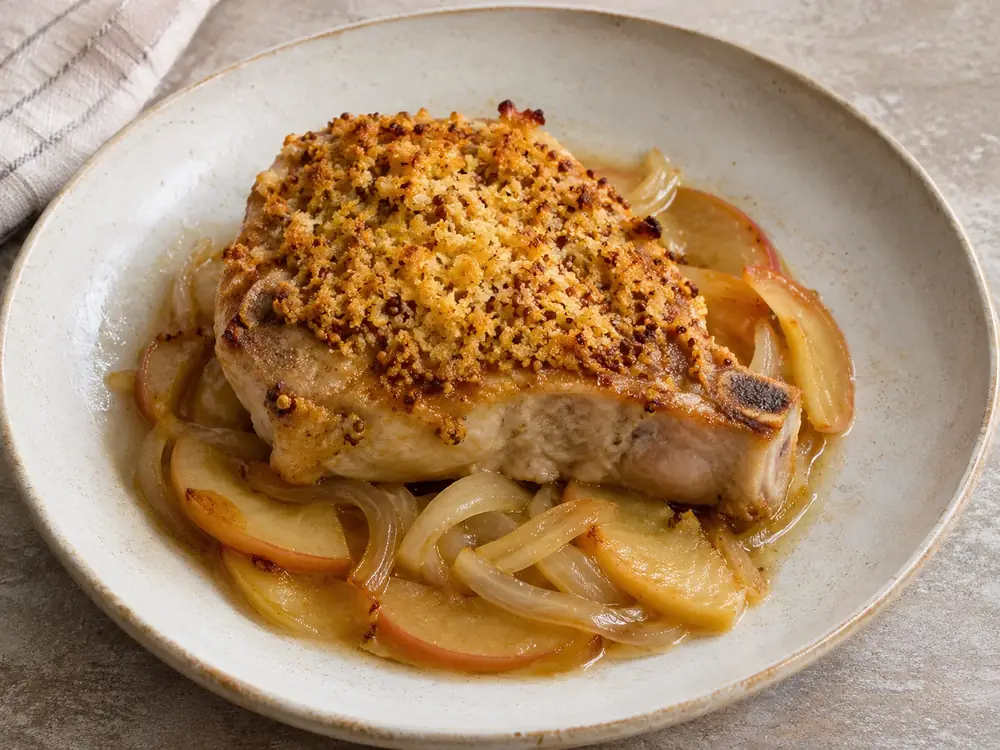
Pork chops bake beneath mustard, breadcrumb and butter crust while apple and onion collect juices below. Four similar-thickness bone-in chops of 180 g give four portions. Choose fresh unsmoked, unbrined product. Comparable dimensions simplify achieving readiness without overcooking smaller pieces while thick ones finish.
Ingredients
- 4 pork chops of 180 g
- 40 g mustard
- 50 g breadcrumbs
- 20 g melted butter
- 1 apple
- 1 onion
- 3 g salt
- pepper
- 50 ml water
Preparation
Method at a glance — Season chops moderately. Mix mustard, crumbs and slightly cooled melted butter. Lay chops over finely sliced apple and onion, pour water around and spread crust on top without wetting it. Bake about 20–25 minutes at 190 °C according to thickness. Check at least 63 °C centrally away from bone, then rest at least 3 minutes; allow 5 here. Finish vegetables separately if necessary.
Preparing the base — Preheat to 190 °C. Wash, core and finely slice apple; peel and finely slice onion. Spread in a shallow dish holding four chops without overlap. Pour measured water around; it starts juices and helps vegetables but must not cover meat. Pat chops dry. Season moderately because mustard and some crumbs already contain salt. Mix measured mustard, crumbs and melted butter cooled to warm. Mixture should lightly clump yet spread easily. Very hot butter makes it unnecessarily fluid. Share all components across the four pieces rather than heavily coating just one.
Forming a thin crust — Place chops over fruit and onion, regular faces upward. Spread coating thinly on those faces only and press gently without spilling into the base. Do not baste topping with dish water, which prevents crumbs developing crispness. Bake about twenty to twenty-five minutes according to thickness. Probe from the side into flesh away from bone. For whole-muscle chops, this version retains at least 63 °C centrally followed by at least three minutes' rest; planned five minutes also settle juices. Thick chops need longer even when crust already looks golden. Surface colour does not replace the check.
Preparing chops ahead — Mix crust near mealtime but preferably spread only at assembly. Long contact with damp meat softens crumbs. Refrigerate both separately if needed. Keep apple and onion finely sliced to suit chop timing; large wedges require separate precooking. Correct cutting prevents extending meat cooking solely to soften the garnish.
Choosing a dish for both textures — Keep juices around vegetables while exposing crumbs to dry heat. Moderate sides help; covering throughout traps steam and softens topping. Light protection only after sufficient browning has a different purpose and may help near the end. Weight alone does not define thickness, especially around bone. Probe substantial flesh rather than a thin tip. Remove ready chops onto a clean plate to rest while others continue. There is no need to overcook all four to wait for the thickest. Buying comparable pieces greatly simplifies the final stage.
Adjusting without wetting everything — Observe liquid through a dish corner. Add small hot-water amounts at the side if needed, never onto crumbs. Apple and onion release variable water; the initial 50 ml does not guarantee the same final juice volume in every dish. If vegetables sit in excessive liquid, reduce separately while chops rest. Mustard and butter should coat crumbs without a thick greasy paste. A high mound browns outside but stays heavy beneath. Distribute across all chops before adding more to one; cook surplus separately if meat surfaces are small instead of creating difficult thick bumps.
Organising the meal's finish — Have accompaniments and plates ready before removing chops. Do not leave them in juices under an airtight sheet, which destroys crispness. Offer base sauce separately or beneath meat, avoiding the topping. Cool leftovers promptly, refrigerate in portions and use within 48 hours. Reheat completely centrally, using 74 °C as the reference even if crust is already hot. Protect initially and uncover briefly if useful. Expect less crispness; moist meat matters more than prolonged heating for renewed colour. Avoid repeatedly reheating the whole dish for successive servings.
Protecting topping and finishing vegetables — If crust colours early, protect lightly and continue checking. Add hot water in a corner if the base dries. Remove ready chops to a warm platter and check onion tenderness; finish vegetables alone in juices if needed. Serve one intact-crusted chop with apple and onion. Separately prepared green beans or cabbage suffice alongside. Offer sauce separately to preserve texture. Choose milder mustard rather than greatly reducing its weight, since it helps crumbs adhere. Even cuts and separation of wet base from dry topping determine success. Enjoy your meal!
Introduction
Pork chops bake beneath mustard, breadcrumb and butter crust while apple and onion collect juices below. Four similar-thickness bone-in chops of 180 g give four portions. Choose fresh unsmoked, unbrined product. Comparable dimensions simplify achieving readiness without overcooking smaller pieces while thick ones finish.
Cultural context
This contemporary family preparation claims no named South African specialty. Its oven method and crust distinguish it from grilled ribs. Apple is a modest garnish rather than sweet sauce. Firm fruit keeps some recognisable slices. The intended contrast is moist juices below and a relatively dry crisp top.
Planning
Serves 4; preparation 15 min; cooking approximately 20–25 min; resting 5 min.
Enjoy your meal
Enjoy your meal!