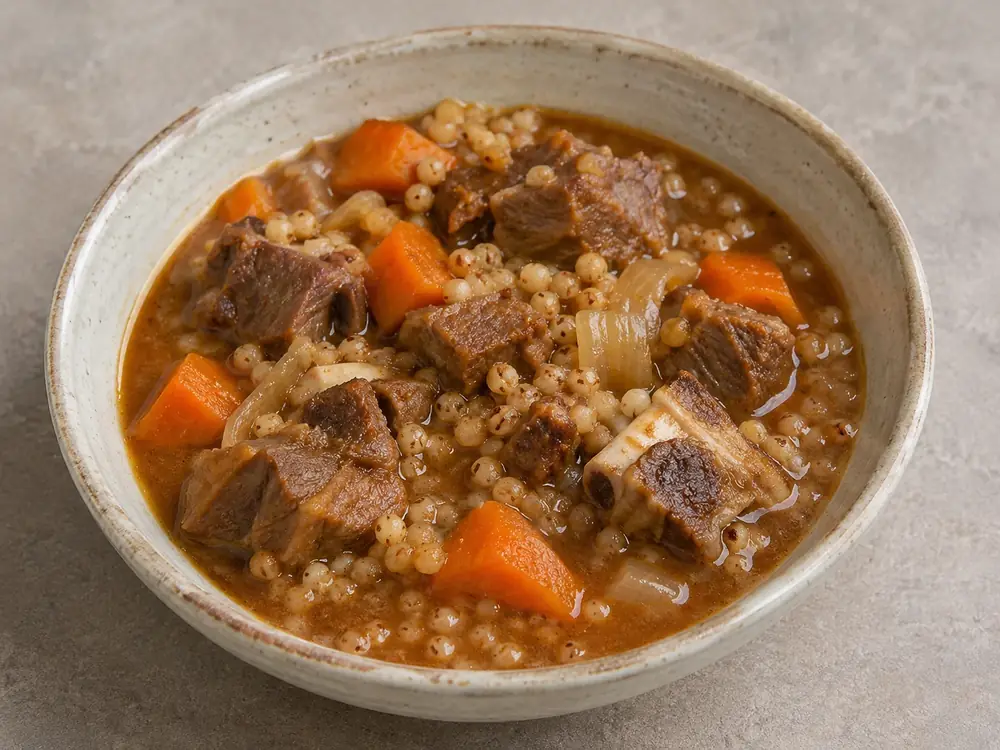
Goat stew with carrots and sorghum
Stewing goat, carrots and whole sorghum make six portions with juices naturally thickened by grain. Sorghum is weighed dry; flour, flakes and fine meal are not interchangeable because their absorption and texture would change cooking entirely. Retain recognisable grain rather than interpreting it as a powdered thickener.
Ingredients
- 1 kg goat for stewing, bone proportion specified at purchase
- 180 g dry sorghum grains
- 400 g carrots
- 2 onions
- 1 l initial water, topped up if needed
- 25 ml oil
- 2 g ground coriander
- 5 g salt
- 1 bay leaf
Preparation
Method at a glance — Read sorghum directions and soak chilled if required. Brown meat in oil; add onion, coriander, bay and 700 ml water. Cover and simmer about 1 h 15, longer if firm. Add rinsed grain, carrots, salt and remaining 300 ml water. Cook 45–75 minutes or longer until meat and grains are tender, stirring and topping up. Remove bay and loose bones. Precook particularly slow sorghum separately and adjust final liquid.
Buying a stewing cut — Ask for goat pieces with bone proportion clearly stated. Boneless cubes give different edible yield from bone-in pieces. Remove loose bone fragments, pat meat dry and slice onions. Peel carrots and cut thick sections so they survive the later cooking stage. Read sorghum instructions before starting. Some grains need much longer or advance soaking. Soak refrigerated if directed and discard that water. The 180 g is dry weight; rinse and drain afterwards. Keep hot water available because one litre is a starting allowance rather than a guaranteed final requirement for any vessel.
Starting the stew — Brown meat in measured oil in batches. Add onions and coriander, stir briefly, then add 700 ml water and bay. Cover and simmer approximately one hour fifteen minutes. Check meat resistance. Extend if very firm before introducing grain and carrots, rather than treating their cooking stage as a rigid countdown for older goat or another cut. Once meat begins tenderising, add sorghum, carrots, salt and remaining 300 ml water. Continue forty-five to seventy-five minutes or longer as required. Stir gently along the base because thickening grain catches. Small hot-water additions keep a supple stew rather than a dry grain mass.
Planning whole-grain texture — Sorghum keeps more chew than cereal purée. Taste before serving to distinguish that character from undercooking. A clearly hard centre still requires more time and liquid. Grains settle between stirrings; pass the spoon gently beneath meat to prevent sticking. Keep a little hot water ready to restore flexible juices if the finished stew waits briefly.
Managing slow cooking — Use a casserole fitting meat without excessive empty area or cramped handling. A lid limits steam loss. Maintain discreet liquid movement on the hob, not a fierce boil that merely accelerates evaporation. Dry meat and heat oil without smoke for browning; let a face release before turning and work in batches. If deposits blacken, stop and remove burnt areas rather than dissolving them into sauce. Brown juices can loosen with planned water. Check level after opening and replace evaporation with small hot additions. If meat is ready but liquid excessive, remove it before separate reduction, avoiding unnecessary further cooking. Grain thickening needs continued attention at the base.
Checking tenderness and arranging service — Fork-test thick flesh away from bone. Resistance should fall markedly; elasticity generally needs further moist cooking. Texture complements cooking checks because simmering sauce does not instantly establish each centre. Thickness, cut and heat stability alter duration, so allow a planning margin. For advance preparation, divide cooked stew into shallow containers, cool promptly and refrigerate. Never leave the entire pot for hours on the stove. Use refrigerated leftovers within 48 hours. Reheat only needed quantities completely centrally, using 74 °C as the manuscript's reference, adding water if thickened. Reheating does not restart storage time.
Bringing textures together — Taste several grains for tenderness with pleasant chew but no hard core. Check meat and carrots separately; temporarily remove anything ready before the rest. Very slow sorghum can be precooked separately according to packet, reducing casserole liquid and adjusting progressively. Remove bay and loose bones. Share meat, then grain and vegetables equitably; fresh salad often suffices alongside. Next day, grain absorbs more juices, requiring water and stirring during complete reheating. Observe three distinct cooking needs rather than imposing one timer on everything. Enjoy your meal!
Introduction
Stewing goat, carrots and whole sorghum make six portions with juices naturally thickened by grain. Sorghum is weighed dry; flour, flakes and fine meal are not interchangeable because their absorption and texture would change cooking entirely. Retain recognisable grain rather than interpreting it as a powdered thickener.
Cultural context
This contemporary casserole is not presented as traditional potjie or attributed to a cultural group. Goat and sorghum occur across African cuisines, without establishing a precise history for this combination. The method prioritises tender meat and cooked grains rather than identical timing for every product.
Planning
Serves 6; preparation 25 min; cooking approximately 2–2 h 30 or longer according to meat and grain; optional soaking according to sorghum.
Enjoy your meal
Enjoy your meal!